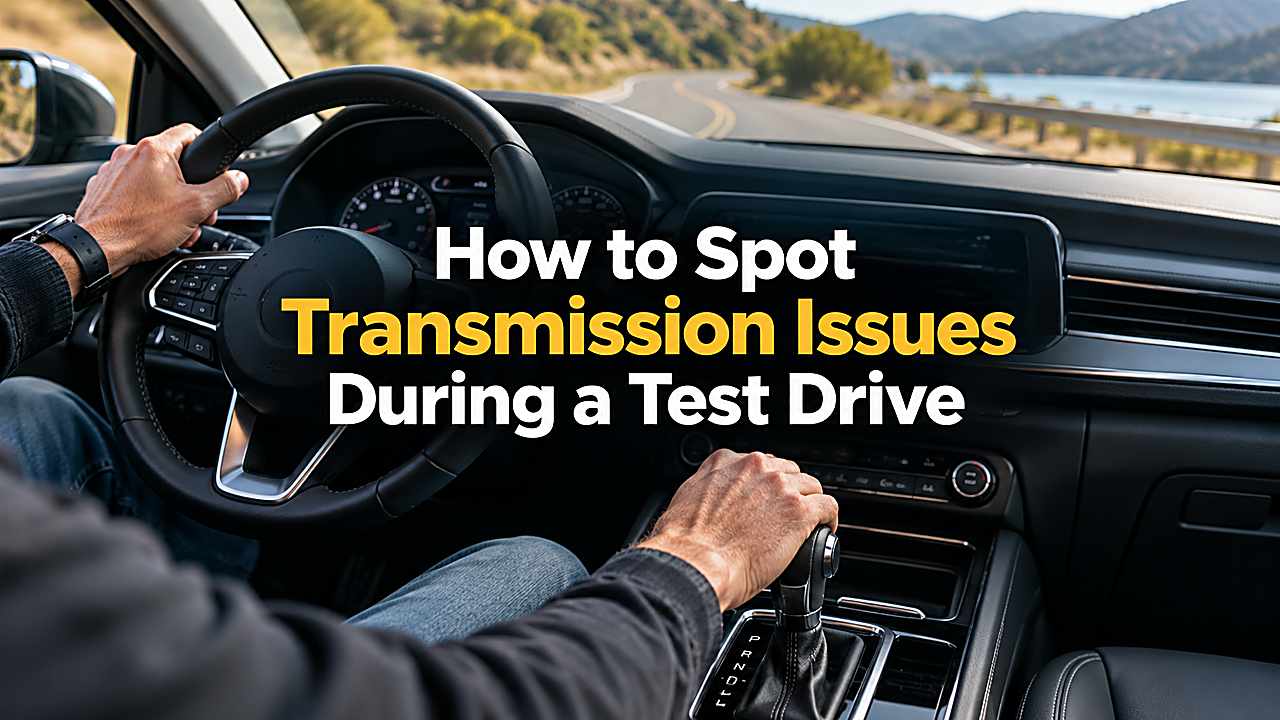
The easiest way to spot transmission trouble on a used-car test drive is to start the vehicle cold, check engagement into Drive and Reverse, accelerate gently and firmly at several speeds, watch for delayed or harsh shifts, listen for whining, and repeat the checks once the drivetrain is fully warm. Any RPM flare without matching acceleration, shudder, hesitation or warning light deserves professional diagnosis.
Different transmissions feel different. A conventional automatic should shift smoothly, a CVT may hold engine speed during acceleration, and a dual-clutch transmission can feel more mechanical at low speed. You are looking for behavior that is inconsistent, delayed, violent or accompanied by faults.
Test the transmission cold and warm. Delayed engagement, slipping RPM, repeated shudder, harsh shifts, fluid leaks, burning smell or transmission codes are strong reasons to pause the purchase and get an independent inspection.
Before the car moves: test cold engagement
Ask the seller not to warm the car before you arrive
Some transmission problems are most obvious when fluid is cold. A pre-warmed vehicle is not proof of deception, but a true cold start gives you more information. Check the temperature gauge when you arrive.
If the engine is already fully warm and the seller has no clear reason, note it. A pre-purchase inspection remains one of the highest-value steps because it turns hidden uncertainty into a list you can price. Even experienced buyers use specialists when structure, electronics or drivetrain condition is difficult to judge.
Shift from Park into Reverse and Drive with your foot on the brake
Engagement should occur promptly and predictably. A long pause followed by a heavy clunk can indicate low fluid, internal wear, mount problems or control issues. Repeat once, not dozens of times.
If the vehicle lurches aggressively, stop and have it inspected. Keep copies of photos, scan reports, quotes and key paperwork when the finding affects price. Clear documentation makes negotiation shorter and prevents memory from becoming less accurate after you have viewed several vehicles.
Resale matters too. A condition you are willing to accept today can still reduce the number of future buyers, dealer trade options or insurance choices, so include the exit value in the purchase decision.
Low-speed driving exposes hesitation and shudder
Creep smoothly through a parking lot
With light throttle, observe whether the car moves predictably and whether the transmission hunts or bangs between ratios. Dual-clutch units can feel different from torque-converter automatics, so compare with known behavior for that model.
Repeated judder is more important than a single awkward shift. Keep copies of photos, scan reports, quotes and key paperwork when the finding affects price. Clear documentation makes negotiation shorter and prevents memory from becoming less accurate after you have viewed several vehicles.
Resale matters too. A condition you are willing to accept today can still reduce the number of future buyers, dealer trade options or insurance choices, so include the exit value in the purchase decision.
Make several gentle stops and starts
A worn automatic or CVT can behave acceptably at steady speed yet hesitate when pulling away. Listen for whining and feel for vibration through the seat. Turn off the radio.
A test drive is diagnostic time, not entertainment. Resale matters too. A condition you are willing to accept today can still reduce the number of future buyers, dealer trade options or insurance choices, so include the exit value in the purchase decision.
Moderate acceleration should connect RPM to road speed
Apply steady throttle from a low road speed and watch the tachometer. In a conventional automatic, engine speed should rise and then settle as the transmission shifts. A noticeable flare where RPM jumps but the car does not accelerate proportionally can indicate clutch or transmission slip.
A CVT can hold higher RPM continuously by design, so judge whether acceleration itself is smooth and consistent. A pre-purchase inspection remains one of the highest-value steps because it turns hidden uncertainty into a list you can price. Even experienced buyers use specialists when structure, electronics or drivetrain condition is difficult to judge.
Use a safe highway segment to check higher gears
Cruise at steady speed and add light throttle
The transmission should respond without repeated hunting, banging or an unexplained delay. Some vehicles downshift quickly by design. What you do not want is repeated indecision, slipping or warning messages.
Drive long enough for the transmission to reach normal operating temperature. That distinction matters because the visible symptom is only one part of the decision. You should connect what you see with ownership records, service history, repair cost and what an independent inspection can verify.
Check for torque-converter shudder under light load
Some automatics develop a vibration or rumble-strip sensation during light acceleration when the converter clutch applies. Tire or engine problems can feel similar, so this symptom is not a diagnosis by itself.
Reproduce it safely and note the speed and throttle position for the mechanic. A useful rule is to treat every finding as a reason for the next check rather than as a final verdict. When several independent clues point in the same direction, your confidence becomes much stronger.
Manual transmissions need a different test
Clutch engagement should be progressive and consistent
A clutch that only grabs at the very top of pedal travel may be worn, though designs vary. Under strong acceleration in a high gear, rising engine speed without matching road speed can indicate clutch slip. Do not abuse a seller’s car with repeated hard tests.
One controlled check is enough. A useful rule is to treat every finding as a reason for the next check rather than as a final verdict. When several independent clues point in the same direction, your confidence becomes much stronger.
Synchronizers reveal themselves during normal shifts
Grinding into one gear, resistance when shifting or a lever that pops out of gear deserves attention. Old or cold gear oil can affect feel, but repeated behavior is not normal.
Check the clutch hydraulic system and service history as part of the inspection. Do not let a low asking price change the standard of proof you require. A cheap vehicle with unclear title, structural or mechanical risk can cost far more than a correctly priced car with honest cosmetic wear.
If the seller can document the explanation and the vehicle supports it, the issue may be manageable. If the story changes or inspection access is restricted, that uncertainty deserves real weight in your decision.
Look and smell after the drive
Check underneath for fresh fluid
Transmission fluid can be red, amber or other colors depending on type and age. A leak around the transmission, cooler lines or axle seals needs diagnosis.
Air-conditioner water is normal and should be distinguished from oily fluid. Do not let a low asking price change the standard of proof you require. A cheap vehicle with unclear title, structural or mechanical risk can cost far more than a correctly priced car with honest cosmetic wear.
If the seller can document the explanation and the vehicle supports it, the issue may be manageable. If the story changes or inspection access is restricted, that uncertainty deserves real weight in your decision.
A burnt smell is a warning, not a diagnosis
Dark or burnt-smelling fluid can accompany overheating and wear, but some modern transmissions do not have easy dipsticks and fluid color alone is not definitive. Do not open sealed systems at a viewing.
Ask the mechanic to evaluate service condition. If the seller can document the explanation and the vehicle supports it, the issue may be manageable. If the story changes or inspection access is restricted, that uncertainty deserves real weight in your decision.
Scan the car before you buy
An OBD2 tool with transmission-module coverage can reveal stored and pending faults even when no warning light is illuminated. Basic readers may only access powertrain emissions codes, so enhanced coverage matters. Also check readiness monitors for recent code clearing.
A clean scan still does not prove the transmission is healthy. A useful rule is to treat every finding as a reason for the next check rather than as a final verdict. When several independent clues point in the same direction, your confidence becomes much stronger.
When one bad shift should end the test drive
A single firm shift can have an innocent explanation, but repeated slipping, limp mode, severe clunks, overheating messages or delayed engagement are not problems to price casually from the driver’s seat. Stop the test and get a specialist inspection. Transmission replacement can exceed the savings that made the used car attractive. Do not let a low asking price change the standard of proof you require. A cheap vehicle with unclear title, structural or mechanical risk can cost far more than a correctly priced car with honest cosmetic wear.
Use the finding to decide your next step, not just your opinion
When a test reveals a concern, convert it into an action: request a record, get a repair quote, scan the vehicle, compare another example or pay for an independent inspection. This keeps the buying decision evidence-based. You do not need to diagnose every problem yourself to make a smart purchase.
That distinction matters because the visible symptom is only one part of the decision. You should connect what you see with ownership records, service history, repair cost and what an independent inspection can verify.
Frequently Asked Questions
Transmission symptoms are easy to misread because different designs behave differently. These answers help separate normal characteristics from signs that deserve diagnosis.
How do you know if an automatic transmission is slipping?
The classic sign is engine RPM rising without a proportional increase in vehicle speed. You may also feel delayed engagement or inconsistent acceleration. Road conditions and CVT behavior can confuse the diagnosis.
A mechanic should confirm the cause before you buy. Resale matters too. A condition you are willing to accept today can still reduce the number of future buyers, dealer trade options or insurance choices, so include the exit value in the purchase decision.
Is a hard shift always a bad transmission?
No. Software adaptation, cold temperature, worn engine mounts or normal design can sometimes create a firm shift. Repeated harsh shifts across several conditions are more concerning.
Check codes and service history. Compare with another example of the same model if possible. That distinction matters because the visible symptom is only one part of the decision. You should connect what you see with ownership records, service history, repair cost and what an independent inspection can verify.
Can a CVT feel like it is slipping when it is normal?
Yes. A CVT often allows engine speed to rise and stay relatively constant while vehicle speed increases, which feels different from stepped gears. What is concerning is shudder, delayed response, abnormal noise, overheating warnings or loss of acceleration.
Model-specific knowledge helps. A useful rule is to treat every finding as a reason for the next check rather than as a final verdict. When several independent clues point in the same direction, your confidence becomes much stronger.
Should you check transmission fluid before buying?
If the vehicle has an accessible dipstick and the manufacturer provides a simple procedure, fluid level and condition can add useful information. Many modern transmissions are sealed or require temperature-specific service procedures. Do not improvise.
A professional inspection can assess leaks and service history more safely. Do not let a low asking price change the standard of proof you require. A cheap vehicle with unclear title, structural or mechanical risk can cost far more than a correctly priced car with honest cosmetic wear.
Can a transmission have serious problems without a warning light?
Yes. Mechanical wear and early clutch problems may not set a diagnostic code immediately. That is why the road test matters.
Electronic codes are useful evidence, not a complete health report. If the seller can document the explanation and the vehicle supports it, the issue may be manageable. If the story changes or inspection access is restricted, that uncertainty deserves real weight in your decision.
Conclusion
Treat how to spot transmission issues during a test drive as a practical decision rather than a trick. The best outcome is the one that solves the immediate problem without creating title, safety, mechanical or resale problems later.
If the numbers and evidence still make sense after those checks, move forward confidently. If they do not, walking away or choosing the simpler repair is often the most profitable decision.