If you are researching how to remove hard water stains from acid rain, the quickest answer is rarely the whole answer. The condition of the vehicle, the material involved and what you plan to do next can change the safest and most economical approach.
This guide focuses on the decisions that matter in real ownership rather than a one-size-fits-all shortcut. You will see what to inspect first, what can reasonably be handled yourself and where a professional estimate or inspection becomes the smarter move.
You can remove fresh mineral and acid-rain residue with a proper wash and paint-safe water-spot remover, but etched marks are damage inside the clear coat and usually need polishing rather than stronger chemicals.
First decide whether you have deposits or actual etching
Fresh residue sits on top of the clear coat
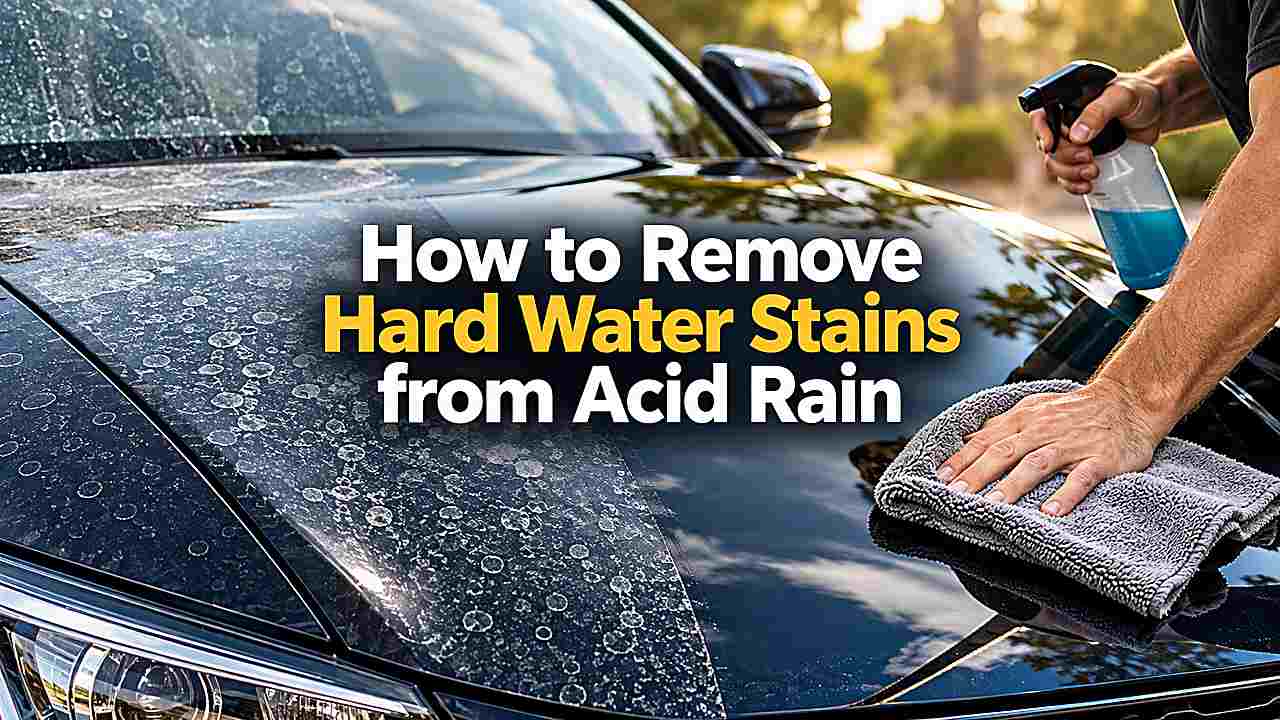
Fresh rain or sprinkler residue can leave minerals and environmental contamination on top of otherwise healthy paint. If the marks change noticeably after washing or a paint-safe acidic water-spot remover, you are dealing mainly with surface deposits. That is why a small test or inspection step should come before a more aggressive method. You get better results when you know what changed after each pass instead of repeating the same process blindly.
That is the easiest stage to correct. You should work early because heat and sun can make deposits bond more firmly and can contribute to clear-coat etching. If your vehicle has previous bodywork, unusual materials or aftermarket protection, mention that before treatment or repair. Those details can change compatibility, labor and the point at which professional help becomes the safer choice.
Etched spots are tiny depressions in the finish
When a mark remains after the contamination itself is gone, the clear coat may have been chemically etched. Acid rain can contribute because pollutants become concentrated as water evaporates. Good lighting and a clean surface make this judgment much easier. Dirt, gloss enhancers and shadows can hide defects or make harmless texture look worse than it really is.
At that point there is nothing left for a cleaner to dissolve. The repair becomes a controlled polishing problem because you are leveling the surrounding clear coat to reduce the visible depression. You should also consider the cost of creating a new problem. A conservative process that leaves a small cosmetic imperfection is often preferable to removing too much clear coat, damaging trim or disturbing a safety-related component.
Wash and decontaminate before you polish
Use a normal wash to remove loose dirt first
Never attack water spots on a dusty panel. Wash the vehicle in shade with a paint-safe shampoo, rinse thoroughly and dry with clean microfiber towels. The practical goal is a stable result, not a dramatic before-and-after created by excessive force. If the recommended method stops producing improvement, reassess rather than escalating automatically.
This prevents grit from being dragged across the finish during later chemical treatment. If the marks are localized, you can still wash the entire surrounding panel so your inspection is not confused by ordinary road film. That is why a small test or inspection step should come before a more aggressive method. You get better results when you know what changed after each pass instead of repeating the same process blindly.
Try a dedicated water-spot remover before abrasives
A purpose-made automotive water-spot remover is designed to dissolve mineral residue more predictably than improvised household acids. Work a small section on cool paint, follow the dwell-time instructions and rinse or neutralize exactly as directed. If your vehicle has previous bodywork, unusual materials or aftermarket protection, mention that before treatment or repair. Those details can change compatibility, labor and the point at which professional help becomes the safer choice.
If the spot disappears, stop there. Repeated chemical applications will not polish away a crater that is already etched into the coating. Good lighting and a clean surface make this judgment much easier. Dirt, gloss enhancers and shadows can hide defects or make harmless texture look worse than it really is.
Escalate carefully when stains remain
Clay only when bonded contamination remains above the surface
Clay can remove some bonded contamination, but it is not the first answer for etched rings. Use plenty of lubricant and the mildest clay that will do the job. You should also consider the cost of creating a new problem. A conservative process that leaves a small cosmetic imperfection is often preferable to removing too much clear coat, damaging trim or disturbing a safety-related component.
On soft or black paint, claying can introduce visible micro-marring. If the surface feels smooth yet the rings remain, you are likely looking at staining or etching rather than something clay can safely shear away. The practical goal is a stable result, not a dramatic before-and-after created by excessive force. If the recommended method stops producing improvement, reassess rather than escalating automatically.
Polish a test area to confirm whether the clear can be corrected
A fine finishing polish is the safest first abrasive step. Work a small test section and inspect under direct light. That is why a small test or inspection step should come before a more aggressive method. You get better results when you know what changed after each pass instead of repeating the same process blindly.
Light etching may improve quickly, while deep marks can require a stronger polish or machine correction. You should not chase every crater to complete disappearance if that would remove excessive clear coat. Improvement is sometimes the more responsible target. If your vehicle has previous bodywork, unusual materials or aftermarket protection, mention that before treatment or repair. Those details can change compatibility, labor and the point at which professional help becomes the safer choice.
Know when the damage is beyond detailing
Severe etching may require professional paint correction
If multiple polishing attempts produce little change, the defects may be deeper than a safe DIY correction can reach. A professional can measure paint thickness and choose a controlled compound and polish combination. Good lighting and a clean surface make this judgment much easier. Dirt, gloss enhancers and shadows can hide defects or make harmless texture look worse than it really is.
On older paint, prior repair or thin clear coat, conservative correction matters. Removing too much clear to eliminate one spot can create a larger durability problem. You should also consider the cost of creating a new problem. A conservative process that leaves a small cosmetic imperfection is often preferable to removing too much clear coat, damaging trim or disturbing a safety-related component.
Peeling or chalky clear coat needs refinishing, not spot removal
If the surface is turning white, flaking or separating, you are no longer dealing with removable water stains. UV and coating failure require refinishing. The practical goal is a stable result, not a dramatic before-and-after created by excessive force. If the recommended method stops producing improvement, reassess rather than escalating automatically.
Chemicals and polishing may temporarily change gloss but cannot replace missing clear coat. Treat that condition as a paint-repair problem rather than an acid-rain-cleaning problem. That is why a small test or inspection step should come before a more aggressive method. You get better results when you know what changed after each pass instead of repeating the same process blindly.
Prevent new spots after correction
Dry water before it bakes onto hot paint
The easiest water spot to remove is the one that never dries. If the car is rained on and then sits in strong sun, drying or rinsing with low-mineral water can reduce spotting. If your vehicle has previous bodywork, unusual materials or aftermarket protection, mention that before treatment or repair. Those details can change compatibility, labor and the point at which professional help becomes the safer choice.
After washing, do not let ordinary tap water evaporate across the panels. A drying aid can improve lubrication and speed. Good lighting and a clean surface make this judgment much easier. Dirt, gloss enhancers and shadows can hide defects or make harmless texture look worse than it really is.
Protection helps but does not make the paint immune
Wax, sealant and ceramic coating can reduce how strongly contamination bonds and can make drying easier. They cannot stop acid rain from landing or guarantee zero etching. You should also consider the cost of creating a new problem. A conservative process that leaves a small cosmetic imperfection is often preferable to removing too much clear coat, damaging trim or disturbing a safety-related component.
Maintain the protection and remove contamination promptly. Your wash routine remains the main defense even on coated paint. The practical goal is a stable result, not a dramatic before-and-after created by excessive force. If the recommended method stops producing improvement, reassess rather than escalating automatically.
Frequently Asked Questions
These questions address the issues that most often come up when you are dealing with how to remove hard water stains from acid rain. They also clarify where a general rule stops being useful and the condition of the specific vehicle, policy, surface or repair has to decide the answer.
Can vinegar remove acid-rain spots from car paint?
Diluted vinegar can dissolve some mineral residue because it is acidic, but concentration and dwell are difficult to control on automotive finishes. A dedicated paint-safe water-spot remover is more predictable. That is why a small test or inspection step should come before a more aggressive method. You get better results when you know what changed after each pass instead of repeating the same process blindly.
If the mark is already etched into clear coat, vinegar will not level the damage. Stop escalating chemical strength once the deposit itself is gone. If your vehicle has previous bodywork, unusual materials or aftermarket protection, mention that before treatment or repair. Those details can change compatibility, labor and the point at which professional help becomes the safer choice.
How can I tell whether a water spot is etched?
Wash and chemically decontaminate a small test area first. If the white or chalky residue disappears but a ring remains visible in reflected light, the clear coat may be etched. Good lighting and a clean surface make this judgment much easier. Dirt, gloss enhancers and shadows can hide defects or make harmless texture look worse than it really is.
A fingernail test is not very useful for shallow defects. A light polish on a test spot is a better diagnostic step. You should also consider the cost of creating a new problem. A conservative process that leaves a small cosmetic imperfection is often preferable to removing too much clear coat, damaging trim or disturbing a safety-related component.
Will clay bar remove acid-rain stains?
Clay can remove bonded material that sits on the paint, but it cannot repair a crater in the clear coat. Use it only when the surface still feels rough after washing and chemical decontamination. The practical goal is a stable result, not a dramatic before-and-after created by excessive force. If the recommended method stops producing improvement, reassess rather than escalating automatically.
Keep lubrication high and pressure low. On soft paint, plan for a finishing polish if clay creates marring. That is why a small test or inspection step should come before a more aggressive method. You get better results when you know what changed after each pass instead of repeating the same process blindly.
Can ceramic coating stop acid-rain damage?
A coating can make washing and drying easier and may reduce how long contaminants cling to the paint, but it is not an acid-proof shield. Acidic or mineral-rich water can still spot a coated vehicle. If your vehicle has previous bodywork, unusual materials or aftermarket protection, mention that before treatment or repair. Those details can change compatibility, labor and the point at which professional help becomes the safer choice.
Maintenance washing and prompt drying remain important. Follow the coating manufacturer’s decontamination guidance. Good lighting and a clean surface make this judgment much easier. Dirt, gloss enhancers and shadows can hide defects or make harmless texture look worse than it really is.
When should I repaint instead of polish?
Repainting is appropriate when clear coat is peeling, severely oxidized, too thin for further correction or damaged beyond safe polishing depth. A paint professional can inspect the finish and measure thickness. You should also consider the cost of creating a new problem. A conservative process that leaves a small cosmetic imperfection is often preferable to removing too much clear coat, damaging trim or disturbing a safety-related component.
Deep isolated etching may be tolerable even if it cannot be fully removed. Preserving sound factory paint is usually preferable to unnecessary refinishing. The practical goal is a stable result, not a dramatic before-and-after created by excessive force. If the recommended method stops producing improvement, reassess rather than escalating automatically.
Conclusion
You can remove fresh mineral and acid-rain residue with a proper wash and paint-safe water-spot remover, but etched marks are damage inside the clear coat and usually need polishing rather than stronger chemicals. The important part is applying that answer to the actual condition in front of you rather than forcing a universal rule onto every vehicle.
Your next step should be the lowest-risk action that gives you better information: inspect carefully, test a small area, verify the policy or product instructions, compare current market evidence or obtain a qualified professional assessment. That keeps the decision practical and protects the value of the vehicle.