If you are researching how to spot hidden hail damage before buying a car, the quickest answer is rarely the whole answer. The condition of the vehicle, the material involved and what you plan to do next can change the safest and most economical approach.
This guide focuses on the decisions that matter in real ownership rather than a one-size-fits-all shortcut. You will see what to inspect first, what can reasonably be handled yourself and where a professional estimate or inspection becomes the smarter move.
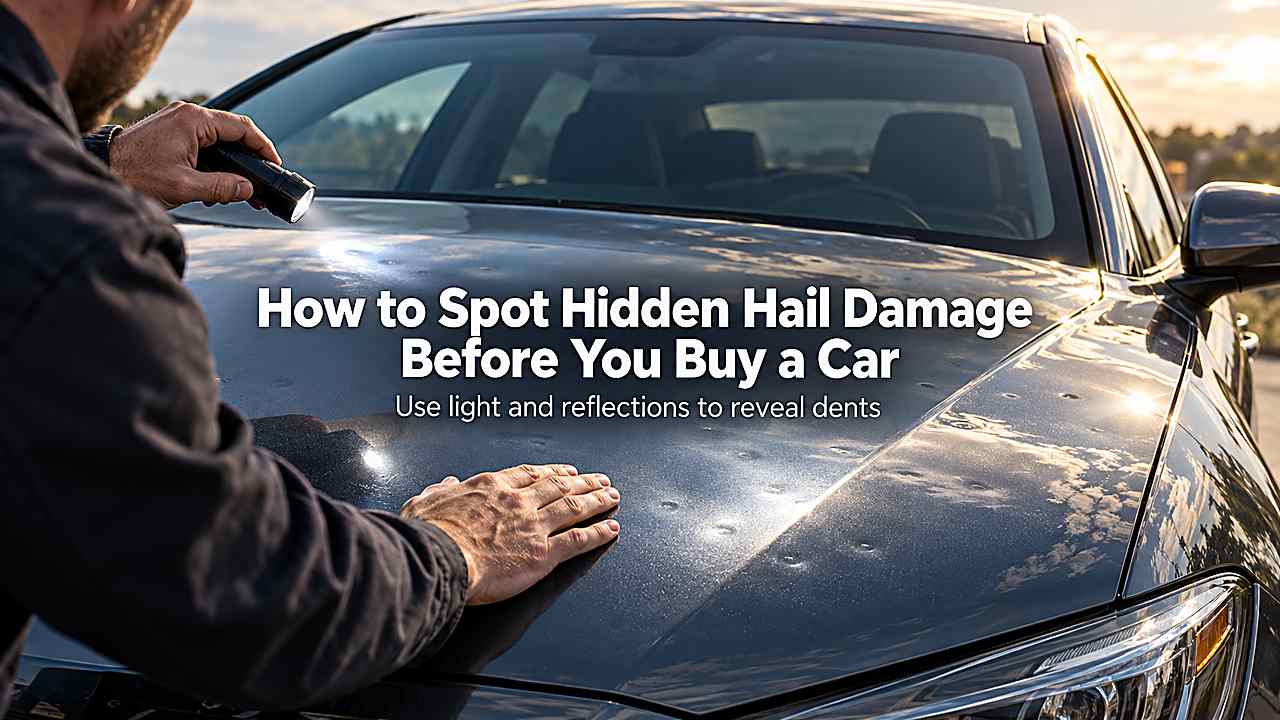
To spot hidden hail damage, inspect the car in low-angle reflected light, check roof rails and horizontal panels, look for cracked glass or replaced trim, compare paint texture and review repair history. A clean vehicle-history report does not prove the car never had hail damage.
Use lighting that makes shallow dents visible
Direct overhead light can hide hail dents
Small lows disappear on a cloudy lot or under flat showroom lighting. Stand at a shallow angle to the hood, roof and trunk so straight building lines or fluorescent reflections flow across the paint. That is why a small test or inspection step should come before a more aggressive method. You get better results when you know what changed after each pass instead of repeating the same process blindly.
A dent bends those lines. Moving your head slowly is more effective than staring straight at the panel. If your vehicle has previous bodywork, unusual materials or aftermarket protection, mention that before treatment or repair. Those details can change compatibility, labor and the point at which professional help becomes the safer choice.
Wet or freshly polished paint can disguise subtle texture
Dealers may detail a vehicle before sale, and gloss can make you focus on shine instead of contour. Inspect after the car is dry and look from several directions. Good lighting and a clean surface make this judgment much easier. Dirt, gloss enhancers and shadows can hide defects or make harmless texture look worse than it really is.
Black and dark colors can make reflections easier to read, while white paint may need a stronger line reflection. Take your time around the roof because buyers often ignore it. You should also consider the cost of creating a new problem. A conservative process that leaves a small cosmetic imperfection is often preferable to removing too much clear coat, damaging trim or disturbing a safety-related component.
Check the panels that hail hits hardest
Start with hood, roof, trunk and upper door surfaces
Horizontal and upward-facing panels receive the most direct hail. Roof rails and the top of quarter panels can show sharper damage than the center of the roof. The practical goal is a stable result, not a dramatic before-and-after created by excessive force. If the recommended method stops producing improvement, reassess rather than escalating automatically.
On trucks, inspect the top bed rails and hood carefully. A car with a replaced hood but original dented roof may have had a partial repair. That is why a small test or inspection step should come before a more aggressive method. You get better results when you know what changed after each pass instead of repeating the same process blindly.
Look along body lines and edges for residual distortion
PDR can restore many dents extremely well, but difficult body lines may retain slight waves if the repair was rushed. Uneven reflections beside a crisp character line can indicate prior damage or repair. If your vehicle has previous bodywork, unusual materials or aftermarket protection, mention that before treatment or repair. Those details can change compatibility, labor and the point at which professional help becomes the safer choice.
That does not automatically make the car a bad purchase. It tells you to inspect more closely and ask for documentation. Good lighting and a clean surface make this judgment much easier. Dirt, gloss enhancers and shadows can hide defects or make harmless texture look worse than it really is.
Look for evidence of conventional hail repair
Paint texture and color mismatch can reveal repainted panels
Compare orange peel, gloss and metallic orientation between adjacent panels. Overspray on rubber, paint edges under trim or masking lines around jambs can indicate refinishing. You should also consider the cost of creating a new problem. A conservative process that leaves a small cosmetic imperfection is often preferable to removing too much clear coat, damaging trim or disturbing a safety-related component.
A paint-depth gauge can help identify thicker repaired areas. Factory variation exists, so use several clues rather than one reading. The practical goal is a stable result, not a dramatic before-and-after created by excessive force. If the recommended method stops producing improvement, reassess rather than escalating automatically.
Replaced glass and trim can support the hail history
Check date codes on windshield and side glass where available. Newer glass on an older car can have many explanations, but combined with roof dents it becomes relevant. That is why a small test or inspection step should come before a more aggressive method. You get better results when you know what changed after each pass instead of repeating the same process blindly.
Roof moldings, antenna bases and trim clips may also show replacement. Ask why those items were changed rather than assuming the worst. If your vehicle has previous bodywork, unusual materials or aftermarket protection, mention that before treatment or repair. Those details can change compatibility, labor and the point at which professional help becomes the safer choice.
Do not rely on a clean history report alone
CARFAX itself says not every accident or damage event is reported
Private repairs, cash PDR and events not submitted by a data source may never appear. A clean report is useful information but not a physical inspection. Good lighting and a clean surface make this judgment much easier. Dirt, gloss enhancers and shadows can hide defects or make harmless texture look worse than it really is.
You should combine history records with close body inspection and a pre-purchase evaluation. The same principle applies to other history databases. You should also consider the cost of creating a new problem. A conservative process that leaves a small cosmetic imperfection is often preferable to removing too much clear coat, damaging trim or disturbing a safety-related component.
A hail-damaged car can retain a clean title
Title branding usually relates to total loss and state law, not every cosmetic repair. A vehicle can have thousands of dollars in hail repairs and still carry a normal title if it was repaired rather than totaled. The practical goal is a stable result, not a dramatic before-and-after created by excessive force. If the recommended method stops producing improvement, reassess rather than escalating automatically.
Clean title does not mean original paint or zero prior damage. Ask the seller directly about storm repairs. That is why a small test or inspection step should come before a more aggressive method. You get better results when you know what changed after each pass instead of repeating the same process blindly.
Get a professional inspection when the car is valuable
A PDR or body expert can identify repair patterns quickly
Someone who works under reflection lighting every day can spot remaining dents, overpulls and panel waves that a buyer may miss. A paint-depth gauge and trim inspection add evidence. If your vehicle has previous bodywork, unusual materials or aftermarket protection, mention that before treatment or repair. Those details can change compatibility, labor and the point at which professional help becomes the safer choice.
The cost of an inspection is small relative to buying a late-model vehicle with undisclosed repair. Good lighting and a clean surface make this judgment much easier. Dirt, gloss enhancers and shadows can hide defects or make harmless texture look worse than it really is.
A mechanic should still inspect the rest of the vehicle
Hail is only one risk in a used-car purchase. Mechanical condition, corrosion, tires, brakes and diagnostic codes matter too. You should also consider the cost of creating a new problem. A conservative process that leaves a small cosmetic imperfection is often preferable to removing too much clear coat, damaging trim or disturbing a safety-related component.
If the vehicle also experienced flooding during the storm, hidden electrical and interior issues can be more serious than dents. Use specialists for the questions they are best equipped to answer. The practical goal is a stable result, not a dramatic before-and-after created by excessive force. If the recommended method stops producing improvement, reassess rather than escalating automatically.
Use findings to set price and expectations
Cosmetic history does not automatically make the car unacceptable
A professionally repaired hail car can be reliable and attractive. The value should reflect any remaining defects, repainting and market perception. That is why a small test or inspection step should come before a more aggressive method. You get better results when you know what changed after each pass instead of repeating the same process blindly.
Ask for invoices and warranties on prior repair. A transparent seller is easier to evaluate than one who denies obvious evidence. If your vehicle has previous bodywork, unusual materials or aftermarket protection, mention that before treatment or repair. Those details can change compatibility, labor and the point at which professional help becomes the safer choice.
Walk away when evidence conflicts with the seller’s story
If the seller claims original paint but you find overspray, thick paint and replaced panels, treat that inconsistency seriously. The issue becomes trust as much as hail. Good lighting and a clean surface make this judgment much easier. Dirt, gloss enhancers and shadows can hide defects or make harmless texture look worse than it really is.
You can request records or an independent inspection, but you do not have to solve every mystery. There are always other used cars. You should also consider the cost of creating a new problem. A conservative process that leaves a small cosmetic imperfection is often preferable to removing too much clear coat, damaging trim or disturbing a safety-related component.
Frequently Asked Questions
These questions address the issues that most often come up when you are dealing with how to spot hidden hail damage before buying a car. They also clarify where a general rule stops being useful and the condition of the specific vehicle, policy, surface or repair has to decide the answer.
Can PDR be completely invisible when inspecting a used car?
High-quality PDR can be extremely difficult to detect because it preserves factory paint. That is not inherently bad if the panel was restored correctly. The practical goal is a stable result, not a dramatic before-and-after created by excessive force. If the recommended method stops producing improvement, reassess rather than escalating automatically.
You may only discover the repair from invoices or history. Focus on current panel quality and whether there was any structural or paint damage beyond the dents. That is why a small test or inspection step should come before a more aggressive method. You get better results when you know what changed after each pass instead of repeating the same process blindly.
Will CARFAX always show hail damage?
No. CARFAX states that not every damage event is reported to it. If your vehicle has previous bodywork, unusual materials or aftermarket protection, mention that before treatment or repair. Those details can change compatibility, labor and the point at which professional help becomes the safer choice.
A private cash repair may leave no database entry. Use the report as one source, then inspect the vehicle physically. A clean report should never replace a pre-purchase inspection. Good lighting and a clean surface make this judgment much easier. Dirt, gloss enhancers and shadows can hide defects or make harmless texture look worse than it really is.
Does a clean title mean there was no hail claim?
No. Many hail claims are repaired without a total-loss declaration, so the title remains normal. You should also consider the cost of creating a new problem. A conservative process that leaves a small cosmetic imperfection is often preferable to removing too much clear coat, damaging trim or disturbing a safety-related component.
Title branding varies by state and typically becomes relevant after total loss or salvage processing. Ask for repair records. Clean title is not the same as damage-free history. The practical goal is a stable result, not a dramatic before-and-after created by excessive force. If the recommended method stops producing improvement, reassess rather than escalating automatically.
How can a paint-depth gauge help find hail repair?
Conventional body repair often adds primer, filler and new paint, producing higher readings than untouched factory panels. PDR normally does not change paint thickness. That is why a small test or inspection step should come before a more aggressive method. You get better results when you know what changed after each pass instead of repeating the same process blindly.
Compare several readings across adjacent panels and understand that factory thickness varies. A gauge is evidence, not a stand-alone verdict. If your vehicle has previous bodywork, unusual materials or aftermarket protection, mention that before treatment or repair. Those details can change compatibility, labor and the point at which professional help becomes the safer choice.
Should I buy a hail-repaired car at a discount?
It can be a reasonable purchase if the repair quality is high, the inspection is clean and the price reflects history and any remaining cosmetic issues. There is no universal discount percentage. Good lighting and a clean surface make this judgment much easier. Dirt, gloss enhancers and shadows can hide defects or make harmless texture look worse than it really is.
Market demand, vehicle age and documentation matter. Compare with similar undamaged cars in your area. You should also consider the cost of creating a new problem. A conservative process that leaves a small cosmetic imperfection is often preferable to removing too much clear coat, damaging trim or disturbing a safety-related component.
Conclusion
To spot hidden hail damage, inspect the car in low-angle reflected light, check roof rails and horizontal panels, look for cracked glass or replaced trim, compare paint texture and review repair history. A clean vehicle-history report does not prove the car never had hail damage. The important part is applying that answer to the actual condition in front of you rather than forcing a universal rule onto every vehicle.
Your next step should be the lowest-risk action that gives you better information: inspect carefully, test a small area, verify the policy or product instructions, compare current market evidence or obtain a qualified professional assessment. That keeps the decision practical and protects the value of the vehicle.