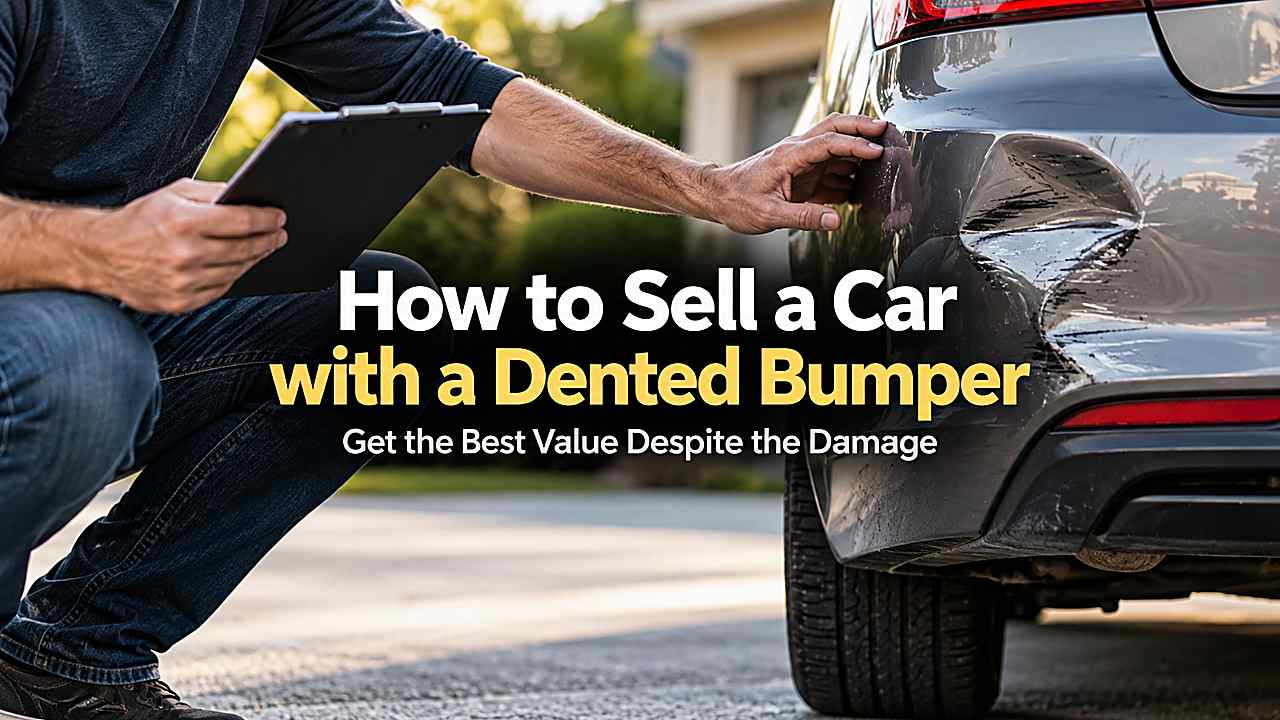
You can sell a car with a dented bumper as-is when the damage is cosmetic. Get a repair estimate, verify that sensors, lights and bumper mounting are unaffected, disclose the dent clearly and price the car against comparable vehicles. Repair first only when the fix is inexpensive or the damage affects safety, attachment or buyer confidence.
That answer is deliberately narrower than a blanket rule. With how to sell a car with a dented bumper, the car’s actual history and condition matter more than a viral tip, a seller’s confidence or one online valuation.
You can sell a car with a dented bumper as-is when the damage is cosmetic. Get a repair estimate, verify that sensors, lights and bumper mounting are unaffected, disclose the dent clearly and price the car against comparable vehicles. Repair first only when the fix is inexpensive or the damage affects safety, attachment or buyer confidence.
Verify the damage is cosmetic
Bumper attachment. Sensors. Lights. Panel gaps.
Reinforcement may be hidden. Warnings or looseness need inspection. If the seller can support the explanation with records and the car behaves consistently with the story, the finding may be harmless. When the explanation changes or inspection access is restricted, give the same clue more weight.
A test section, comparison panel or written quote is more useful than a confident guess. Repeatable evidence protects you from both unnecessary fear and an expensive assumption.
Get one real repair quote before deciding
Plastic reshaping versus paint and replacement. Quote gives negotiation context.
Do not assume full retail quote equals value loss. A test section, comparison panel or written quote is more useful than a confident guess. Repeatable evidence protects you from both unnecessary fear and an expensive assumption.
Repair when economics are obvious
Low-cost paint-intact reshaping can help photos. Cracked paint or torn plastic can be expensive. Compare repair with sale-price gain. Do not let a highly visible cosmetic issue distract you from ownership, mechanical and safety checks. The biggest repair on a used car is often not the one you can see from ten feet away.
What the buyer should see
Present the condition clearly in photos and description so the buyer can decide whether the car fits before traveling to see it. Honest presentation reduces wasted appointments and makes the eventual negotiation less adversarial.
Photograph and disclose the dent
Full-car image plus close-up. State what you know. Do not claim no structural damage without verification. Clear disclosure filters buyers. Keep the transaction numbers separate whenever possible. Purchase price, trade value, financing, repair cost and taxes are easier to judge when one figure is not hiding another.
What the buyer should see
Present the condition clearly in photos and description so the buyer can decide whether the car fits before traveling to see it. Honest presentation reduces wasted appointments and makes the eventual negotiation less adversarial.
Price the whole vehicle
Trim mileage title maintenance tires and overall cosmetics. Newer premium cars are more condition-sensitive. Leave modest negotiation room. When the issue crosses into structure, airbags, title status, flood exposure or expensive diagnostics, pay for a specialist. The inspection fee is small compared with inheriting a problem you cannot verify yourself.
What the buyer should see
Present the condition clearly in photos and description so the buyer can decide whether the car fits before traveling to see it. Honest presentation reduces wasted appointments and makes the eventual negotiation less adversarial.
Compare private sale with trade-in
Dealers have reconditioning channels. Private buyers see retail repair cost.
Get offers before spending on bodywork. That distinction matters because a used-car decision is rarely controlled by one clue. You get a stronger answer when paperwork, physical condition and independent evidence all point in the same direction.
Use records to keep one dent in perspective
Maintenance history. Clean interior. Good tires.
Honest ownership story. Strong documentation can outweigh one cosmetic flaw. Use the result as a reason for the next check, not as permission to jump straight to a conclusion. A good inspection narrows uncertainty step by step and stops when the evidence becomes too expensive or risky to ignore.
Know when the cheapest answer is to walk away
Inspection is successful when it prevents a bad purchase. You do not have to prove fraud or diagnose the exact failure to decide that a vehicle carries too much uncertainty. If the seller blocks verification, the title trail is unclear or the repair risk exceeds the discount, another car is a rational next step.
Use the result as a reason for the next check, not as permission to jump straight to a conclusion. A good inspection narrows uncertainty step by step and stops when the evidence becomes too expensive or risky to ignore.
Design the Sale Around Buyer Confidence
This section turns the earlier principles into a practical decision you can use on the actual vehicle rather than treating the topic as an abstract rule.
Show the condition before the buyer asks
Use cosmetic-versus-functional damage to decide what must appear in the listing and photos. Buyers become suspicious when an obvious defect is absent from the advertisement and discovered only in person. Clear disclosure filters inquiries but improves the quality of the buyers who remain.
Keep the conclusion proportional to the evidence. If the finding is uncertain but inexpensive to verify, verify it. If it is uncertain and potentially expensive, do not let the seller make that uncertainty your financial responsibility.
Support the asking price with evidence
Use repair quote and net sale value to explain why the car is priced where it is. A repair quote, service history or strong comparable listing is more persuasive than saying the price is fair. You do not need to overwhelm the buyer with paperwork, but the important claims should be easy to verify.
Keep the conclusion proportional to the evidence. If the finding is uncertain but inexpensive to verify, verify it. If it is uncertain and potentially expensive, do not let the seller make that uncertainty your financial responsibility.
Make the transaction easy to finish
Prepare clear disclosure in photos and listing before the first serious viewing. When the car, records, title status and known defects are organized, a buyer can move from inspection to decision without waiting for missing information. Speed comes from removing uncertainty, not from pressuring the buyer.
Keep the conclusion proportional to the evidence. If the finding is uncertain but inexpensive to verify, verify it. If it is uncertain and potentially expensive, do not let the seller make that uncertainty your financial responsibility.
Prepare for the Test Drive and Inspection
This section turns the earlier principles into a practical decision you can use on the actual vehicle rather than treating the topic as an abstract rule.
Let the buyer verify the story
A serious buyer may want a cold start, OBD2 scan or independent inspection. Set reasonable safety rules, but do not treat due diligence as hostility. Verification supports a clean transaction and reduces post-sale disputes.
Keep the conclusion proportional to the evidence. If the finding is uncertain but inexpensive to verify, verify it. If it is uncertain and potentially expensive, do not let the seller make that uncertainty your financial responsibility.
Know your lowest acceptable net price
Decide the number after accounting for any repair you already paid for, listing fees and your alternatives. During negotiation, separate emotional attachment from the market. If the buyer’s number is below your floor, you can simply continue marketing the car.
Keep the conclusion proportional to the evidence. If the finding is uncertain but inexpensive to verify, verify it. If it is uncertain and potentially expensive, do not let the seller make that uncertainty your financial responsibility.
Three Ways to Handle the Dent Before You Publish the Ad
Start with verified cosmetic condition. This is the part of the decision that should be known before you spend money or make a final offer. Put the evidence in writing and compare it with at least one realistic alternative. When buyers skip this step, they often let the visible condition or the seller’s urgency set the number for them. A better approach is to establish what the car or transaction would be worth if this issue did not exist, then measure the actual gap instead of guessing.
Next, verify repair quote. A quoted number, diagnostic result or document is useful only when it applies to the exact vehicle and the exact problem. Ask what is included, what is excluded and what could change after disassembly or verification. If the range is wide, use the conservative end in your budget. That protects you from a deal that looks profitable or affordable only because every uncertain item was calculated at the best possible outcome.
Finally, consider buyer disclosure. Used-car decisions do not end on the day you sign or sell. Insurance, future trade value, buyer confidence, repeat repairs and paperwork can continue affecting the car after the immediate problem is solved. If the transaction still makes sense after you include that future friction, you have a much stronger decision. If the deal only works when every future buyer ignores the same concern, the current discount is probably too small.
A Final Sanity Check Before You Commit
Before you commit on how to sell a car with a dented bumper, compare the decision with one ordinary alternative that does not have the same complication. This prevents a low asking price, polished presentation or successful negotiation from becoming the only reason you continue. Write down the additional cost you expect in the first month and the uncertainty that could still remain after purchase, repair or trade. If a simpler alternative costs only a little more but removes a large title, structural, diagnostic or resale risk, the extra purchase price can be the cheaper decision over the full ownership period.
Then ask what evidence would make you change your mind in either direction. A good inspection process is falsifiable: a clean independent report, matching records or a verified repair can reduce concern, while a contradictory title event, failed diagnostic test or seller refusal can increase it. Do not keep moving the standard simply because you have already invested time in the car. The money already spent on a history report or inspection is a sunk cost, and its purpose was to help you avoid a much larger mistake. That discipline is especially important in used-car transactions because urgency and scarcity can make a questionable vehicle feel more attractive than it really is.
Frequently Asked Questions
The main process above handles most situations. These questions address the exceptions, limitations and negotiation issues that tend to show up with how to sell a car with a dented bumper.
Do you have to repair a dented bumper before selling?
The exact answer depends on the vehicle, its history and the evidence available. Use the clue as part of a pattern rather than treating one observation as absolute proof. Do not let a highly visible cosmetic issue distract you from ownership, mechanical and safety checks. The biggest repair on a used car is often not the one you can see from ten feet away.
If this point could materially change price, safety, title status or a major repair decision, verify it before the transaction rather than using the FAQ as a substitute for the specific vehicle evidence.
How much should you discount for a bumper dent?
If the point could change safety, legal ownership or a major repair bill, verify it before you buy or spend money. A qualified inspection is more valuable than a stronger opinion when the evidence is incomplete. Keep the transaction numbers separate whenever possible. Purchase price, trade value, financing, repair cost and taxes are easier to judge when one figure is not hiding another.
If this point could materially change price, safety, title status or a major repair decision, verify it before the transaction rather than using the FAQ as a substitute for the specific vehicle evidence.
Can a bumper dent hide structural damage?
Compare the finding with records, similar vehicles and the seller’s explanation. Consistency across several sources is what gives you confidence. When the issue crosses into structure, airbags, title status, flood exposure or expensive diagnostics, pay for a specialist. The inspection fee is small compared with inheriting a problem you cannot verify yourself.
If this point could materially change price, safety, title status or a major repair decision, verify it before the transaction rather than using the FAQ as a substitute for the specific vehicle evidence.
Should you fix parking sensors before selling?
Do not force the deal to work simply because the asking price is attractive. The right purchase still has to make sense after inspection, paperwork and realistic repair cost. That distinction matters because a used-car decision is rarely controlled by one clue. You get a stronger answer when paperwork, physical condition and independent evidence all point in the same direction.
If this point could materially change price, safety, title status or a major repair decision, verify it before the transaction rather than using the FAQ as a substitute for the specific vehicle evidence.
Is it better to trade in a car with a dented bumper?
Document what you see with photos or notes so you can compare vehicles later and negotiate from facts. Memory gets unreliable after several test drives and dealer conversations. Use the result as a reason for the next check, not as permission to jump straight to a conclusion. A good inspection narrows uncertainty step by step and stops when the evidence becomes too expensive or risky to ignore.
If this point could materially change price, safety, title status or a major repair decision, verify it before the transaction rather than using the FAQ as a substitute for the specific vehicle evidence.
Conclusion
For how to sell a car with a dented bumper, facts beat pressure. Keep the transaction numbers clear, confirm the history and condition, and be willing to walk away when the car cannot support the story being sold with it.
If the vehicle still makes sense after those checks, you can move forward or negotiate with a clearer number. If it does not, walking away is a successful inspection rather than a missed deal.