If you are researching how to prepare your car for hurricane season, the quickest answer is rarely the whole answer. The condition of the vehicle, the material involved and what you plan to do next can change the safest and most economical approach.
This guide focuses on the decisions that matter in real ownership rather than a one-size-fits-all shortcut. You will see what to inspect first, what can reasonably be handled yourself and where a professional estimate or inspection becomes the smarter move.
Prepare your car for hurricane season before a storm is named: maintain it, keep fuel and emergency supplies ready, review comprehensive coverage, protect documents and know where you will move the vehicle if flooding, wind or evacuation threatens.
Make the vehicle evacuation-ready before hurricane season
Catch maintenance problems before roads become crowded
Check tires, battery condition, fluids, cooling system, lights, wipers and brakes before the season peaks. A marginal battery or bald tire becomes a much bigger problem during heavy rain and long evacuation traffic. That is why a small test or inspection step should come before a more aggressive method. You get better results when you know what changed after each pass instead of repeating the same process blindly.
You do not need to replace everything preemptively, but you should know the car can handle hours of stop-and-go travel. Keep routine service current rather than waiting for a warning cone to appear. If your vehicle has previous bodywork, unusual materials or aftermarket protection, mention that before treatment or repair. Those details can change compatibility, labor and the point at which professional help becomes the safer choice.
Keep the tank from falling below a practical reserve
Fuel stations can develop long lines or lose power as a storm approaches. NOAA preparedness guidance emphasizes early planning rather than last-minute rushing. Good lighting and a clean surface make this judgment much easier. Dirt, gloss enhancers and shadows can hide defects or make harmless texture look worse than it really is.
Keeping at least a reasonable reserve gives you flexibility to evacuate without immediately searching for fuel. Electric-vehicle owners should maintain charge and identify chargers along more than one route. You should also consider the cost of creating a new problem. A conservative process that leaves a small cosmetic imperfection is often preferable to removing too much clear coat, damaging trim or disturbing a safety-related component.
Build a vehicle emergency kit that matches storm travel
Include water, food, medications and charging options
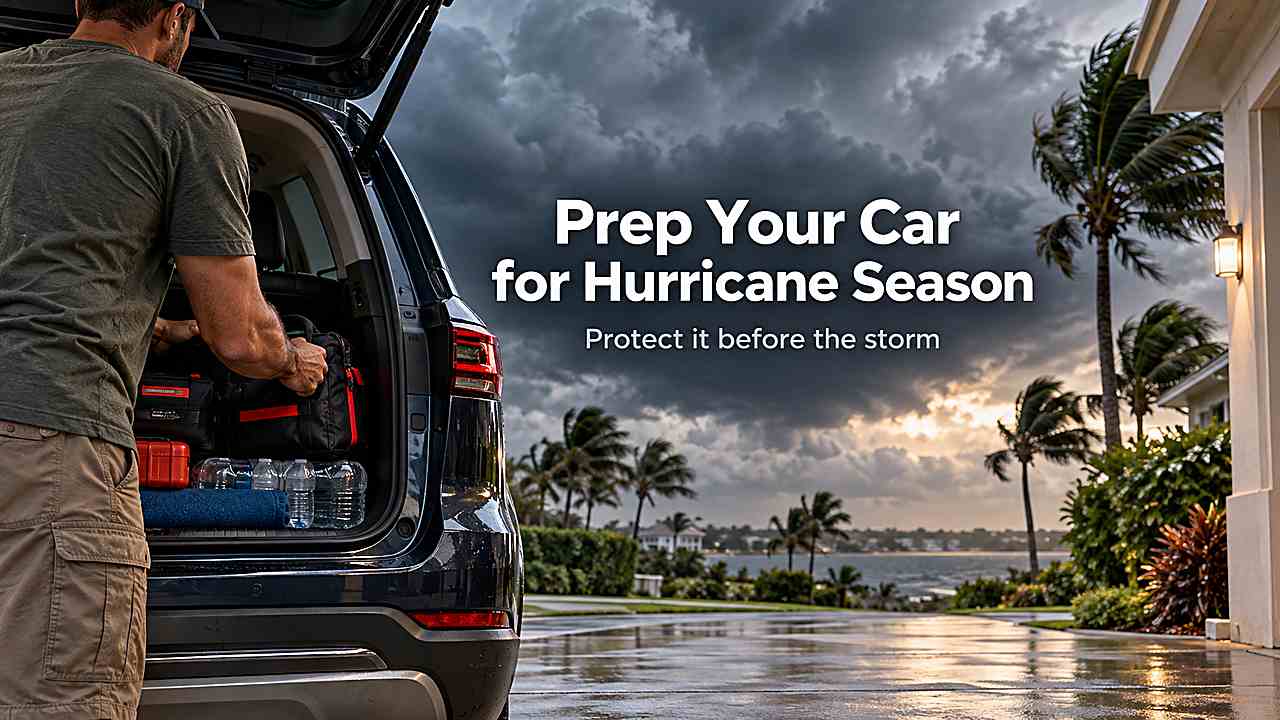
A basic car kit should support you if traffic stalls or your destination loses power. Pack drinking water, shelf-stable food, essential medications, flashlights, batteries, phone cables and a power bank. The practical goal is a stable result, not a dramatic before-and-after created by excessive force. If the recommended method stops producing improvement, reassess rather than escalating automatically.
Include a first-aid kit and basic hygiene supplies. Keep the kit light enough to move if you must leave the car. That is why a small test or inspection step should come before a more aggressive method. You get better results when you know what changed after each pass instead of repeating the same process blindly.
Add automotive items for rain and road debris
A tire inflator, pressure gauge, reflective triangles, work gloves and basic hand tools can help with minor problems. Carry rain gear rather than planning to stand outside under an umbrella in strong wind. If your vehicle has previous bodywork, unusual materials or aftermarket protection, mention that before treatment or repair. Those details can change compatibility, labor and the point at which professional help becomes the safer choice.
A compact jump pack is useful if maintained and charged. Do not rely on complicated repairs during dangerous weather. Good lighting and a clean surface make this judgment much easier. Dirt, gloss enhancers and shadows can hide defects or make harmless texture look worse than it really is.
Protect records, insurance and ownership information
Review comprehensive coverage before a storm is imminent
Comprehensive coverage generally handles weather losses such as wind, flooding and falling objects, subject to policy terms and deductible. Insurers may restrict adding coverage when a major storm is approaching, so review your declarations well in advance. You should also consider the cost of creating a new problem. A conservative process that leaves a small cosmetic imperfection is often preferable to removing too much clear coat, damaging trim or disturbing a safety-related component.
Keep insurer contact information and your policy number accessible. Photograph the vehicle before the storm to document pre-loss condition. The practical goal is a stable result, not a dramatic before-and-after created by excessive force. If the recommended method stops producing improvement, reassess rather than escalating automatically.
Store essential documents where water cannot destroy them
Registration, insurance cards and evacuation information should be in a waterproof pouch or backed up digitally. Do not leave the only copy of an important document in a glove box that could flood. That is why a small test or inspection step should come before a more aggressive method. You get better results when you know what changed after each pass instead of repeating the same process blindly.
Save photos of the VIN plate, license plate and current odometer. These records simplify a claim if the vehicle is displaced or damaged. If your vehicle has previous bodywork, unusual materials or aftermarket protection, mention that before treatment or repair. Those details can change compatibility, labor and the point at which professional help becomes the safer choice.
Choose parking based on both wind and water
High ground is more important than a convenient low parking spot
Floodwater can destroy electronics, interiors and powertrain components long before it reaches the roof. Move the car away from low-lying streets, drainage channels and underground garages if storm surge or flash flooding is possible. Good lighting and a clean surface make this judgment much easier. Dirt, gloss enhancers and shadows can hide defects or make harmless texture look worse than it really is.
Never drive into floodwater to save the vehicle. Once water is moving across a road, personal safety comes first. You should also consider the cost of creating a new problem. A conservative process that leaves a small cosmetic imperfection is often preferable to removing too much clear coat, damaging trim or disturbing a safety-related component.
Avoid trees, construction debris and weak structures
A covered garage is useful only if it is structurally appropriate and not flood-prone. Outdoor parking should avoid large trees, sign structures and loose objects that can become projectiles. The practical goal is a stable result, not a dramatic before-and-after created by excessive force. If the recommended method stops producing improvement, reassess rather than escalating automatically.
A solid elevated parking structure can be excellent if local authorities allow it and it is outside surge risk. Move early, not during peak winds. That is why a small test or inspection step should come before a more aggressive method. You get better results when you know what changed after each pass instead of repeating the same process blindly.
Prepare for evacuation without overloading the vehicle
Know at least two routes and your destination
Official evacuation routes can become congested. Review local emergency information and identify alternate roads before the storm. If your vehicle has previous bodywork, unusual materials or aftermarket protection, mention that before treatment or repair. Those details can change compatibility, labor and the point at which professional help becomes the safer choice.
Download offline maps because cell networks can be overloaded. Tell someone where you plan to go. Do not delay a mandatory evacuation to finish detailing or securing the car. Good lighting and a clean surface make this judgment much easier. Dirt, gloss enhancers and shadows can hide defects or make harmless texture look worse than it really is.
Secure cargo so sudden braking does not turn supplies into hazards
Heavy water containers, tools and fuel cans can become dangerous if loose inside the cabin. Store weight low and tie it down. You should also consider the cost of creating a new problem. A conservative process that leaves a small cosmetic imperfection is often preferable to removing too much clear coat, damaging trim or disturbing a safety-related component.
Never carry gasoline in an unsafe container or passenger area. Leave enough visibility and rear-seat space for people or pets who may need to travel with you. The practical goal is a stable result, not a dramatic before-and-after created by excessive force. If the recommended method stops producing improvement, reassess rather than escalating automatically.
After the storm, inspect before you drive
Look for flood exposure, glass damage and debris under the car
If water reached the interior or engine intake, do not simply start the vehicle. Flood exposure can create electrical and mechanical damage that worsens when energized. That is why a small test or inspection step should come before a more aggressive method. You get better results when you know what changed after each pass instead of repeating the same process blindly.
Check tires for punctures, fluid leaks and debris. If the car was submerged or water level is uncertain, have it inspected or towed. If your vehicle has previous bodywork, unusual materials or aftermarket protection, mention that before treatment or repair. Those details can change compatibility, labor and the point at which professional help becomes the safer choice.
Photograph storm damage before cleanup
Insurance documentation is easier when you have clear photos of dents, broken glass, water lines and fallen debris. Prevent further damage where safe, but do not throw away parts or begin major repairs before understanding claim requirements. Good lighting and a clean surface make this judgment much easier. Dirt, gloss enhancers and shadows can hide defects or make harmless texture look worse than it really is.
Keep receipts for emergency towing or protective measures. Your insurer can explain the next steps. You should also consider the cost of creating a new problem. A conservative process that leaves a small cosmetic imperfection is often preferable to removing too much clear coat, damaging trim or disturbing a safety-related component.
Frequently Asked Questions
These questions address the issues that most often come up when you are dealing with how to prepare your car for hurricane season. They also clarify where a general rule stops being useful and the condition of the specific vehicle, policy, surface or repair has to decide the answer.
Should I fill my gas tank before a hurricane?
Keeping a healthy fuel reserve is sensible because stations may have long lines, supply interruptions or power outages. You do not need to hoard fuel or store unsafe containers. The practical goal is a stable result, not a dramatic before-and-after created by excessive force. If the recommended method stops producing improvement, reassess rather than escalating automatically.
Fill early enough that you are not competing with last-minute demand. EV owners should similarly keep a strong charge and know backup charging locations. That is why a small test or inspection step should come before a more aggressive method. You get better results when you know what changed after each pass instead of repeating the same process blindly.
Does car insurance cover hurricane flood damage?
Comprehensive auto coverage generally covers flooding and storm-related damage, subject to the policy’s terms and deductible. Liability-only coverage does not pay for damage to your own vehicle. If your vehicle has previous bodywork, unusual materials or aftermarket protection, mention that before treatment or repair. Those details can change compatibility, labor and the point at which professional help becomes the safer choice.
Coverage must normally be in force before the loss occurs. Review your policy well before a storm because binding restrictions can apply during imminent events. Good lighting and a clean surface make this judgment much easier. Dirt, gloss enhancers and shadows can hide defects or make harmless texture look worse than it really is.
Is a parking garage safe during a hurricane?
An elevated, structurally sound garage outside flood and storm-surge zones can protect a vehicle from debris and wind. Underground or low-level garages can be dangerous if water enters. You should also consider the cost of creating a new problem. A conservative process that leaves a small cosmetic imperfection is often preferable to removing too much clear coat, damaging trim or disturbing a safety-related component.
Local emergency guidance should take priority. Never enter a closed or unsafe structure during peak storm conditions just to retrieve a car. The practical goal is a stable result, not a dramatic before-and-after created by excessive force. If the recommended method stops producing improvement, reassess rather than escalating automatically.
Should I cover my car outside during a hurricane?
A loose fabric cover can become a sail or flap against paint in high wind. It provides little protection from major debris. That is why a small test or inspection step should come before a more aggressive method. You get better results when you know what changed after each pass instead of repeating the same process blindly.
Solid shelter and location choice matter far more. If you use any cover before lower-level weather, secure it according to the manufacturer and remove it if local guidance warns against loose outdoor items. If your vehicle has previous bodywork, unusual materials or aftermarket protection, mention that before treatment or repair. Those details can change compatibility, labor and the point at which professional help becomes the safer choice.
What should I do if floodwater reached the floorboards?
Do not assume the car is safe because the engine still turns over. Water can reach wiring, restraint modules, connectors and seat components. Good lighting and a clean surface make this judgment much easier. Dirt, gloss enhancers and shadows can hide defects or make harmless texture look worse than it really is.
Document the water line and contact your insurer or a qualified repair facility. Starting or repeatedly cycling electronics can make some damage worse. You should also consider the cost of creating a new problem. A conservative process that leaves a small cosmetic imperfection is often preferable to removing too much clear coat, damaging trim or disturbing a safety-related component.
Conclusion
Prepare your car for hurricane season before a storm is named: maintain it, keep fuel and emergency supplies ready, review comprehensive coverage, protect documents and know where you will move the vehicle if flooding, wind or evacuation threatens. The important part is applying that answer to the actual condition in front of you rather than forcing a universal rule onto every vehicle.
Your next step should be the lowest-risk action that gives you better information: inspect carefully, test a small area, verify the policy or product instructions, compare current market evidence or obtain a qualified professional assessment. That keeps the decision practical and protects the value of the vehicle.