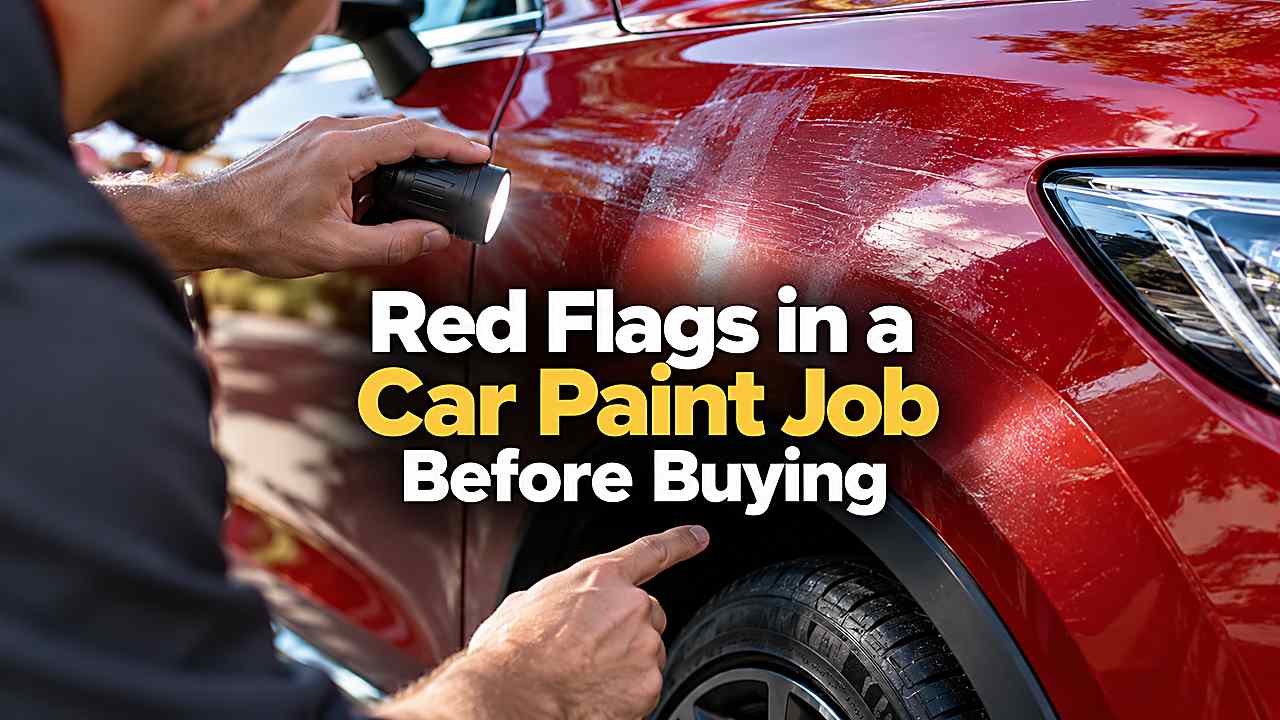
If you are researching red flags in a car paint job before buying, the quickest answer is rarely the whole answer. The condition of the vehicle, the material involved and what you plan to do next can change the safest and most economical approach.
This guide focuses on the decisions that matter in real ownership rather than a one-size-fits-all shortcut. You will see what to inspect first, what can reasonably be handled yourself and where a professional estimate or inspection becomes the smarter move.
The biggest paint-job red flags are obvious color mismatch, overspray, rough tape edges, inconsistent orange peel, sanding scratches, unusually thick paint and disturbed bolts or trim. One clue does not prove a bad repair, but several together deserve a professional inspection.
Inspect color and metallic match in natural light
Panels can match indoors and look wrong in sunlight
Metallic and pearl colors change with viewing angle. Walk around the car outdoors and compare adjacent panels from several directions. That is why a small test or inspection step should come before a more aggressive method. You get better results when you know what changed after each pass instead of repeating the same process blindly.
A door that turns darker or more yellow than the fender may have been repainted poorly. Small factory variations exist, so look for a cluster of clues rather than a single subtle difference. If your vehicle has previous bodywork, unusual materials or aftermarket protection, mention that before treatment or repair. Those details can change compatibility, labor and the point at which professional help becomes the safer choice.
Check bumper-to-body match with reasonable expectations
Plastic bumpers can look slightly different from metal panels even from the factory because substrate and spray orientation vary. A dramatic mismatch, hard blend line or different metallic flop is more suspicious. Good lighting and a clean surface make this judgment much easier. Dirt, gloss enhancers and shadows can hide defects or make harmless texture look worse than it really is.
Compare both front and rear bumpers. If only one looks obviously different, ask about repair history. You should also consider the cost of creating a new problem. A conservative process that leaves a small cosmetic imperfection is often preferable to removing too much clear coat, damaging trim or disturbing a safety-related component.
Look for overspray and masking evidence
Rubber seals and textured trim should not have paint mist on them
Run your eyes along weatherstrips, wheel-arch liners, lamp edges and windshield moldings. Fine colored specks can show that masking was rushed. The practical goal is a stable result, not a dramatic before-and-after created by excessive force. If the recommended method stops producing improvement, reassess rather than escalating automatically.
Overspray on glass may feel rough to the touch. A professional repair should remove or mask adjacent parts carefully enough that these clues are minimal. That is why a small test or inspection step should come before a more aggressive method. You get better results when you know what changed after each pass instead of repeating the same process blindly.
Hard paint edges can reveal where tape stopped the repair
Open doors, hood and trunk and look around jambs. A sharp ridge where new paint ends can indicate a localized blend. If your vehicle has previous bodywork, unusual materials or aftermarket protection, mention that before treatment or repair. Those details can change compatibility, labor and the point at which professional help becomes the safer choice.
That is not automatically unacceptable, but rough tape edges or peeling transitions are poor workmanship. Factory finishes generally have consistent smooth boundaries. Good lighting and a clean surface make this judgment much easier. Dirt, gloss enhancers and shadows can hide defects or make harmless texture look worse than it really is.
Compare texture and surface finish
Different orange peel can reveal a repainted panel
Factory clear coat has a characteristic texture. A mirror-flat repaired door beside moderately textured factory paint can be just as obvious as a rough refinish. You should also consider the cost of creating a new problem. A conservative process that leaves a small cosmetic imperfection is often preferable to removing too much clear coat, damaging trim or disturbing a safety-related component.
Look down the side in reflected light. Heavy dry spray, dirt nibs and excessive texture suggest poor application or insufficient finishing. The practical goal is a stable result, not a dramatic before-and-after created by excessive force. If the recommended method stops producing improvement, reassess rather than escalating automatically.
Sanding scratches and buffer trails show rushed correction
Deep straight scratches under the clear coat indicate preparation marks that were never refined. Holograms or rotary trails on top can sometimes be polished out, but they still suggest hurried finishing. That is why a small test or inspection step should come before a more aggressive method. You get better results when you know what changed after each pass instead of repeating the same process blindly.
Check dark colors in direct sun. Fresh wax can temporarily hide some defects. If your vehicle has previous bodywork, unusual materials or aftermarket protection, mention that before treatment or repair. Those details can change compatibility, labor and the point at which professional help becomes the safer choice.
Use panel hardware and paint thickness as supporting evidence
Disturbed bolts can show panel removal
Hood, fender and door bolts often have factory paint over their edges. Tool marks or shifted witness marks can indicate removal or alignment work. Good lighting and a clean surface make this judgment much easier. Dirt, gloss enhancers and shadows can hide defects or make harmless texture look worse than it really is.
Panels are sometimes removed for legitimate reasons unrelated to collision, so ask for context. Replacement VIN labels or missing stickers can also deserve investigation depending on the vehicle. You should also consider the cost of creating a new problem. A conservative process that leaves a small cosmetic imperfection is often preferable to removing too much clear coat, damaging trim or disturbing a safety-related component.
A paint-depth gauge can identify thicker repaired areas
Take multiple readings across each panel instead of trusting one number. Large jumps relative to adjacent factory panels can indicate filler, primer and repainting. The practical goal is a stable result, not a dramatic before-and-after created by excessive force. If the recommended method stops producing improvement, reassess rather than escalating automatically.
Aluminum and plastic require compatible gauges or different interpretation. Thickness data should support visual evidence, not replace it. That is why a small test or inspection step should come before a more aggressive method. You get better results when you know what changed after each pass instead of repeating the same process blindly.
Inspect panel gaps and structure, not only gloss
Beautiful paint can cover poor body alignment
Check hood, doors, trunk and lamps for even gaps. Open and close everything and listen for binding. If your vehicle has previous bodywork, unusual materials or aftermarket protection, mention that before treatment or repair. Those details can change compatibility, labor and the point at which professional help becomes the safer choice.
If a panel sits proud or a door requires unusual force, there may be underlying repair or structural movement. Paint quality is only one layer of a collision repair. Good lighting and a clean surface make this judgment much easier. Dirt, gloss enhancers and shadows can hide defects or make harmless texture look worse than it really is.
Look underneath for repaired seams and corrosion protection
Visible welds, sealer differences and damaged undercoating can show deeper work. A pre-purchase inspector can compare left and right sides of the body structure. You should also consider the cost of creating a new problem. A conservative process that leaves a small cosmetic imperfection is often preferable to removing too much clear coat, damaging trim or disturbing a safety-related component.
Fresh black undercoating over one small area can sometimes conceal repair or rust. Do not crawl under an unsupported vehicle yourself. The practical goal is a stable result, not a dramatic before-and-after created by excessive force. If the recommended method stops producing improvement, reassess rather than escalating automatically.
Decide whether a repaint is acceptable for the price
A properly repaired panel is not automatically a reason to walk away
Good collision refinishing can be durable and visually excellent. What matters is whether the repair was done correctly and whether structural safety was restored. That is why a small test or inspection step should come before a more aggressive method. You get better results when you know what changed after each pass instead of repeating the same process blindly.
Documentation from a reputable shop adds confidence. Price should reflect history and any remaining defects. If your vehicle has previous bodywork, unusual materials or aftermarket protection, mention that before treatment or repair. Those details can change compatibility, labor and the point at which professional help becomes the safer choice.
Inconsistent seller explanations are a stronger warning than paint alone
If the seller insists the car has never been painted while multiple panels show obvious refinishing, trust becomes the issue. Ask for invoices or a history report and arrange an independent inspection. Good lighting and a clean surface make this judgment much easier. Dirt, gloss enhancers and shadows can hide defects or make harmless texture look worse than it really is.
You do not need to prove exactly what happened before deciding the uncertainty is too high. You should also consider the cost of creating a new problem. A conservative process that leaves a small cosmetic imperfection is often preferable to removing too much clear coat, damaging trim or disturbing a safety-related component.
Frequently Asked Questions
These questions address the issues that most often come up when you are dealing with red flags in a car paint job before buying. They also clarify where a general rule stops being useful and the condition of the specific vehicle, policy, surface or repair has to decide the answer.
Is orange peel always a sign of a bad repaint?
No. Factory paint often has some orange peel. The practical goal is a stable result, not a dramatic before-and-after created by excessive force. If the recommended method stops producing improvement, reassess rather than escalating automatically.
The warning sign is a large texture difference between adjacent panels, especially when combined with overspray, tape lines or color mismatch. A skilled refinish often tries to match factory texture. Inspect the car in reflected light. That is why a small test or inspection step should come before a more aggressive method. You get better results when you know what changed after each pass instead of repeating the same process blindly.
Can a paint-depth gauge prove a car was in an accident?
It can show that a panel likely has additional paint or filler, but it cannot prove why. Cosmetic scratch repair, vandalism and factory rework can also change thickness. If your vehicle has previous bodywork, unusual materials or aftermarket protection, mention that before treatment or repair. Those details can change compatibility, labor and the point at which professional help becomes the safer choice.
Use the gauge with visual inspection, history and structural checks. Consistent evidence is more meaningful than one high reading. Good lighting and a clean surface make this judgment much easier. Dirt, gloss enhancers and shadows can hide defects or make harmless texture look worse than it really is.
Is overspray on rubber trim a major problem?
It is mainly a workmanship clue. Overspray can sometimes be removed, but its presence suggests masking or preparation was rushed. You should also consider the cost of creating a new problem. A conservative process that leaves a small cosmetic imperfection is often preferable to removing too much clear coat, damaging trim or disturbing a safety-related component.
Look for other shortcuts on that panel. If the repair involved structural work, cosmetic sloppiness makes a deeper inspection more important. The practical goal is a stable result, not a dramatic before-and-after created by excessive force. If the recommended method stops producing improvement, reassess rather than escalating automatically.
Should I avoid any used car that has been repainted?
No. Many good used cars have professionally refinished panels after minor cosmetic damage. That is why a small test or inspection step should come before a more aggressive method. You get better results when you know what changed after each pass instead of repeating the same process blindly.
Judge the quality, documentation and underlying structure. A well-done repaint can be preferable to original paint with corrosion or severe damage. Price and transparency matter. If your vehicle has previous bodywork, unusual materials or aftermarket protection, mention that before treatment or repair. Those details can change compatibility, labor and the point at which professional help becomes the safer choice.
What is the fastest way to spot a hidden repaint?
Compare color and texture in natural light, inspect rubber and glass for overspray, look at panel bolts and check paint thickness if you have a gauge. None of these alone is perfect. Good lighting and a clean surface make this judgment much easier. Dirt, gloss enhancers and shadows can hide defects or make harmless texture look worse than it really is.
Together they can identify panels that deserve closer inspection. A body professional can usually confirm quickly. You should also consider the cost of creating a new problem. A conservative process that leaves a small cosmetic imperfection is often preferable to removing too much clear coat, damaging trim or disturbing a safety-related component.
Conclusion
The biggest paint-job red flags are obvious color mismatch, overspray, rough tape edges, inconsistent orange peel, sanding scratches, unusually thick paint and disturbed bolts or trim. One clue does not prove a bad repair, but several together deserve a professional inspection. The important part is applying that answer to the actual condition in front of you rather than forcing a universal rule onto every vehicle.
Your next step should be the lowest-risk action that gives you better information: inspect carefully, test a small area, verify the policy or product instructions, compare current market evidence or obtain a qualified professional assessment. That keeps the decision practical and protects the value of the vehicle.