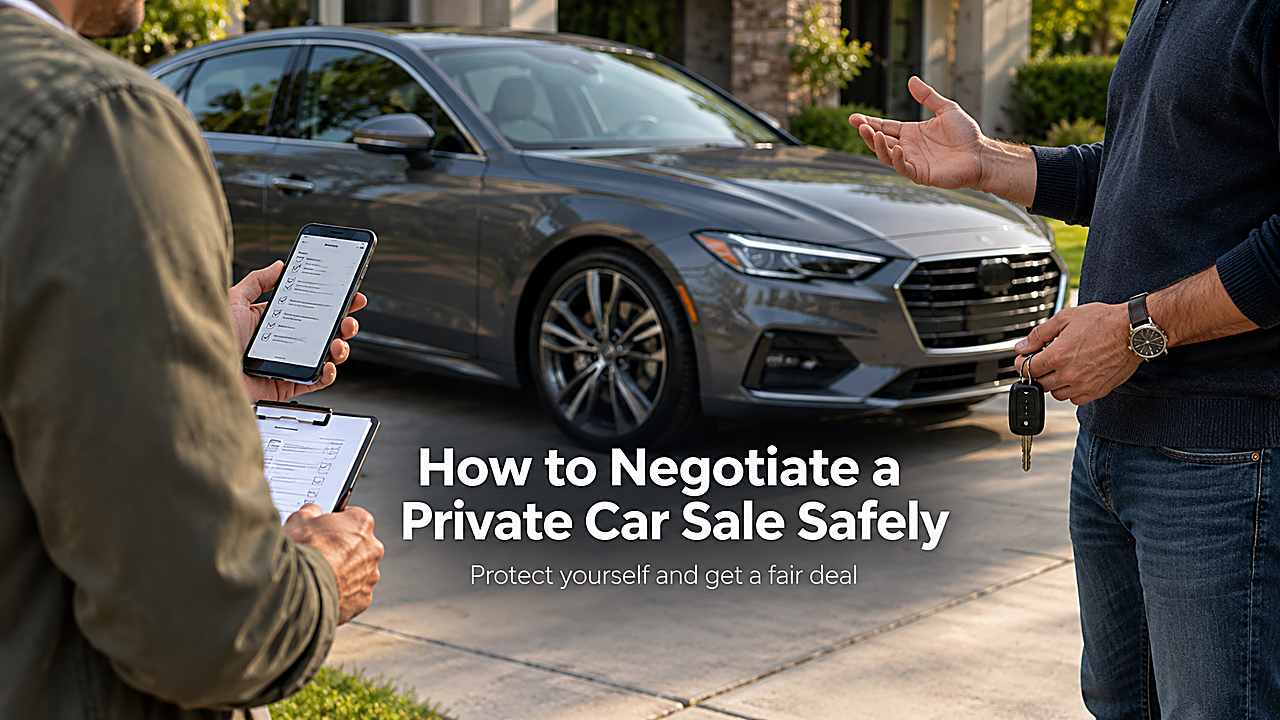
Safe private-sale negotiation is less about aggressive bargaining and more about controlling risk. Meet in a public place, verify the seller and title, inspect and test-drive the car, agree on price only after a pre-purchase inspection, and complete payment and title transfer in a bank, credit union or other secure setting when possible.
If you are selling, do not accept an overpayment check and send money back. The FTC specifically warns that fake-check scams can show funds in your account before the bank later determines the check is fraudulent.
Negotiate after inspection, not before. Verify identity and ownership, keep payment verifiable, complete title paperwork at the same time as money changes hands, and walk away from overpayment or remote-buyer pressure.
Before price, verify you are dealing with the owner
Match the seller’s identification to the title and compare the VIN on the title, dashboard and vehicle. If there is a lien, understand exactly how payoff and title release will work. A seller who is not named on the title needs a legitimate legal explanation and documentation.
Do not accept an open title as a shortcut. Resale matters too. A condition you are willing to accept today can still reduce the number of future buyers, dealer trade options or insurance choices, so include the exit value in the purchase decision.
Choose a meeting setup that protects both sides
Meet in daylight in a public or transaction-friendly location
A bank, credit union, police safe-exchange area or busy parking location can reduce personal risk. Tell someone where you are going.
If the seller insists on an isolated location or changes the meeting place repeatedly, leave. Do not let a low asking price change the standard of proof you require. A cheap vehicle with unclear title, structural or mechanical risk can cost far more than a correctly priced car with honest cosmetic wear.
If the seller can document the explanation and the vehicle supports it, the issue may be manageable. If the story changes or inspection access is restricted, that uncertainty deserves real weight in your decision.
Do the test drive with identification and boundaries
The buyer should show a valid driver’s license and the seller should verify insurance or local legal requirements as appropriate. Decide whether the seller rides along.
Do not hand over the car and title together before payment is complete. If the seller can document the explanation and the vehicle supports it, the issue may be manageable. If the story changes or inspection access is restricted, that uncertainty deserves real weight in your decision.
Make the car inspection part of the negotiation
Test-drive the car and have an independent mechanic inspect it before settling the final number. Use specific findings such as tires, brakes, warning codes or body damage as evidence. Do not invent repair costs.
A written inspection gives both sides a rational basis for the price. A useful rule is to treat every finding as a reason for the next check rather than as a final verdict. When several independent clues point in the same direction, your confidence becomes much stronger.
Handle payment where it can be verified
The most reliable way to use this section is to treat each check separately. One good sign should not cancel several bad ones, and one questionable sign should be verified before you assume the worst.
Cash can be simple but creates security risk
For larger amounts, meeting inside a bank allows cash to be counted and deposited immediately. Do not carry large cash amounts unnecessarily.
Confirm local reporting and transaction practices if the amount is substantial. Your final number should include the repair or ownership cost that will actually fall on you, not a generic internet average. Local labor rates, vehicle design and parts availability can change the economics quickly.
Cashier’s checks should be verified with the issuing bank
Fake cashier’s checks exist, and the FTC warns that funds can appear available before a fraudulent check is discovered. Verify the check independently using the bank’s official contact information rather than a number printed by the buyer.
Do not release the vehicle until payment is confirmed. A pre-purchase inspection remains one of the highest-value steps because it turns hidden uncertainty into a list you can price. Even experienced buyers use specialists when structure, electronics or drivetrain condition is difficult to judge.
Electronic bank transfers can reduce fake-check risk
A wire or bank-to-bank transfer can be useful when both parties understand the process. Confirm the money in your actual bank account, not from a screenshot or email. Beware of payment links sent by the other party.
Never return an alleged overpayment. Keep copies of photos, scan reports, quotes and key paperwork when the finding affects price. Clear documentation makes negotiation shorter and prevents memory from becoming less accurate after you have viewed several vehicles.
Resale matters too. A condition you are willing to accept today can still reduce the number of future buyers, dealer trade options or insurance choices, so include the exit value in the purchase decision.
The classic overpayment scam should end the deal immediately
The FTC’s current warning describes buyers who send a check for more than the agreed price and ask the seller to refund the difference or pay a transporter. The original check later proves fake. If someone overpays and asks you to send money elsewhere, stop the transaction.
A legitimate buyer can issue the correct amount. If the seller can document the explanation and the vehicle supports it, the issue may be manageable. If the story changes or inspection access is restricted, that uncertainty deserves real weight in your decision.
Complete the title and bill of sale when payment is final
Both parties should follow the state’s title-transfer instructions, including odometer disclosure, lien release, plate handling and any bill-of-sale requirement. Sellers should file the state’s release-of-liability or sale notice when required. Photograph signed paperwork and keep copies.
Do not pre-sign a blank title. Your final number should include the repair or ownership cost that will actually fall on you, not a generic internet average. Local labor rates, vehicle design and parts availability can change the economics quickly.
If you are the buyer, do not let a low price rush your paperwork
Scammers use urgency because a careful buyer asks questions. If the seller cannot produce the title, asks you to put a false sale price on documents or refuses an inspection, walk away. The legal ownership path matters as much as the price. A pre-purchase inspection remains one of the highest-value steps because it turns hidden uncertainty into a list you can price. Even experienced buyers use specialists when structure, electronics or drivetrain condition is difficult to judge.
If you are the seller, keep your personal information controlled
Use the listing platform’s messaging system or a dedicated contact method until the buyer appears legitimate. Remove documents from the glove box that reveal unnecessary personal data. Do not send a copy of your driver’s license to random prospective buyers.
Share only what the legal transaction requires. Keep copies of photos, scan reports, quotes and key paperwork when the finding affects price. Clear documentation makes negotiation shorter and prevents memory from becoming less accurate after you have viewed several vehicles.
Document the transaction before money changes hands
Write down the agreed terms and keep copies of the title, bill of sale, lien documents and any state forms you submit. Good records are especially important when family relationships, private sales or financed vehicles are involved. Do not leave blanks on ownership documents for someone else to complete later.
Your final number should include the repair or ownership cost that will actually fall on you, not a generic internet average. Local labor rates, vehicle design and parts availability can change the economics quickly.
Test-drive safety for both buyer and seller
Meet where the route can include normal city and higher-speed driving without requiring unsafe maneuvers. The seller should know who is driving and retain appropriate control of keys and documents. The buyer should not leave a phone or other valuable as informal collateral. Use ordinary identification and agreed boundaries instead.
For high-value vehicles, both parties may prefer to meet at a dealership, bank or inspection shop. A neutral professional location reduces personal-security concerns and gives you immediate access to verification resources.
How to make a fair offer without creating unnecessary conflict
After the inspection, separate true repair needs from normal used-car wear. If the mechanic identifies $900 of near-term tires and brakes, explain that cost and make one clear offer. Do not list every stone chip as if it deserves a deduction. A seller is more likely to take your number seriously when it is tied to specific condition and comparable market prices.
Give the seller room to counter without creating artificial pressure. If the final number exceeds your budget or the risk no longer makes sense, leave politely. Safe negotiation includes avoiding the sunk-cost mistake of buying only because you already paid for an inspection.
Frequently Asked Questions
Private sales can save money for both sides, but payment and title mistakes create risks that dealer transactions normally handle for you.
What is the safest payment method for a private car sale?
A verified bank transfer or a cashier’s check verified directly with the issuing bank can work well, especially when the parties meet at a bank. Cash can also work if handled securely.
The key is independent verification before the vehicle and title are released. If the seller can document the explanation and the vehicle supports it, the issue may be manageable. If the story changes or inspection access is restricted, that uncertainty deserves real weight in your decision.
Should you accept a personal check for a car?
It carries more risk because the check can bounce after the vehicle leaves. If you choose to accept one, wait until funds have fully cleared according to your bank’s guidance before transferring the car.
Do not rely on the account balance showing as available. Your final number should include the repair or ownership cost that will actually fall on you, not a generic internet average. Local labor rates, vehicle design and parts availability can change the economics quickly.
Can you negotiate before paying for a pre-purchase inspection?
You can discuss a range, but final negotiation is stronger after the inspection because you have real evidence. Agreeing to a final price too early can leave you bargaining again when the mechanic finds problems.
Make the inspection part of the process. A pre-purchase inspection remains one of the highest-value steps because it turns hidden uncertainty into a list you can price. Even experienced buyers use specialists when structure, electronics or drivetrain condition is difficult to judge.
Who pays sales tax in a private car sale?
Usually the buyer pays applicable tax during registration or title transfer, but rules vary by state. Do not write a fake lower sale price to reduce tax.
Use the actual transaction amount and state forms. Keep copies of photos, scan reports, quotes and key paperwork when the finding affects price. Clear documentation makes negotiation shorter and prevents memory from becoming less accurate after you have viewed several vehicles.
What if the seller still owes money on the car?
Arrange the payoff with the lender so you know how the title will be released. Meeting at the lender or using its documented payoff process is safer than paying the seller and trusting them to clear the lien later.
Do not buy a car without a clear path to clean title. Resale matters too. A condition you are willing to accept today can still reduce the number of future buyers, dealer trade options or insurance choices, so include the exit value in the purchase decision.
Conclusion
Treat how to negotiate a private car sale safely as a practical decision rather than a trick. The best outcome is the one that solves the immediate problem without creating title, safety, mechanical or resale problems later.
If the numbers and evidence still make sense after those checks, move forward confidently. If they do not, walking away or choosing the simpler repair is often the most profitable decision.