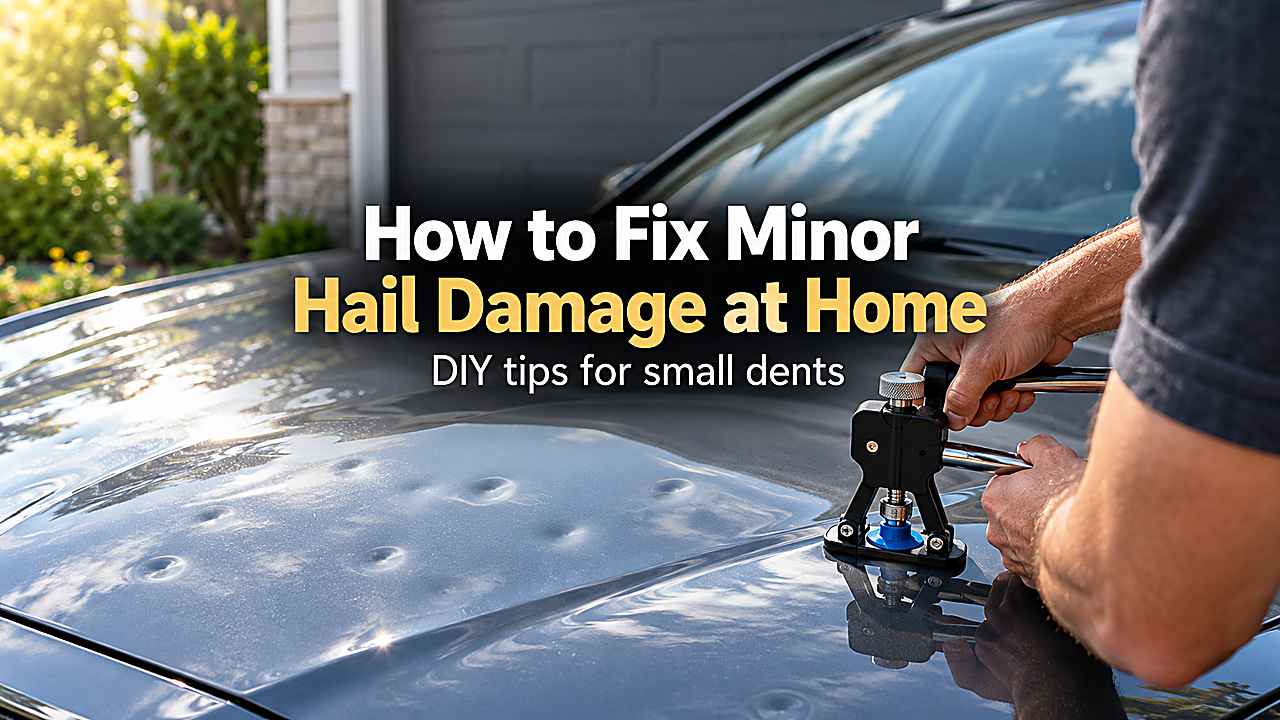
If you are researching fixing minor hail damage yourself at home, the most useful answer is the one that separates what is technically possible from what is financially or practically sensible. Small details such as paint condition, local rules, temperature, material or policy wording can completely change the right choice.
This guide focuses on the decision points that matter in real ownership, not viral shortcuts or one-size-fits-all claims. You will see where a DIY step is reasonable, where documentation matters and where a professional or state-specific answer is safer.
You can inspect, document and sometimes improve a very broad soft dent at home, but most true hail dents are poor DIY candidates because they require precise metal finishing. If factory paint matters, the safest home strategy is often to avoid heat, dry ice and aggressive pulling until you have a PDR estimate.
Start by deciding whether the damage is actually minor
In this article, start by deciding whether the damage is actually minor matters because it changes the practical decision in ways that are easy to miss from a quick glance. The details below show what you should verify before you spend money, alter the surface or assume two similar-looking situations need the same solution.
Count panels, not just the dents you notice first
Hail damage is easiest to see under angled reflection. Clean the car and inspect the hood, roof, trunk lid, upper doors, fenders and rails. A vehicle that looks lightly damaged in diffuse light can reveal dozens of dents under an LED or striped reflection. The scope determines whether DIY work is sensible.
When you evaluate count panels, not just the dents you notice first, treat it as one part of the decision rather than a shortcut. Compare it with the condition of your vehicle, the limits of the product or repair method, and any manufacturer, insurer or local requirements that apply before you move to a more aggressive step.
Broken paint or glass moves the job beyond simple cosmetic DIY
If hail chipped paint to bare metal, cracked a windshield or distorted a panel edge, address those conditions first. Pushing a dent out does not restore missing coating. Water intrusion from broken glass also needs immediate protection. A small dent with intact paint is a very different problem from mixed hail damage.
When you evaluate broken paint or glass moves the job beyond simple cosmetic diy, treat it as one part of the decision rather than a shortcut. Compare it with the condition of your vehicle, the limits of the product or repair method, and any manufacturer, insurer or local requirements that apply before you move to a more aggressive step.
Home methods that carry the lowest risk
In this article, home methods that carry the lowest risk matters because it changes the practical decision in ways that are easy to miss from a quick glance. The details below show what you should verify before you spend money, alter the surface or assume two similar-looking situations need the same solution.
Use cleaning, lighting and documentation as your first tools
Wash with a safe method, dry the car and mark dents with removable tape beside, not on, damaged paint. Photograph from multiple angles. This gives you a baseline and helps a PDR shop quote accurately. It also preserves evidence if you plan to use insurance.
When you evaluate use cleaning, lighting and documentation as your first tools, treat it as one part of the decision rather than a shortcut. Compare it with the condition of your vehicle, the limits of the product or repair method, and any manufacturer, insurer or local requirements that apply before you move to a more aggressive step.
A large suction cup is only reasonable on broad shallow open-panel dents
Suction can sometimes move a soft depression that is much larger than the tool and has no sharp center. Small hail dents are usually too tight for it to work predictably. If the panel moves, stop before pulling it high. You should not treat suction as a general hail-repair technique.
When you evaluate a large suction cup is only reasonable on broad shallow open-panel dents, treat it as one part of the decision rather than a shortcut. Compare it with the condition of your vehicle, the limits of the product or repair method, and any manufacturer, insurer or local requirements that apply before you move to a more aggressive step.
Why common DIY hail tricks fail
In this article, why common diy hail tricks fail matters because it changes the practical decision in ways that are easy to miss from a quick glance. The details below show what you should verify before you spend money, alter the surface or assume two similar-looking situations need the same solution.
Heat and cold do not control the final contour
Hair dryers, heat guns, hot water, dry ice and inverted canned air all rely on thermal movement. They cannot tell a crown to lower or a sharp center to rise exactly to the surrounding surface. Repeated temperature cycling can also stress paint. The dramatic pop shown online is not the same as a finished panel.
When you evaluate heat and cold do not control the final contour, treat it as one part of the decision rather than a shortcut. Compare it with the condition of your vehicle, the limits of the product or repair method, and any manufacturer, insurer or local requirements that apply before you move to a more aggressive step.
Cheap glue-pull kits can create high spots quickly
Glue pulling is a legitimate professional PDR method, but tab selection, glue strength, pull direction and knockdown technique matter. A beginner can easily lift the center past level or pull weak repaint from the panel. Once high spots are created, the repair becomes harder. Factory-paint preservation is a poor place to learn by trial and error on your daily driver.
When you evaluate cheap glue-pull kits can create high spots quickly, treat it as one part of the decision rather than a shortcut. Compare it with the condition of your vehicle, the limits of the product or repair method, and any manufacturer, insurer or local requirements that apply before you move to a more aggressive step.
When professional PDR is worth the money
In this article, when professional pdr is worth the money matters because it changes the practical decision in ways that are easy to miss from a quick glance. The details below show what you should verify before you spend money, alter the surface or assume two similar-looking situations need the same solution.
Multiple small dents are exactly what hail technicians are equipped to repair
Hail PDR uses specialized lighting and access methods to restore many dents without refinishing. A technician can remove headliners and trim safely where necessary and can price the vehicle as a complete hail job. The workflow is much more efficient than treating each dent as an isolated DIY project. Insurance also commonly recognizes PDR as a hail-repair method.
When you evaluate multiple small dents are exactly what hail technicians are equipped to repair, treat it as one part of the decision rather than a shortcut. Compare it with the condition of your vehicle, the limits of the product or repair method, and any manufacturer, insurer or local requirements that apply before you move to a more aggressive step.
Body lines, roof rails and aluminum raise difficulty
These areas require more force control and often restricted access. Aluminum behaves differently from steel, and sharp body lines must be reconstructed accurately. If your minor dent happens to be in a difficult location, size does not make it beginner-friendly. Get an assessment before you create paint or shape damage.
When you evaluate body lines, roof rails and aluminum raise difficulty, treat it as one part of the decision rather than a shortcut. Compare it with the condition of your vehicle, the limits of the product or repair method, and any manufacturer, insurer or local requirements that apply before you move to a more aggressive step.
If you still want to practice PDR at home
In this article, if you still want to practice pdr at home matters because it changes the practical decision in ways that are easy to miss from a quick glance. The details below show what you should verify before you spend money, alter the surface or assume two similar-looking situations need the same solution.
Practice on a scrap panel before the vehicle you care about
A salvage-yard hood or door lets you learn how small tool movements appear under reflection lighting. You can intentionally make highs, use knockdowns and see how easy it is to damage a finish. That experience is more valuable than watching a short video. It also protects your actual car from the learning curve.
When you evaluate practice on a scrap panel before the vehicle you care about, treat it as one part of the decision rather than a shortcut. Compare it with the condition of your vehicle, the limits of the product or repair method, and any manufacturer, insurer or local requirements that apply before you move to a more aggressive step.
Set a stop rule before you begin
Decide that you will stop if paint changes, the dent becomes a high spot, or the panel begins oil-canning. Do not keep pulling because the defect is almost gone. The last few percent of a PDR repair is often the hardest part. Knowing when to stop can keep a minor cosmetic issue from becoming conventional bodywork.
When you evaluate set a stop rule before you begin, treat it as one part of the decision rather than a shortcut. Compare it with the condition of your vehicle, the limits of the product or repair method, and any manufacturer, insurer or local requirements that apply before you move to a more aggressive step.
A realistic DIY inspection setup before you touch the metal
If you want to understand the damage yourself, park the car in shade and place a long LED shop light or a striped reflection board so its lines stretch across the panel. Move your head rather than the light until each dent distorts the lines. Mark locations with small pieces of removable tape beside the low spots. This simple setup often reveals why hail repair is more complicated than it looked in the driveway.
Use the inspection to decide which dents are broad and which are sharp, near edges, over braces or on body lines. Those difficult dents are the ones most likely to become worse with a beginner pull. If you eventually practice with a glue kit or rods, use a scrap panel and the same reflection method first. Learning to see the metal is more important than learning to pull hard.
Protect the paint even if you decide not to repair the dents
If your inspection shows intact paint and you choose to live with small dents, continue normal washing and paint protection rather than repeatedly experimenting with them. Wax, sealant or coating can help the surface shed contamination, though none will remove the dents. Recheck the deepest impacts for fine paint cracks after washing and before winter salt exposure. A cosmetic dent is usually low urgency only while the coating remains healthy.
If you later sell or trade the vehicle, disclose damage as required and expect buyers to price the cosmetic condition. Keeping photos of the original hail event and any professional estimate can help explain the history. Leaving dents alone can be a rational financial choice; repeatedly attempting uncertain DIY repairs is often the path that creates expensive paintwork.
If your vehicle has a lease, loan or active hail claim, check those obligations before deciding to leave damage alone or experiment with repair. A lease return may charge for excess damage, a lender may require covered repairs in some situations, and an insurer may need to inspect the original loss. Those financial relationships can matter more than whether you personally can tolerate the dents. A home repair should not create a documentation problem or violate an agreement that affects the vehicle.
Frequently Asked Questions
These questions address the issues that most often cause confusion around fixing minor hail damage yourself at home. They are useful for checking your plan before you spend money, alter the vehicle or rely on a rule that may not apply to your exact situation.
Can I use a glue-pull kit on factory paint?
Professional glue pulling is often performed on sound factory paint, but beginner technique can still create damage or high spots. Repainted panels carry additional adhesion risk. If you care about a near-invisible finish, learn on scrap metal first. Do not assume a strong tab equals a better pull.
If your vehicle, policy or product falls outside the normal case, verify the exact instructions before acting. That extra check is especially worthwhile when the downside includes paint damage, broken glass or a disputed claim.
Will a suction cup fix small round hail dents?
Usually not. Small hail dents have too little surface area for ordinary suction cups to control effectively, and their centers may be sharp. Suction works better on broad flexible depressions. Even if a dent pops, finishing may still be needed.
The most reliable answer comes from the specific vehicle and documentation rather than an internet average. Keep photos, estimates and policy or product paperwork when they affect the decision.
Can I push a roof hail dent from inside the car?
Do not blindly push against the headliner. Roofs contain braces, adhesive, wiring and often curtain-airbag components near the sides. Headliner removal can be delicate. A concentrated push without reflection guidance can create a high spot.
You do not need to solve every variable yourself. A qualified repairer, glass shop, insurer or state regulator can confirm the details that are specific to your situation.
Should I repair minor hail before filing an insurance claim?
If you may file a claim, document and report the damage before changing it when practical. Emergency measures to prevent further loss are different from permanent cosmetic repair. An insurer may want photos or inspection. Keeping the starting condition clear avoids unnecessary disputes.
If your vehicle, policy or product falls outside the normal case, verify the exact instructions before acting. That extra check is especially worthwhile when the downside includes paint damage, broken glass or a disputed claim.
Is DIY hail repair cheaper than PDR?
The tools can cost less than professional labor, but one paint pull or high spot can erase the savings. DIY makes more sense as a learning hobby on scrap panels than as a guaranteed low-cost repair. Get a professional quote before deciding.
The most reliable answer comes from the specific vehicle and documentation rather than an internet average. Keep photos, estimates and policy or product paperwork when they affect the decision.
Conclusion
You can inspect, document and sometimes improve a very broad soft dent at home, but most true hail dents are poor DIY candidates because they require precise metal finishing. If factory paint matters, the safest home strategy is often to avoid heat, dry ice and aggressive pulling until you have a PDR estimate.
Your best next step is to verify the condition, documents or operating limits that control your specific case, then choose the least aggressive solution that fully addresses the problem. That approach gives you better odds of protecting the vehicle, your coverage and your budget at the same time.