If you are researching fixing minor flood damage smell in a car, the quickest answer is rarely the whole answer. The condition of the vehicle, the material involved and what you plan to do next can change the safest and most economical approach.
This guide focuses on the decisions that matter in real ownership rather than a one-size-fits-all shortcut. You will see what to inspect first, what can reasonably be handled yourself and where a professional estimate or inspection becomes the smarter move.
A minor flood smell can often be improved if water exposure was limited and you remove moisture quickly, lift or dry wet carpet padding, clean contaminated surfaces and ventilate thoroughly. If floodwater reached electronics, safety modules or deep seat foam, professional inspection is more important than deodorizer.
First decide whether the flooding is truly minor
A damp carpet edge is different from a submerged interior
Rainwater from an open window or shallow clean-water intrusion can sometimes be handled with drying and cleaning. Storm floodwater may contain sewage, fuel, soil and microbes, making the interior a contamination problem as well as an odor problem. That is why a small test or inspection step should come before a more aggressive method. You get better results when you know what changed after each pass instead of repeating the same process blindly.
If water rose high enough to reach seat wiring, modules or dashboard areas, stop treating it as a simple detailing job. If your vehicle has previous bodywork, unusual materials or aftermarket protection, mention that before treatment or repair. Those details can change compatibility, labor and the point at which professional help becomes the safer choice.
Electrical and safety systems can hide below the carpet
Modern vehicles often route wiring harnesses and modules through low cabin areas. A carpet that looks merely damp on top can hide saturated foam and connectors underneath. Good lighting and a clean surface make this judgment much easier. Dirt, gloss enhancers and shadows can hide defects or make harmless texture look worse than it really is.
Persistent warning lights, unusual electrical behavior or water above sill level deserve professional inspection. Smell removal should not distract you from possible safety issues. You should also consider the cost of creating a new problem. A conservative process that leaves a small cosmetic imperfection is often preferable to removing too much clear coat, damaging trim or disturbing a safety-related component.
Remove the source of moisture before adding fragrance
Extract standing water and open the carpet where practical
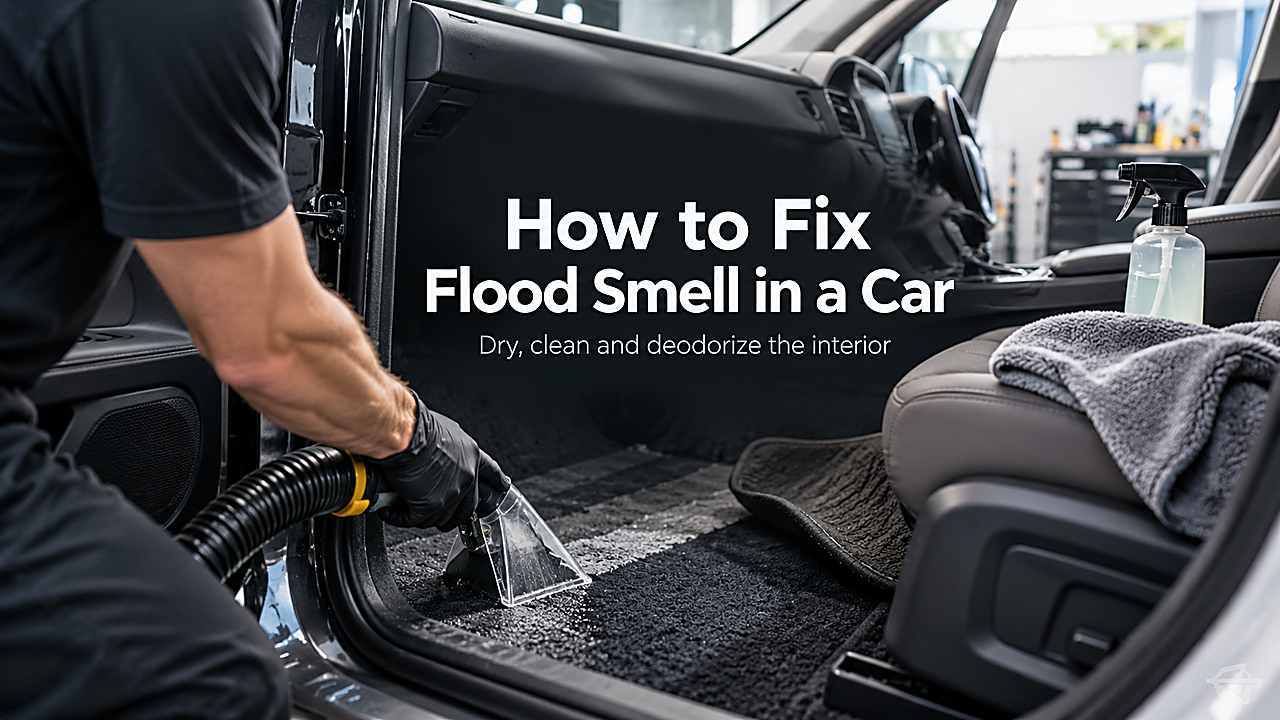
Use a wet-dry vacuum or extractor to remove free water, then inspect under mats and accessible carpet edges. Thick padding can hold moisture for days while the visible surface feels almost dry. The practical goal is a stable result, not a dramatic before-and-after created by excessive force. If the recommended method stops producing improvement, reassess rather than escalating automatically.
Where safe and practical, lifting trim to create airflow speeds drying. If disassembly involves airbags or seat-belt components, use service information or professional help. That is why a small test or inspection step should come before a more aggressive method. You get better results when you know what changed after each pass instead of repeating the same process blindly.
Ventilation and dehumidification are more important than perfume
Open doors in a secure dry location, use fans and run a dehumidifier when possible. EPA flood guidance emphasizes moisture control as the key to mold control. If your vehicle has previous bodywork, unusual materials or aftermarket protection, mention that before treatment or repair. Those details can change compatibility, labor and the point at which professional help becomes the safer choice.
Do not close the vehicle overnight while deep materials are still wet. Odor bombs and fragrance can mask the smell temporarily while mold continues growing underneath. Good lighting and a clean surface make this judgment much easier. Dirt, gloss enhancers and shadows can hide defects or make harmless texture look worse than it really is.
Clean surfaces according to the contamination level
Clean hard surfaces with detergent and controlled moisture
Use an automotive-safe cleaner on plastics and sealed surfaces. Work from cleaner upper areas toward the floor and replace towels as they become dirty. You should also consider the cost of creating a new problem. A conservative process that leaves a small cosmetic imperfection is often preferable to removing too much clear coat, damaging trim or disturbing a safety-related component.
Flood contamination should be lifted rather than scrubbed aggressively into porous material. Avoid flooding switches and electrical connectors during cleaning. The practical goal is a stable result, not a dramatic before-and-after created by excessive force. If the recommended method stops producing improvement, reassess rather than escalating automatically.
Carpet and fabric may need repeated low-moisture extraction
Pre-treat with an appropriate fabric cleaner, agitate lightly and extract. Make extra suction-only passes so you do not leave more water behind. That is why a small test or inspection step should come before a more aggressive method. You get better results when you know what changed after each pass instead of repeating the same process blindly.
If padding smells strongly after drying or was exposed to contaminated floodwater for a long time, replacement may be safer than endless shampooing. Porous foam can hold contamination beyond the reach of surface cleaning. If your vehicle has previous bodywork, unusual materials or aftermarket protection, mention that before treatment or repair. Those details can change compatibility, labor and the point at which professional help becomes the safer choice.
Address the HVAC system if odor appears when the fan runs
Replace a wet or contaminated cabin filter
A cabin filter can hold dust and moisture and become a strong odor source. Check the filter housing for water intrusion and install the correct replacement if it is dirty or wet. Good lighting and a clean surface make this judgment much easier. Dirt, gloss enhancers and shadows can hide defects or make harmless texture look worse than it really is.
Do not spray random disinfectant directly into electronics. Follow the vehicle’s service procedure if the housing itself flooded. You should also consider the cost of creating a new problem. A conservative process that leaves a small cosmetic imperfection is often preferable to removing too much clear coat, damaging trim or disturbing a safety-related component.
Clean the evaporator only with products intended for HVAC use
Musty odor that appears mainly with air conditioning can come from microbial growth around the evaporator. Automotive evaporator cleaners are designed to reach that area through specific drains or vents. The practical goal is a stable result, not a dramatic before-and-after created by excessive force. If the recommended method stops producing improvement, reassess rather than escalating automatically.
Follow product and vehicle instructions. If drainage is blocked or water continues entering the cabin, fix that fault before treating odor. That is why a small test or inspection step should come before a more aggressive method. You get better results when you know what changed after each pass instead of repeating the same process blindly.
Know when materials should be replaced
Persistent moldy padding is difficult to make trustworthy again
If carpet underlay remains wet for more than a short period, mold and bacterial growth can become established. EPA guidance for flooded buildings often recommends discarding porous material that cannot be fully cleaned and dried within roughly 24 to 48 hours. If your vehicle has previous bodywork, unusual materials or aftermarket protection, mention that before treatment or repair. Those details can change compatibility, labor and the point at which professional help becomes the safer choice.
Vehicle materials differ, but the principle is useful. Replacement can be more reliable than repeated deodorizing. Good lighting and a clean surface make this judgment much easier. Dirt, gloss enhancers and shadows can hide defects or make harmless texture look worse than it really is.
Seat foam and restraint components require caution
Flooded seat cushions can trap contaminated water deep inside foam, and many seats contain airbags, occupancy sensors and heaters. Do not saturate them further trying to extract the smell. You should also consider the cost of creating a new problem. A conservative process that leaves a small cosmetic imperfection is often preferable to removing too much clear coat, damaging trim or disturbing a safety-related component.
If water reached electrical seat components, have the system inspected. A clean smell does not prove the safety equipment is unaffected. The practical goal is a stable result, not a dramatic before-and-after created by excessive force. If the recommended method stops producing improvement, reassess rather than escalating automatically.
Prevent the odor from returning
Find and fix the leak or drainage problem
A sunroof drain, door membrane, windshield leak or clogged body drain can recreate the problem after the next storm. Drying without stopping the water path is only temporary. That is why a small test or inspection step should come before a more aggressive method. You get better results when you know what changed after each pass instead of repeating the same process blindly.
Check for fresh dampness after rain. A body or glass specialist can pressure-test leaks that are hard to find. If your vehicle has previous bodywork, unusual materials or aftermarket protection, mention that before treatment or repair. Those details can change compatibility, labor and the point at which professional help becomes the safer choice.
Monitor humidity for several days after cleaning
A small digital humidity meter can tell you whether the cabin remains unusually damp. Continue airflow and dehumidification until carpets, padding and seat bases are dry. Good lighting and a clean surface make this judgment much easier. Dirt, gloss enhancers and shadows can hide defects or make harmless texture look worse than it really is.
Leave moisture absorbers only as a supplement, not as the main drying method. If the musty odor returns quickly, hidden material is still wet or contaminated. You should also consider the cost of creating a new problem. A conservative process that leaves a small cosmetic imperfection is often preferable to removing too much clear coat, damaging trim or disturbing a safety-related component.
Frequently Asked Questions
These questions address the issues that most often come up when you are dealing with fixing minor flood damage smell in a car. They also clarify where a general rule stops being useful and the condition of the specific vehicle, policy, surface or repair has to decide the answer.
Can baking soda remove flood smell from a car?
Baking soda can absorb some odors from dry surfaces, but it does not disinfect contaminated flood material or remove hidden moisture. Use it only after the interior is clean and completely dry. The practical goal is a stable result, not a dramatic before-and-after created by excessive force. If the recommended method stops producing improvement, reassess rather than escalating automatically.
Vacuum it thoroughly so powder does not remain in seat tracks or vents. Source removal matters more than odor absorption. That is why a small test or inspection step should come before a more aggressive method. You get better results when you know what changed after each pass instead of repeating the same process blindly.
Will an ozone machine fix flood odor?
Ozone can oxidize odors, but it does not remove wet padding, dirt or mold source material. It also requires strict safety controls because ozone is harmful to breathe. If your vehicle has previous bodywork, unusual materials or aftermarket protection, mention that before treatment or repair. Those details can change compatibility, labor and the point at which professional help becomes the safer choice.
Professional remediation may use it after cleaning and drying, not instead of them. If the interior is still damp, fix that first. Good lighting and a clean surface make this judgment much easier. Dirt, gloss enhancers and shadows can hide defects or make harmless texture look worse than it really is.
How long does a flooded car interior take to dry?
It depends on water depth, temperature, humidity and how much padding was saturated. Surface fabric may feel dry within hours while foam stays wet for days. You should also consider the cost of creating a new problem. A conservative process that leaves a small cosmetic imperfection is often preferable to removing too much clear coat, damaging trim or disturbing a safety-related component.
Strong airflow and dehumidification help. Do not judge only by touch at the top of the carpet. The practical goal is a stable result, not a dramatic before-and-after created by excessive force. If the recommended method stops producing improvement, reassess rather than escalating automatically.
Is a car safe after water only reached the carpet?
Sometimes, but modern vehicles can have wiring and modules in low locations. Document the water depth and check for warning lights or unusual electrical behavior. That is why a small test or inspection step should come before a more aggressive method. You get better results when you know what changed after each pass instead of repeating the same process blindly.
If the water was contaminated or reached seat wiring, professional inspection is appropriate. A dry-looking carpet does not guarantee hidden electronics stayed dry. If your vehicle has previous bodywork, unusual materials or aftermarket protection, mention that before treatment or repair. Those details can change compatibility, labor and the point at which professional help becomes the safer choice.
Should I replace the cabin air filter after flooding?
Yes if the filter became wet, dirty or contaminated. Also inspect the housing and drainage path so a new filter is not immediately exposed to the same moisture. Good lighting and a clean surface make this judgment much easier. Dirt, gloss enhancers and shadows can hide defects or make harmless texture look worse than it really is.
A musty smell that starts when the fan turns on often points toward HVAC contamination. Use the correct filter for the vehicle. You should also consider the cost of creating a new problem. A conservative process that leaves a small cosmetic imperfection is often preferable to removing too much clear coat, damaging trim or disturbing a safety-related component.
Conclusion
A minor flood smell can often be improved if water exposure was limited and you remove moisture quickly, lift or dry wet carpet padding, clean contaminated surfaces and ventilate thoroughly. If floodwater reached electronics, safety modules or deep seat foam, professional inspection is more important than deodorizer. The important part is applying that answer to the actual condition in front of you rather than forcing a universal rule onto every vehicle.
Your next step should be the lowest-risk action that gives you better information: inspect carefully, test a small area, verify the policy or product instructions, compare current market evidence or obtain a qualified professional assessment. That keeps the decision practical and protects the value of the vehicle.