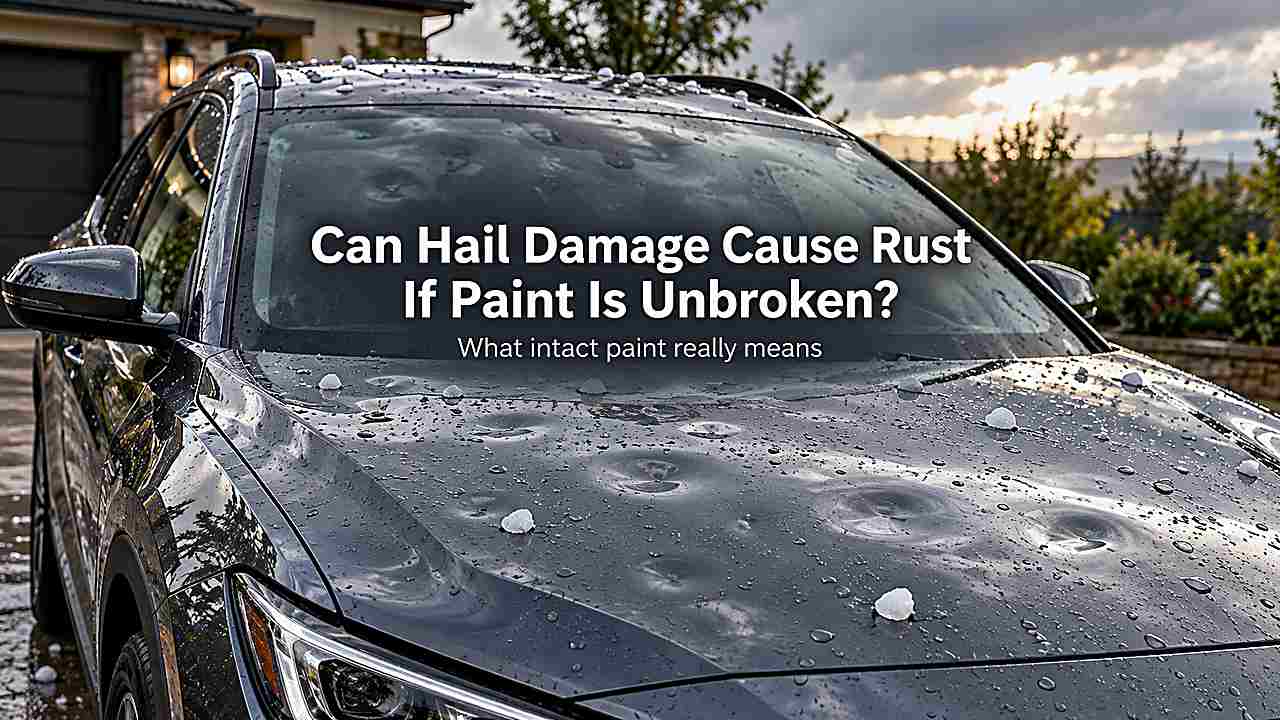
If you are researching does hail damage cause rust if paint is unbroken, the most useful answer is the one that separates what is technically possible from what is financially or practically sensible. Small details such as paint condition, local rules, temperature, material or policy wording can completely change the right choice.
This guide focuses on the decision points that matter in real ownership, not viral shortcuts or one-size-fits-all claims. You will see where a DIY step is reasonable, where documentation matters and where a professional or state-specific answer is safer.
A dent does not normally rust simply because the metal is pushed inward if the paint, primer and corrosion protection remain truly intact. The risk rises when hail creates tiny cracks, chips, seam damage or coating failure that exposes metal to moisture and road salt.
Why intact paint usually prevents immediate rust
In this article, why intact paint usually prevents immediate rust matters because it changes the practical decision in ways that are easy to miss from a quick glance. The details below show what you should verify before you spend money, alter the surface or assume two similar-looking situations need the same solution.
Automotive coating systems isolate steel from water and oxygen
Modern body panels typically have multiple protective layers, including pretreatment, primer, color and clear coat. A smooth hail dent can deform the metal without breaking those layers. If the coating remains bonded and continuous, the bare steel is not directly exposed. The dent is then primarily cosmetic rather than a rust source.
When you evaluate automotive coating systems isolate steel from water and oxygen, treat it as one part of the decision rather than a shortcut. Compare it with the condition of your vehicle, the limits of the product or repair method, and any manufacturer, insurer or local requirements that apply before you move to a more aggressive step.
Aluminum panels do not form red iron rust but can still corrode
Many hoods and body panels are aluminum. Aluminum forms different corrosion products and still relies on coatings and proper repair practices. You should not assume an aluminum dent is immune to corrosion concerns. Material identification is part of a complete repair assessment.
When you evaluate aluminum panels do not form red iron rust but can still corrode, treat it as one part of the decision rather than a shortcut. Compare it with the condition of your vehicle, the limits of the product or repair method, and any manufacturer, insurer or local requirements that apply before you move to a more aggressive step.
Tiny coating damage can be hard to see
In this article, tiny coating damage can be hard to see matters because it changes the practical decision in ways that are easy to miss from a quick glance. The details below show what you should verify before you spend money, alter the surface or assume two similar-looking situations need the same solution.
Sharp hail impacts can crack clear coat at the deepest point
A tiny radial crack or chip may be almost invisible until the panel is cleaned and viewed under magnification or bright light. Water can enter the coating break and reach steel. Road salt accelerates corrosion once metal is exposed. Inspect before deciding an unrepaired dent is harmless.
When you evaluate sharp hail impacts can crack clear coat at the deepest point, treat it as one part of the decision rather than a shortcut. Compare it with the condition of your vehicle, the limits of the product or repair method, and any manufacturer, insurer or local requirements that apply before you move to a more aggressive step.
Edges and body lines are more vulnerable than broad open metal
Hail that hits a sharp character line, roof edge or hood edge can concentrate stress in the finish. Seams may also contain sealers that are less obvious from outside. A dent in the middle of a flat hood is often simpler. Location matters even when the diameter is the same.
When you evaluate edges and body lines are more vulnerable than broad open metal, treat it as one part of the decision rather than a shortcut. Compare it with the condition of your vehicle, the limits of the product or repair method, and any manufacturer, insurer or local requirements that apply before you move to a more aggressive step.
How to inspect hail damage for corrosion risk
In this article, how to inspect hail damage for corrosion risk matters because it changes the practical decision in ways that are easy to miss from a quick glance. The details below show what you should verify before you spend money, alter the surface or assume two similar-looking situations need the same solution.
Clean the panel gently before inspection
Dirt can hide small paint chips and also mimic dark cracks. Wash and dry the vehicle, then inspect each dent under strong reflected light. Look for white fracture lines, missing color, exposed primer or a sharp chip in the center. Do not polish over a suspected crack until you know what it is.
When you evaluate clean the panel gently before inspection, treat it as one part of the decision rather than a shortcut. Compare it with the condition of your vehicle, the limits of the product or repair method, and any manufacturer, insurer or local requirements that apply before you move to a more aggressive step.
Check glass, trim and seams at the same time
A storm strong enough to dent metal can damage moldings, weatherstrips and glass. Water leaks can create hidden corrosion in places unrelated to the visible dent. Check trunk seals, roof moldings and sunroof areas if the storm was severe. A dry cosmetic dent is only one part of post-hail inspection.
When you evaluate check glass, trim and seams at the same time, treat it as one part of the decision rather than a shortcut. Compare it with the condition of your vehicle, the limits of the product or repair method, and any manufacturer, insurer or local requirements that apply before you move to a more aggressive step.
What to do when paint is damaged
In this article, what to do when paint is damaged matters because it changes the practical decision in ways that are easy to miss from a quick glance. The details below show what you should verify before you spend money, alter the surface or assume two similar-looking situations need the same solution.
Protect exposed steel promptly
A small chip should be cleaned, dried and sealed with an appropriate touch-up system until permanent repair is arranged. The goal is to keep moisture and salt away from bare metal. Touch-up does not remove the dent, but it reduces corrosion risk. Do not leave bare steel through a salty winter.
When you evaluate protect exposed steel promptly, treat it as one part of the decision rather than a shortcut. Compare it with the condition of your vehicle, the limits of the product or repair method, and any manufacturer, insurer or local requirements that apply before you move to a more aggressive step.
Coordinate metal repair and refinishing
If the dent is suitable for PDR but the paint is chipped, a technician may still reduce the metal damage before a body shop refinishes it. Severe stretch may need conventional bodywork instead. The final repair should restore both contour and coating. Treat rust prevention as part of the repair plan, not an afterthought.
When you evaluate coordinate metal repair and refinishing, treat it as one part of the decision rather than a shortcut. Compare it with the condition of your vehicle, the limits of the product or repair method, and any manufacturer, insurer or local requirements that apply before you move to a more aggressive step.
Leaving cosmetic hail unrepaired
In this article, leaving cosmetic hail unrepaired matters because it changes the practical decision in ways that are easy to miss from a quick glance. The details below show what you should verify before you spend money, alter the surface or assume two similar-looking situations need the same solution.
It can be reasonable when paint is genuinely intact
Some owners accept cosmetic dents on an older vehicle rather than spending thousands on appearance. If there is no coating damage, no glass issue, no water leak and no lender requirement, the decision can be financial. Reinspect periodically because chips can appear later from unrelated road damage. Keep the car washed and protected.
When you evaluate it can be reasonable when paint is genuinely intact, treat it as one part of the decision rather than a shortcut. Compare it with the condition of your vehicle, the limits of the product or repair method, and any manufacturer, insurer or local requirements that apply before you move to a more aggressive step.
Future resale and insurance still matter
Unrepaired hail can reduce resale value and may be documented as pre-existing damage by an insurer. A future hail claim will not pay to fix old dents again. Photograph the condition and keep any estimate. Clear records help separate old cosmetic damage from a later event.
When you evaluate future resale and insurance still matter, treat it as one part of the decision rather than a shortcut. Compare it with the condition of your vehicle, the limits of the product or repair method, and any manufacturer, insurer or local requirements that apply before you move to a more aggressive step.
Recheck the panel after washing and after the first temperature cycle
Fresh storm grime can hide tiny coating fractures, and some chips become easier to see after the car is washed and fully dried. Inspect again in strong light after the vehicle has gone through a normal warm and cool cycle. Pay attention to the sharpest dents and edges. If you see a hairline fracture, exposed primer or a spot that catches your fingernail, treat the coating as damaged even if most of the dent still looks glossy.
Photograph any questionable spots and monitor them until repair. A small chip that is sealed early is much easier to manage than corrosion spreading beneath paint months later. This is especially important before winter road salt exposure. The fact that most hail dents remain rust-free does not remove the need to identify the few impacts that actually broke the coating.
Why road salt changes the urgency of a tiny hail chip
Bare steel exposed by a pin-sized chip may remain visually minor in a dry climate, but salty winter brine greatly accelerates corrosion. The salt solution conducts the electrochemical reactions involved in rusting and can remain in seams after the surface dries. If your hail event occurs before winter, inspect and seal any exposed metal before road-treatment season rather than waiting for orange rust to appear.
Frequent washing helps, but rinsing cannot replace a missing coating layer. Touch-up or professional refinishing provides a physical barrier again. Once corrosion begins beneath surrounding paint, the eventual repair area can become larger than the original chip. The lowest-cost time to address exposed metal is while the defect is still small and clean.
You should also separate corrosion risk from resale risk. A perfectly intact coating can keep a dent from rusting while the visible damage still reduces market value. That means you may reasonably leave a cosmetic dent unrepaired on an older car yet still want a professional inspection confirming the paint is sound. If you later choose PDR, repairing before corrosion starts is simpler than combining dent correction with refinishing. Keeping the surface clean makes future checks for coating failure much easier.
Check seams, edges and hidden coating damage after a hailstorm
Even when the center of a hail dent still has intact paint, you should inspect nearby edges, seams and chips because corrosion risk begins wherever the protective coating has actually been breached. Hail can expose an older stone chip, flex a panel near a seam or damage trim that normally keeps moisture away from vulnerable areas. Wash the vehicle after the storm, dry it thoroughly and look at the dent under strong angled light. If you find a fresh chip or a crack in the coating, repair that defect promptly rather than assuming every part of the dent is sealed.
Keep monitoring repaired and unrepaired dents through winter
An intact painted dent usually does not start rusting simply because the metal changed shape, but road salt and trapped moisture can exploit small defects that were easy to miss initially. Recheck questionable areas after several washes and after winter exposure, especially around wheel arches, roof edges and horizontal seams. If orange staining develops from a chip, the issue is no longer only cosmetic. Early touch-up or professional refinishing is much easier than waiting for corrosion to spread beneath the surrounding paint.
Frequently Asked Questions
These questions address the issues that most often cause confusion around does hail damage cause rust if paint is unbroken. They are useful for checking your plan before you spend money, alter the vehicle or rely on a rule that may not apply to your exact situation.
Can a dent crack paint without looking chipped?
Yes. Fine cracks can form in clear coat or color without a large missing flake. They may be visible only under strong light at the deepest point. Clean the panel and inspect closely. If you are uncertain, a PDR or body technician can identify coating damage.
You do not need to solve every variable yourself. A qualified repairer, glass shop, insurer or state regulator can confirm the details that are specific to your situation.
How fast can rust start after a hail chip?
There is no universal timeline. Humidity, salt, temperature and the size of the exposed metal all affect corrosion. Surface oxidation can begin sooner in wet salty conditions. Protect exposed steel as soon as practical rather than waiting for visible rust.
If your vehicle, policy or product falls outside the normal case, verify the exact instructions before acting. That extra check is especially worthwhile when the downside includes paint damage, broken glass or a disputed claim.
Does ceramic coating prevent rust in a hail dent?
A ceramic coating adds a thin protective layer over intact paint, but it cannot bridge cracked paint reliably or replace primer and clear coat. If hail breaks the coating system to metal, the chip needs proper repair. Ceramic coating is not structural corrosion protection for exposed steel.
The most reliable answer comes from the specific vehicle and documentation rather than an internet average. Keep photos, estimates and policy or product paperwork when they affect the decision.
Can PDR be done after rust starts?
Minor surface corrosion may need to be removed and refinished, which means the job is no longer a simple paintless repair. Rust also changes how the metal and coating behave. Have a body shop evaluate the area before pulling or pushing it. Early treatment is easier.
You do not need to solve every variable yourself. A qualified repairer, glass shop, insurer or state regulator can confirm the details that are specific to your situation.
Will insurance cover rust that appears months after hail?
Coverage depends on the policy, proof of cause and whether the rust is considered part of the covered sudden loss or later wear and neglect. Insurers commonly exclude ordinary rust and wear over time. Report hail damage promptly and document paint breaks rather than waiting for corrosion to develop.
If your vehicle, policy or product falls outside the normal case, verify the exact instructions before acting. That extra check is especially worthwhile when the downside includes paint damage, broken glass or a disputed claim.
Conclusion
A dent does not normally rust simply because the metal is pushed inward if the paint, primer and corrosion protection remain truly intact. The risk rises when hail creates tiny cracks, chips, seam damage or coating failure that exposes metal to moisture and road salt.
Your best next step is to verify the condition, documents or operating limits that control your specific case, then choose the least aggressive solution that fully addresses the problem. That approach gives you better odds of protecting the vehicle, your coverage and your budget at the same time.