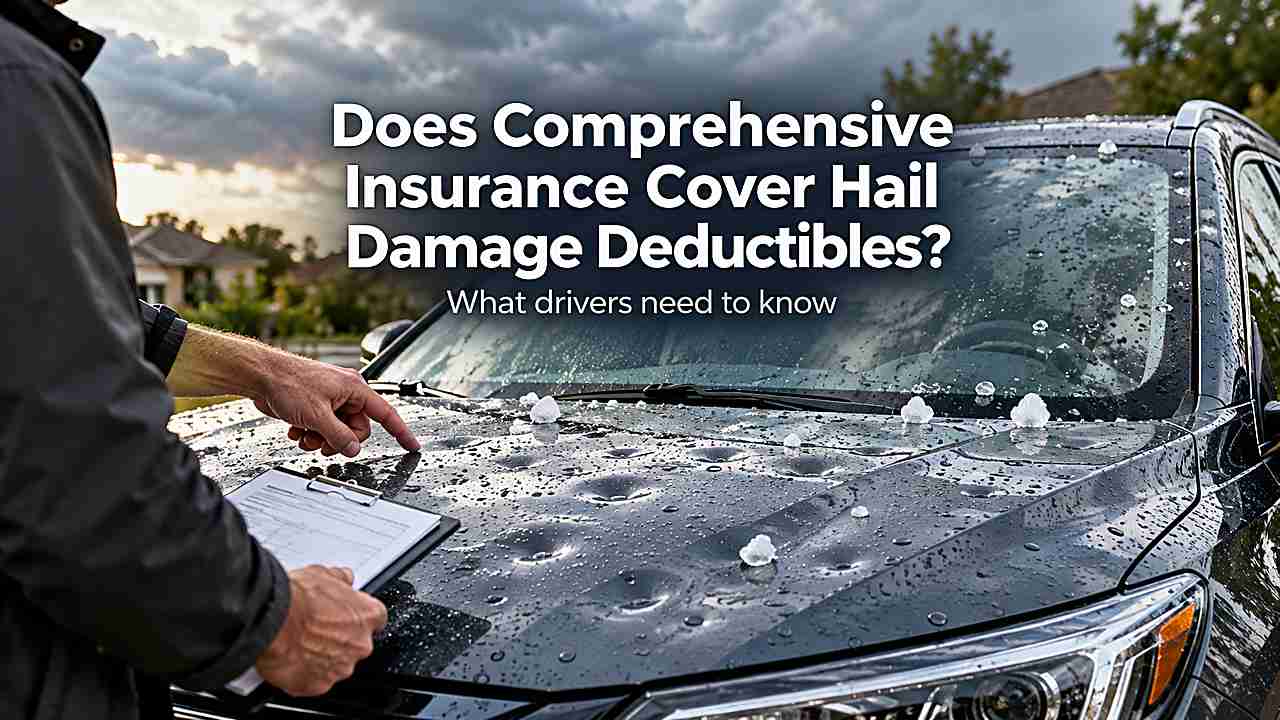
If you are researching does comprehensive insurance cover hail damage deductibles, the most useful answer is the one that separates what is technically possible from what is financially or practically sensible. Small details such as paint condition, local rules, temperature, material or policy wording can completely change the right choice.
This guide focuses on the decision points that matter in real ownership, not viral shortcuts or one-size-fits-all claims. You will see where a DIY step is reasonable, where documentation matters and where a professional or state-specific answer is safer.
Comprehensive insurance usually covers hail damage to your car, but it normally does not cover your deductible. You are responsible for the comprehensive deductible you selected, and the insurer pays the approved covered amount above it, subject to policy limits and total-loss rules.
How comprehensive coverage handles a hail loss
In this article, how comprehensive coverage handles a hail loss matters because it changes the practical decision in ways that are easy to miss from a quick glance. The details below show what you should verify before you spend money, alter the surface or assume two similar-looking situations need the same solution.
Hail is normally a comprehensive claim, not a collision claim
Comprehensive coverage is designed for non-collision events such as hail, wind, falling objects, theft and other weather losses. If you carry only liability coverage, there is usually no coverage for hail damage to your own vehicle. When comprehensive applies, the insurer evaluates the covered repair cost or the vehicle value if the damage is severe enough to total the car. Your deductible is then applied under the terms of your policy.
When you evaluate hail is normally a comprehensive claim, not a collision claim, treat it as one part of the decision rather than a shortcut. Compare it with the condition of your vehicle, the limits of the product or repair method, and any manufacturer, insurer or local requirements that apply before you move to a more aggressive step.
The deductible is your share of the covered loss
A deductible is the amount you agreed to absorb before the insurer pays its share. If a covered hail repair is estimated at $4,000 and your comprehensive deductible is $500, the insurer would generally pay the covered portion above that $500, assuming no other limitations. If the repair cost is below the deductible, there may be no claim payment at all. This is why you should compare a realistic repair estimate with your deductible before filing.
When you evaluate the deductible is your share of the covered loss, treat it as one part of the decision rather than a shortcut. Compare it with the condition of your vehicle, the limits of the product or repair method, and any manufacturer, insurer or local requirements that apply before you move to a more aggressive step.
When you may pay less than the normal deductible
In this article, when you may pay less than the normal deductible matters because it changes the practical decision in ways that are easy to miss from a quick glance. The details below show what you should verify before you spend money, alter the surface or assume two similar-looking situations need the same solution.
Glass coverage can have different terms
Some policies or states allow separate glass coverage, low-deductible glass coverage or a waiver when a windshield can be repaired instead of replaced. Those provisions do not automatically erase the deductible for body-panel hail dents. Read the comprehensive and glass sections separately. If your storm damage includes both dents and broken glass, ask how the insurer will apply the policy.
When you evaluate glass coverage can have different terms, treat it as one part of the decision rather than a shortcut. Compare it with the condition of your vehicle, the limits of the product or repair method, and any manufacturer, insurer or local requirements that apply before you move to a more aggressive step.
Special deductible features are policy-specific
Some insurers offer disappearing-deductible features or optional endorsements that can reduce what you owe after claim-free periods. Those features have eligibility rules and should not be assumed from the word comprehensive alone. Your declarations page usually shows the deductible that applies to the vehicle. If the number is unclear, get the answer in writing before authorizing repairs.
When you evaluate special deductible features are policy-specific, treat it as one part of the decision rather than a shortcut. Compare it with the condition of your vehicle, the limits of the product or repair method, and any manufacturer, insurer or local requirements that apply before you move to a more aggressive step.
Deciding whether a hail claim is worth filing
In this article, deciding whether a hail claim is worth filing matters because it changes the practical decision in ways that are easy to miss from a quick glance. The details below show what you should verify before you spend money, alter the surface or assume two similar-looking situations need the same solution.
Compare the estimate with the deductible, not with the dent count
A roof covered with tiny dents can still produce a large PDR estimate, while a few isolated dents might cost less than your deductible. The useful comparison is the documented repair cost versus your out-of-pocket amount. You should also consider whether cracked paint, glass replacement or panel replacement will raise the final estimate. A professional hail inspection can reveal damage that is hard to see in ordinary light.
When you evaluate compare the estimate with the deductible, not with the dent count, treat it as one part of the decision rather than a shortcut. Compare it with the condition of your vehicle, the limits of the product or repair method, and any manufacturer, insurer or local requirements that apply before you move to a more aggressive step.
Avoid filing a small claim simply because coverage exists
If the repair estimate is only slightly above the deductible, the net payment may be modest. A claim also becomes part of your loss history, and insurers may consider claim history when rating or underwriting subject to state rules. That does not mean you should avoid a legitimate large claim. It means the decision should be based on the real financial difference rather than the assumption that insurance makes every repair free.
When you evaluate avoid filing a small claim simply because coverage exists, treat it as one part of the decision rather than a shortcut. Compare it with the condition of your vehicle, the limits of the product or repair method, and any manufacturer, insurer or local requirements that apply before you move to a more aggressive step.
What happens if hail totals the vehicle
In this article, what happens if hail totals the vehicle matters because it changes the practical decision in ways that are easy to miss from a quick glance. The details below show what you should verify before you spend money, alter the surface or assume two similar-looking situations need the same solution.
The deductible usually comes out of the total-loss settlement
When repair economics make the car a total loss, the insurer generally pays actual cash value rather than funding the full repair. The comprehensive deductible is commonly subtracted from that settlement if you are claiming under your own policy. The value should reflect the vehicle immediately before the hail event, including relevant mileage, trim, options and condition. A loan balance does not determine actual cash value.
When you evaluate the deductible usually comes out of the total-loss settlement, treat it as one part of the decision rather than a shortcut. Compare it with the condition of your vehicle, the limits of the product or repair method, and any manufacturer, insurer or local requirements that apply before you move to a more aggressive step.
Your lender or lessor can affect how payment is issued
If the vehicle is financed or leased, the lender or leasing company may be named on the payment because it has a financial interest in the car. You may still owe money if the settlement is lower than the loan payoff. Gap coverage, if you have it and the loss qualifies, may address some of that difference. You should contact the lender before making decisions about owner-retained salvage or repairs after a total loss.
When you evaluate your lender or lessor can affect how payment is issued, treat it as one part of the decision rather than a shortcut. Compare it with the condition of your vehicle, the limits of the product or repair method, and any manufacturer, insurer or local requirements that apply before you move to a more aggressive step.
How to read your policy before the next storm
In this article, how to read your policy before the next storm matters because it changes the practical decision in ways that are easy to miss from a quick glance. The details below show what you should verify before you spend money, alter the surface or assume two similar-looking situations need the same solution.
Check the declarations page for the comprehensive deductible
Your declarations page normally lists the comprehensive deductible for each vehicle. Do not confuse it with the collision deductible, which can be a different amount. If you want lower out-of-pocket exposure, ask what a lower comprehensive deductible would do to the premium before the next loss. You cannot usually change the deductible after a storm and apply the new amount retroactively.
When you evaluate check the declarations page for the comprehensive deductible, treat it as one part of the decision rather than a shortcut. Compare it with the condition of your vehicle, the limits of the product or repair method, and any manufacturer, insurer or local requirements that apply before you move to a more aggressive step.
Ask about glass, rental and claim-payment details separately
Comprehensive coverage answers only part of the practical question. Rental reimbursement is often a separate optional coverage, and glass treatment can vary. Claim payment timing is also controlled by policy language and state claim-settlement rules. A quick pre-storm policy review can prevent surprises when a severe-weather claim happens.
When you evaluate ask about glass, rental and claim-payment details separately, treat it as one part of the decision rather than a shortcut. Compare it with the condition of your vehicle, the limits of the product or repair method, and any manufacturer, insurer or local requirements that apply before you move to a more aggressive step.
A deductible example that shows why the repair estimate comes first
Suppose hail leaves several roof and hood dents and a PDR shop estimates $2,800. With a $500 comprehensive deductible, the covered portion would generally be $2,300 if the estimate is accepted and no other policy issue applies. With a $2,500 deductible, the same loss would produce only about $300 of insurer-paid repair cost. The damage did not change, but the financial value of filing did because you chose a different amount of retained risk when the policy was purchased.
The same logic applies to a total loss. If the vehicle is valued at $16,000 immediately before the storm and a $1,000 comprehensive deductible applies, the deductible is commonly subtracted from the settlement rather than paid separately at a body shop. Taxes, fees, lienholder payment and owner-retained salvage can then change the final check. Looking at the entire payment calculation prevents the common mistake of assuming the insurer pays the deductible for you.
When comparing policies before storm season, look at the annual premium difference between deductible options and how long it would take the savings from a higher deductible to equal the extra amount you would pay after a loss. A $1,000 deductible is not automatically better or worse than $500; it depends on your emergency savings and risk tolerance. The important part is choosing the amount deliberately. If hail is common in your area and you park outside, a lower comprehensive deductible may have more practical value than it would for a garage-kept vehicle in a low-risk climate.
Frequently Asked Questions
These questions address the issues that most often cause confusion around does comprehensive insurance cover hail damage deductibles. They are useful for checking your plan before you spend money, alter the vehicle or rely on a rule that may not apply to your exact situation.
Do I have to physically pay the deductible to the insurance company?
Usually no. In a repairable claim, the insurer may pay the shop its approved share and you pay the deductible to the repair facility, or the insurer may issue payment to you with the deductible already subtracted. The exact payment flow varies. The important point is that the deductible remains your responsibility unless a specific waiver applies.
The most reliable answer comes from the specific vehicle and documentation rather than an internet average. Keep photos, estimates and policy or product paperwork when they affect the decision.
Is there a separate hail deductible on auto insurance?
Most personal auto policies use the comprehensive deductible for hail, but policy designs can differ. Separate wind or hail deductibles are more common in property insurance than standard personal auto coverage. Check the declarations page and comprehensive section for your vehicle. Do not rely on a homeowners-insurance deductible rule when interpreting an auto policy.
You do not need to solve every variable yourself. A qualified repairer, glass shop, insurer or state regulator can confirm the details that are specific to your situation.
Does comprehensive cover hail if the car is parked outside?
Yes, parking outside does not normally eliminate hail coverage if you carried comprehensive and the event is otherwise covered. Insurers may ask when and where the loss occurred, and you still have a duty to protect the vehicle from further damage when practical. Coverage is determined by the policy, not by whether you own a garage.
If your vehicle, policy or product falls outside the normal case, verify the exact instructions before acting. That extra check is especially worthwhile when the downside includes paint damage, broken glass or a disputed claim.
What if the hail repair costs less than my deductible?
The insurer generally owes no payment when the covered repair amount does not exceed the deductible. You can pay the repair yourself or leave cosmetic damage unrepaired if safe and permitted by a lender or lease agreement. Get a credible estimate first because hail damage can be more extensive than it looks.
The most reliable answer comes from the specific vehicle and documentation rather than an internet average. Keep photos, estimates and policy or product paperwork when they affect the decision.
Can my comprehensive deductible be waived after a catastrophe?
Sometimes specific insurers, endorsements or state emergency actions can affect deductibles, but there is no universal automatic waiver for auto hail claims. Do not assume news about homeowners wind or hurricane deductibles applies to your car. Ask your insurer about your exact policy and loss date.
You do not need to solve every variable yourself. A qualified repairer, glass shop, insurer or state regulator can confirm the details that are specific to your situation.
Conclusion
Comprehensive insurance usually covers hail damage to your car, but it normally does not cover your deductible. You are responsible for the comprehensive deductible you selected, and the insurer pays the approved covered amount above it, subject to policy limits and total-loss rules.
Your best next step is to verify the condition, documents or operating limits that control your specific case, then choose the least aggressive solution that fully addresses the problem. That approach gives you better odds of protecting the vehicle, your coverage and your budget at the same time.