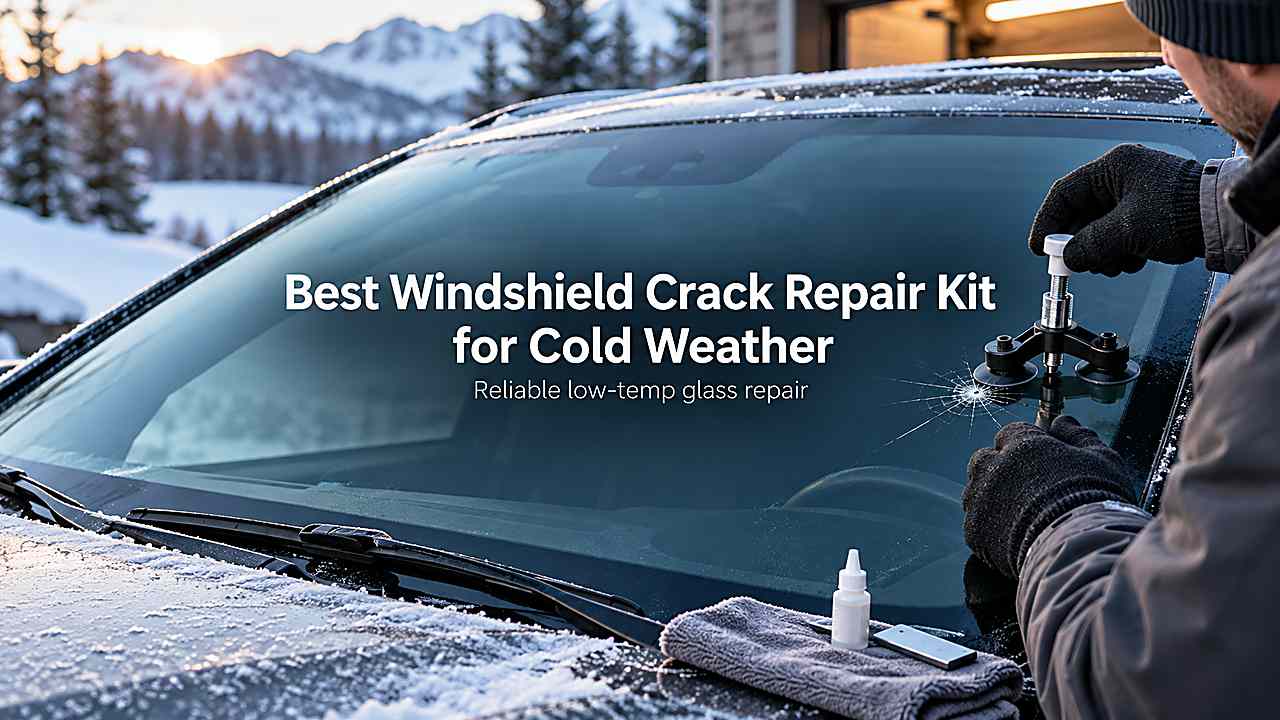
If you are researching best windshield crack repair kit for cold weather, the most useful answer is the one that separates what is technically possible from what is financially or practically sensible. Small details such as paint condition, local rules, temperature, material or policy wording can completely change the right choice.
This guide focuses on the decision points that matter in real ownership, not viral shortcuts or one-size-fits-all claims. You will see where a DIY step is reasonable, where documentation matters and where a professional or state-specific answer is safer.
For cold-weather DIY use, the Rain-X Windshield Repair Kit is the most flexible mainstream option because the manufacturer gives about 40°F as a practical lower guideline, while Permatex specifies roughly 50-75°F and 3M lists about 60-90°F as ideal. Even with Rain-X, you should warm and dry the glass and provide the required UV cure rather than repairing a frozen windshield outdoors.
Cold weather changes the repair conditions
In this article, cold weather changes the repair conditions matters because it changes the practical decision in ways that are easy to miss from a quick glance. The details below show what you should verify before you spend money, alter the surface or assume two similar-looking situations need the same solution.
The glass and resin need to be within a workable temperature range
Windshield repair resin must flow into tiny cracks and displace air. Very cold resin thickens and a cold windshield can hold condensation or ice in the break. Manufacturers therefore specify or recommend application temperatures. Bringing the vehicle into a dry garage is often more important than choosing a different brand.
When you evaluate the glass and resin need to be within a workable temperature range, treat it as one part of the decision rather than a shortcut. Compare it with the condition of your vehicle, the limits of the product or repair method, and any manufacturer, insurer or local requirements that apply before you move to a more aggressive step.
Rapidly heating frozen glass can extend the crack
Do not blast a frozen chip with a heat gun or pour hot water on the windshield. Uneven thermal expansion can turn a small repairable chip into a long crack. Warm the cabin and glass gradually. The repair area should be dry before resin is injected.
When you evaluate rapidly heating frozen glass can extend the crack, treat it as one part of the decision rather than a shortcut. Compare it with the condition of your vehicle, the limits of the product or repair method, and any manufacturer, insurer or local requirements that apply before you move to a more aggressive step.
Rain-X is the best mainstream pick for the lowest practical temperature
In this article, rain-x is the best mainstream pick for the lowest practical temperature matters because it changes the practical decision in ways that are easy to miss from a quick glance. The details below show what you should verify before you spend money, alter the surface or assume two similar-looking situations need the same solution.
Rain-X currently gives about 40°F as a useful lower guideline
Rain-X states that its resin retains properties at low temperatures and suggests roughly 40°F as a practical guideline, with strong direct sunlight required for curing. That gives it a wider stated low-temperature window than the other major kits compared here. It works best on round damage up to about one inch and cracks up to about 12 inches according to the manufacturer. Damage through more than one glass layer is outside the kit guidance.
When you evaluate rain-x currently gives about 40°f as a useful lower guideline, treat it as one part of the decision rather than a shortcut. Compare it with the condition of your vehicle, the limits of the product or repair method, and any manufacturer, insurer or local requirements that apply before you move to a more aggressive step.
The lower temperature guideline does not eliminate the need for good conditions
Forty degrees is still not a reason to work on icy glass in wind or snow. You need dry damage, a stable mounting surface and enough time to complete the injection before conditions change. After resin placement, the repair needs UV exposure to cure. A heated garage followed by controlled sunlight is much more predictable.
When you evaluate the lower temperature guideline does not eliminate the need for good conditions, treat it as one part of the decision rather than a shortcut. Compare it with the condition of your vehicle, the limits of the product or repair method, and any manufacturer, insurer or local requirements that apply before you move to a more aggressive step.
Permatex and 3M prefer warmer glass
In this article, permatex and 3m prefer warmer glass matters because it changes the practical decision in ways that are easy to miss from a quick glance. The details below show what you should verify before you spend money, alter the surface or assume two similar-looking situations need the same solution.
Permatex specifies about 50°F to 75°F for its standard windshield repair kit
Permatex instructs users to make the repair in shade with the windshield between about 50°F and 75°F, then use daylight for cure. The kit is designed mainly for bullseye-type damage up to about 1.25 inches. In a cold climate, that means you should warm the vehicle into the specified range before starting. Do not assume the resin will behave correctly at freezing temperature.
When you evaluate permatex specifies about 50°f to 75°f for its standard windshield repair kit, treat it as one part of the decision rather than a shortcut. Compare it with the condition of your vehicle, the limits of the product or repair method, and any manufacturer, insurer or local requirements that apply before you move to a more aggressive step.
3M lists an ideal range around 60°F to 90°F
3M instructions for its 08580 kit call for an ideal application temperature around 60°F to 90°F and advise allowing a hot or cold vehicle to acclimate. That makes it less convenient for true outdoor winter use. The upside is straightforward manufacturer guidance: create indoor conditions first. Temperature control is part of the repair, not a bonus.
When you evaluate 3m lists an ideal range around 60°f to 90°f, treat it as one part of the decision rather than a shortcut. Compare it with the condition of your vehicle, the limits of the product or repair method, and any manufacturer, insurer or local requirements that apply before you move to a more aggressive step.
A quick comparison for winter use
In this article, a quick comparison for winter use matters because it changes the practical decision in ways that are easy to miss from a quick glance. The details below show what you should verify before you spend money, alter the surface or assume two similar-looking situations need the same solution.
Choose by the temperature you can actually create
If your garage can hold 60°F or more, any of the major kits can be viable for suitable damage. If you can only get the glass into the low 40s, Rain-X has the clearest manufacturer guidance supporting that range. If the car must stay below freezing, postpone DIY resin work or use a professional mobile service with a heated setup. Do not force a resin repair outside its operating conditions.
When you evaluate choose by the temperature you can actually create, treat it as one part of the decision rather than a shortcut. Compare it with the condition of your vehicle, the limits of the product or repair method, and any manufacturer, insurer or local requirements that apply before you move to a more aggressive step.
Damage type still matters more than brand once temperature is controlled
Windshield kits are intended for small chips, bullseyes, stars and limited cracks in laminated windshield glass. Edge cracks, long cracks, contaminated breaks and damage in the driver’s critical viewing area may be poor DIY candidates. Advanced driver-assistance cameras also make windshield replacement and calibration more complex. A professional glass shop can tell you when repair is no longer appropriate.
When you evaluate damage type still matters more than brand once temperature is controlled, treat it as one part of the decision rather than a shortcut. Compare it with the condition of your vehicle, the limits of the product or repair method, and any manufacturer, insurer or local requirements that apply before you move to a more aggressive step.
How to perform a winter repair more successfully
In this article, how to perform a winter repair more successfully matters because it changes the practical decision in ways that are easy to miss from a quick glance. The details below show what you should verify before you spend money, alter the surface or assume two similar-looking situations need the same solution.
Keep the chip clean and dry until repair day
Cover fresh damage with clear tape on the exterior if the manufacturer permits, so road salt and water do not fill the break. Do not wash the car immediately before repair if moisture could remain in the chip. Allow the windshield to dry thoroughly indoors. Resin bonds best to clean dry glass.
When you evaluate keep the chip clean and dry until repair day, treat it as one part of the decision rather than a shortcut. Compare it with the condition of your vehicle, the limits of the product or repair method, and any manufacturer, insurer or local requirements that apply before you move to a more aggressive step.
Cure exactly as the kit requires
Some kits use sunlight or UV to harden the resin after injection. Do not assume a warm garage alone completes that step. Follow the curing-strip and light instructions. If winter sun is weak, allow extra time where the manufacturer directs or use professional equipment rather than improvising chemical cure.
When you evaluate cure exactly as the kit requires, treat it as one part of the decision rather than a shortcut. Compare it with the condition of your vehicle, the limits of the product or repair method, and any manufacturer, insurer or local requirements that apply before you move to a more aggressive step.
Cold-weather kit comparison at a glance
Rain-X is the most practical choice when you can warm the windshield only into the low-40s Fahrenheit because the manufacturer specifically gives about 40°F as a useful guideline. Permatex requires a warmer 50-75°F working range, and 3M describes about 60-90°F as ideal. Those numbers are more useful than marketing claims because resin flow and glass temperature directly affect the repair. In all three cases, the glass must be clean and dry.
The best winter strategy is therefore to create the right environment rather than search for a resin that can be injected into frozen glass. A garage, warmed windshield and dry chip dramatically improve your odds. Rain-X still needs strong sunlight for its cure step, while Permatex and 3M also rely on daylight or UV curing procedures. If you cannot meet the temperature and cure requirements, professional repair in a controlled environment is the safer choice.
When a professional winter repair is the better value
DIY resin is most attractive when the damage is fresh, small, dry and comfortably within the kit limits. A chip at the windshield edge, a crack that has already lengthened in cold weather or contamination that has been present for weeks is less predictable. A professional glass technician can use vacuum and pressure equipment in a controlled environment and can judge whether replacement is safer. That is particularly important when the damage is near a camera, sensor or critical viewing area.
Professional repair may also be covered differently under comprehensive glass provisions. Some insurers waive or reduce a deductible for repair compared with replacement, depending on the policy and state. Check that before buying a kit if you carry glass coverage. A $15 DIY kit is not a bargain if it turns repairable damage into a windshield replacement.
Frequently Asked Questions
These questions address the issues that most often cause confusion around best windshield crack repair kit for cold weather. They are useful for checking your plan before you spend money, alter the vehicle or rely on a rule that may not apply to your exact situation.
Can I repair a windshield chip below freezing?
DIY kits are not designed for application to frozen glass. Even the more cold-tolerant Rain-X guidance points to about 40°F as a practical lower temperature. Warm the vehicle and glass gradually, dry the break and work within the product instructions. If you cannot create those conditions, use a professional repair.
If your vehicle, policy or product falls outside the normal case, verify the exact instructions before acting. That extra check is especially worthwhile when the downside includes paint damage, broken glass or a disputed claim.
Which is better in winter, Rain-X or Permatex?
For lower ambient temperature, Rain-X has the more permissive current guidance, around 40°F, while Permatex specifies roughly 50°F to 75°F. If you can heat a garage into the Permatex range, either can be suitable for the correct damage type. Choose based on both temperature and the chip geometry.
The most reliable answer comes from the specific vehicle and documentation rather than an internet average. Keep photos, estimates and policy or product paperwork when they affect the decision.
Can I use a heat gun to warm the chip?
Avoid concentrated heat. A heat gun can create a steep temperature gradient in laminated glass and may extend the crack. Warm the entire vehicle gradually with cabin heat or a conditioned garage. The goal is stable glass temperature, not a hot spot.
You do not need to solve every variable yourself. A qualified repairer, glass shop, insurer or state regulator can confirm the details that are specific to your situation.
Will a repair kit stop a crack from growing in winter?
A successful resin repair can stabilize suitable small damage, but no DIY kit guarantees every crack will stop. Edge cracks and long cracks are more difficult, and cold temperature swings can stress the windshield. Repair fresh damage quickly within the kit limits. Seek professional glass service for questionable cracks.
If your vehicle, policy or product falls outside the normal case, verify the exact instructions before acting. That extra check is especially worthwhile when the downside includes paint damage, broken glass or a disputed claim.
Can I repair a chip in the driver’s line of sight?
The answer depends on the damage size, location and local inspection rules. Even a structurally successful repair can leave optical distortion. Many professionals are cautious about repairing critical viewing areas. If the chip is directly in front of you, get a glass-shop assessment.
The most reliable answer comes from the specific vehicle and documentation rather than an internet average. Keep photos, estimates and policy or product paperwork when they affect the decision.
Conclusion
For cold-weather DIY use, the Rain-X Windshield Repair Kit is the most flexible mainstream option because the manufacturer gives about 40°F as a practical lower guideline, while Permatex specifies roughly 50-75°F and 3M lists about 60-90°F as ideal. Even with Rain-X, you should warm and dry the glass and provide the required UV cure rather than repairing a frozen windshield outdoors.
Your best next step is to verify the condition, documents or operating limits that control your specific case, then choose the least aggressive solution that fully addresses the problem. That approach gives you better odds of protecting the vehicle, your coverage and your budget at the same time.