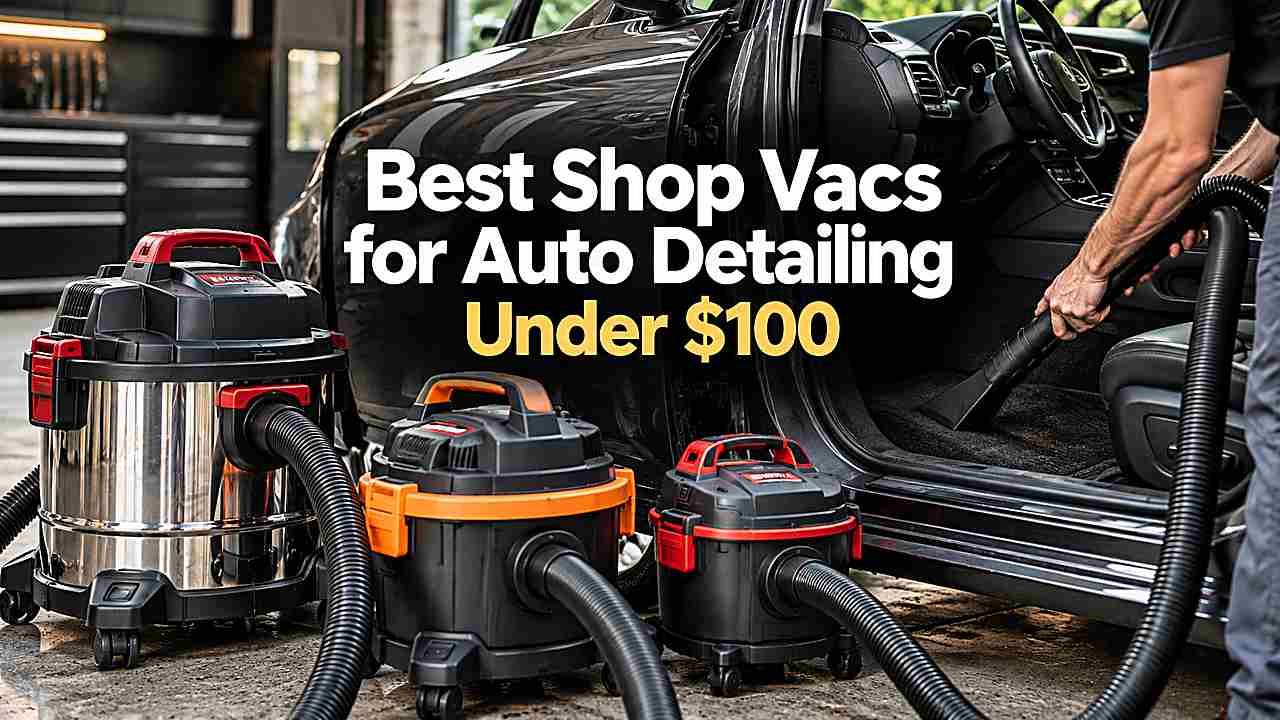
For most DIY auto detailers under $100, the RIDGID 6-gallon 3.5-peak-HP NXT is the best overall buy because it combines usable capacity, proven wet/dry capability and a current price around $80. The BAUER 6-gallon 4-peak-HP vac is the best budget value around $55, while the Stanley 5-gallon 4-peak-HP model is a compact corded alternative around $48.
Do not buy by peak horsepower alone. For interiors, hose flexibility, crevice tools, filter availability, noise, portability and whether you can add a small detailing nozzle matter as much as the motor label.
RIDGID’s 6-gallon NXT is the strongest all-around sub-$100 pick, BAUER’s 6-gallon is the budget choice, and Stanley’s 5-gallon works well when compact size matters. Verify current local price before buying because sale pricing changes.
Quick comparison
| Vacuum | Approx. current price | Capacity / power | Why it works for detailing |
| RIDGID HD06001 NXT | $79.98 | 6 gal / 3.5 peak HP | Strong all-around value, locking hose, common filters |
| BAUER 56201 | $54.99 | 6 gal / 4 peak HP | Lowest-cost full-size pick, 7-ft hose, 10-ft cord |
| Stanley SL18115 | $47.99 | 5 gal / 4 peak HP | Compact corded value for small garages |
| RYOBI PCL732B | $64.97 tool-only | 5 gal cordless | Useful if you already own ONE+ batteries |
Best overall: RIDGID 6-gallon NXT
Home Depot currently lists the RIDGID HD06001 around $79.98. Six gallons is large enough for an interior cleaning session without becoming awkward to carry, and the locking hose is useful when you are reaching under seats. RIDGID filters and accessories are widely available.
For detailing, add a narrow crevice nozzle and soft brush if your package does not include them. Your final number should include the repair or ownership cost that will actually fall on you, not a generic internet average. Local labor rates, vehicle design and parts availability can change the economics quickly.
Best budget: BAUER 6-gallon 4-peak-HP
Harbor Freight currently lists the BAUER 56201 around $54.99. It includes a 7-foot hose, 10-foot cord, washable filter and onboard storage. The value is difficult to beat if you want a basic wet/dry machine and are willing to add better detailing attachments.
At this price, spend part of the remaining budget on a flexible small-diameter hose adapter or quality crevice tools. A pre-purchase inspection remains one of the highest-value steps because it turns hidden uncertainty into a list you can price. Even experienced buyers use specialists when structure, electronics or drivetrain condition is difficult to judge.
Best compact corded option: Stanley 5-gallon
The Stanley SL18115 currently appears around $47.99 at Home Depot. Its 5-gallon size is easier to store than a larger shop vac and still gives enough capacity for routine interior dirt and small wet cleanup. It is a practical choice for apartment garages or anyone who does not want a large canister. Keep copies of photos, scan reports, quotes and key paperwork when the finding affects price. Clear documentation makes negotiation shorter and prevents memory from becoming less accurate after you have viewed several vehicles.
Best cordless value if you already own batteries: RYOBI bucket-top 5-gallon
RYOBI’s PCL732B is currently around $64.97 as a tool-only 18V ONE+ model. Cordless convenience is excellent when you clean cars outside or lack a nearby outlet, but battery runtime and suction depend on the platform. It only makes budget sense if you already own compatible batteries and chargers. Resale matters too. A condition you are willing to accept today can still reduce the number of future buyers, dealer trade options or insurance choices, so include the exit value in the purchase decision.
What matters for auto detailing more than tank size
The most reliable way to use this section is to treat each check separately. One good sign should not cancel several bad ones, and one questionable sign should be verified before you assume the worst.
Crevice access
Seats, tracks, console gaps and carpet edges need a narrow tool. A powerful vac with a bulky hose can be frustrating inside a small cabin.
Look for adapters that accept automotive-detailing nozzles. Do not let a low asking price change the standard of proof you require. A cheap vehicle with unclear title, structural or mechanical risk can cost far more than a correctly priced car with honest cosmetic wear.
If the seller can document the explanation and the vehicle supports it, the issue may be manageable. If the story changes or inspection access is restricted, that uncertainty deserves real weight in your decision.
Hose flexibility and reach
A stiff hose knocks into paint and makes under-seat work harder. Seven feet or more is useful when the machine stays outside the car.
Use a soft hose cuff near painted door sills. If the seller can document the explanation and the vehicle supports it, the issue may be manageable. If the story changes or inspection access is restricted, that uncertainty deserves real weight in your decision.
Filter and bag availability
Fine cabin dust can pass through or clog a basic filter. Better filters and disposable bags keep suction consistent and reduce dust when you empty the vacuum.
Confirm replacements are easy to buy. Your final number should include the repair or ownership cost that will actually fall on you, not a generic internet average. Local labor rates, vehicle design and parts availability can change the economics quickly.
Wet capability
Wet pickup is useful for small spills and extractor cleanup, but a shop vac is not a true upholstery extractor by itself. Never vacuum flammable liquids.
Clean and dry the canister after wet work. A pre-purchase inspection remains one of the highest-value steps because it turns hidden uncertainty into a list you can price. Even experienced buyers use specialists when structure, electronics or drivetrain condition is difficult to judge.
A $100 budget is better spent on the vacuum plus attachments
The difference between a $55 and $95 vacuum may matter less than having a good crevice tool, soft brush, hose adapter and fresh filter. For pet hair, rubber agitation tools can improve pickup more than extra motor power. Build the system around the interior tasks you actually do. A useful rule is to treat every finding as a reason for the next check rather than as a final verdict. When several independent clues point in the same direction, your confidence becomes much stronger.
When to spend more than $100
If you detail several vehicles each week, need quieter operation, HEPA-grade filtration or very long hoses, a larger professional wet/dry vacuum can save time. Commercial machines also offer better accessory ecosystems. For one or two personal cars, the under-$100 options are enough when your technique and tools are good. Do not let a low asking price change the standard of proof you require. A cheap vehicle with unclear title, structural or mechanical risk can cost far more than a correctly priced car with honest cosmetic wear.
Buy for the jobs you will actually do
A tool earns its space by solving a recurring task safely and efficiently. Before spending, list the vehicles and jobs you expect to handle during the next year, then choose accessories and capacity around those needs. This keeps a beginner kit practical instead of turning it into a collection of unused specialty equipment.
That distinction matters because the visible symptom is only one part of the decision. You should connect what you see with ownership records, service history, repair cost and what an independent inspection can verify.
Maintenance that keeps a budget vacuum pulling strongly
Empty the tank before it becomes packed with debris and clean or replace filters according to the manufacturer instructions. Fine dust can clog a filter long before the canister is full, causing users to think the motor has become weak. Inspect the hose for coins, leaves and pet-hair plugs when suction suddenly drops.
After wet pickup, drain and dry the tank, hose and filter system as required. Leaving dirty water sealed inside creates odor and can damage filters that are not designed to stay wet. Basic maintenance makes a $55 vacuum perform better than a neglected expensive one.
Which detailing attachments are worth adding first
A narrow flexible crevice tool is the first upgrade because seat rails, console gaps and door pockets are where a standard utility nozzle struggles. A soft round brush helps on dashboards, vents and delicate hard surfaces when used gently. A smaller hose adapter can make interior work easier, but every reduction in hose diameter can change airflow and increase clogging risk.
For pet hair and carpet, pair the vacuum with a rubber brush or dedicated hair tool instead of expecting suction alone to lift embedded fibers. Keep wheel and dirty-floor tools separate from the attachments you use on seats and interior trim.
Why a blower port is useful but not essential
A rear blower port can help push dust from cargo seams or dry small crevices, but it should not be used to blast gritty debris across paint. For interior detailing, controlled vacuuming and soft brushing matter more. Treat the blower as a convenience feature rather than a reason to choose a weaker vacuum.
Frequently Asked Questions
Shop-vac specifications are easy to compare on paper, but interior usefulness comes from maneuverability and attachments. These questions focus on the details that matter inside a vehicle.
How many gallons is best for car detailing?
Around 4 to 6 gallons is a useful home-detailing range because it balances capacity with portability. Larger tanks are fine but take more storage space. Small cordless vacs are convenient for maintenance cleaning.
Choose around your garage and usage. Resale matters too. A condition you are willing to accept today can still reduce the number of future buyers, dealer trade options or insurance choices, so include the exit value in the purchase decision.
Is peak horsepower a good way to compare shop vacs?
Not by itself. Peak horsepower is a marketing-oriented motor rating and does not fully describe airflow or sealed suction. Hose diameter, filter condition and nozzle size affect real pickup.
Use overall design and user needs rather than one number. That distinction matters because the visible symptom is only one part of the decision. You should connect what you see with ownership records, service history, repair cost and what an independent inspection can verify.
Can you use a shop vac to extract car seats?
A wet/dry vac can recover moisture after you apply and agitate upholstery cleaner, but it lacks the integrated spray system of a carpet extractor. Use minimal liquid and make extra dry passes.
Do not soak seat foam or headliners. A useful rule is to treat every finding as a reason for the next check rather than as a final verdict. When several independent clues point in the same direction, your confidence becomes much stronger.
Do you need a HEPA filter for auto detailing?
Not for every car, but improved filtration is helpful for fine dust and allergens. Make sure the vacuum supports the filter and that airflow remains adequate. A clogged high-efficiency filter can reduce suction.
Bags can also help contain fine dirt. Do not let a low asking price change the standard of proof you require. A cheap vehicle with unclear title, structural or mechanical risk can cost far more than a correctly priced car with honest cosmetic wear.
Is cordless worth it for detailing?
It is excellent for quick maintenance and parking-lot work, especially if you already own the battery platform. Corded machines avoid runtime limits and often provide strong consistent power.
For deep interiors, corded is usually the better value under $100. If the seller can document the explanation and the vehicle supports it, the issue may be manageable. If the story changes or inspection access is restricted, that uncertainty deserves real weight in your decision.
Conclusion
Treat best shop vacs for auto detailing under 100 dollars as a practical decision rather than a trick. The best outcome is the one that solves the immediate problem without creating title, safety, mechanical or resale problems later.
If the numbers and evidence still make sense after those checks, move forward confidently. If they do not, walking away or choosing the simpler repair is often the most profitable decision.