You do not need to wait until the end of the article for the answer. For most North American used-car shoppers, BlueDriver Pro Next-Gen is the best overall value because it offers standard OBD2 data, enhanced diagnostics on many popular makes, repair reports and no subscription at a relatively low current price. OBDLink MX+ is better for app flexibility, while Innova 5610 offers deeper standalone diagnostics at a much higher cost.
What changes from one vehicle to another is the evidence behind that answer. The sections below are designed to help you separate low-cost cosmetic issues from ownership, structural, mechanical or resale risks.
For most North American used-car shoppers, BlueDriver Pro Next-Gen is the best overall value because it offers standard OBD2 data, enhanced diagnostics on many popular makes, repair reports and no subscription at a relatively low current price. OBDLink MX+ is better for app flexibility, while Innova 5610 offers deeper standalone diagnostics at a much higher cost.
BlueDriver Pro Next-Gen for most buyers
| Scanner | Best for | Current price | Important note |
| BlueDriver Pro Next-Gen | Best overall for most buyers | ~$99.95 current sale | No subscription; enhanced coverage varies |
| OBDLink MX+ | Best app flexibility | ~$139.95 | Strong OEM/app support; coverage varies |
| Innova 5610 | Best advanced handheld | ~$349.99 | All-system and bidirectional features |
| TOPDON TopScan Pro | Best advanced mobile testing | Check current device price | Paid updates after included year |
Current official sale around $99.95. No subscription. IOS and Android. Enhanced ABS airbag transmission coverage on supported makes. Repair reports and Mode 6. Keep the transaction numbers separate whenever possible. Purchase price, trade value, financing, repair cost and taxes are easier to judge when one figure is not hiding another.
Who this option fits
Choose based on the vehicles you expect to inspect and the modules you actually need. Coverage checkers matter more than headline feature counts because enhanced diagnostics can vary by year, make and model.
OBDLink MX+ for enthusiasts
About $139.95 official price. Fast Bluetooth. Many OEM add-ons included. Broad third-party app support. Enhanced coverage varies by vehicle. When the issue crosses into structure, airbags, title status, flood exposure or expensive diagnostics, pay for a specialist. The inspection fee is small compared with inheriting a problem you cannot verify yourself.
Who this option fits
Choose based on the vehicles you expect to inspect and the modules you actually need. Coverage checkers matter more than headline feature counts because enhanced diagnostics can vary by year, make and model.
Innova 5610 for advanced handheld diagnostics
About $349.99. All-system scan. OEM live data. Bidirectional controls. No subscription. Overkill for one purchase but useful for frequent inspections. That distinction matters because a used-car decision is rarely controlled by one clue. You get a stronger answer when paperwork, physical condition and independent evidence all point in the same direction.
Who this option fits
Choose based on the vehicles you expect to inspect and the modules you actually need. Coverage checkers matter more than headline feature counts because enhanced diagnostics can vary by year, make and model.
TOPDON TopScan Pro for app-based active tests
Full-system diagnostics. Bidirectional tests. Multiple service functions. One year updates included. Current Pro update renewal listed at $99 annually. Use the result as a reason for the next check, not as permission to jump straight to a conclusion. A good inspection narrows uncertainty step by step and stops when the evidence becomes too expensive or risky to ignore.
Who this option fits
Choose based on the vehicles you expect to inspect and the modules you actually need. Coverage checkers matter more than headline feature counts because enhanced diagnostics can vary by year, make and model.
What to scan before a test drive
Stored and pending codes. Freeze frame. Do not clear anything. Save report. Verify VIN and module communication. You should also think about resale. A condition you are willing to accept today may still affect what the next buyer, lender or dealer is willing to pay later, so price the future limitation into today’s decision.
Check readiness monitors after the scan
Multiple not-ready monitors can indicate recent battery disconnect or code clearing. Ask why. Legitimate explanations exist. Monitor requirements vary. If the seller can support the explanation with records and the car behaves consistently with the story, the finding may be harmless. When the explanation changes or inspection access is restricted, give the same clue more weight.
A test section, comparison panel or written quote is more useful than a confident guess. Repeatable evidence protects you from both unnecessary fear and an expensive assumption.
Use the scanner as a filter, not a certification
Clean codes cannot detect rust frame repairs bearings or all transmission problems. FTC recommends independent inspection. Tool should help you ask better questions. A test section, comparison panel or written quote is more useful than a confident guess. Repeatable evidence protects you from both unnecessary fear and an expensive assumption.
Use the test drive to challenge the paper story
A used car can look convincing while parked. Start it cold when possible, watch the warning-light bulb check, listen over rough pavement and assess steering, braking and transmission behavior on a safe road. Any symptom that conflicts with the service history or seller explanation should be resolved before final price discussion.
A test section, comparison panel or written quote is more useful than a confident guess. Repeatable evidence protects you from both unnecessary fear and an expensive assumption.
Use the Scanner in a Repeatable Pre-Purchase Workflow
This section turns the earlier principles into a practical decision you can use on the actual vehicle rather than treating the topic as an abstract rule.
Scan before the test drive
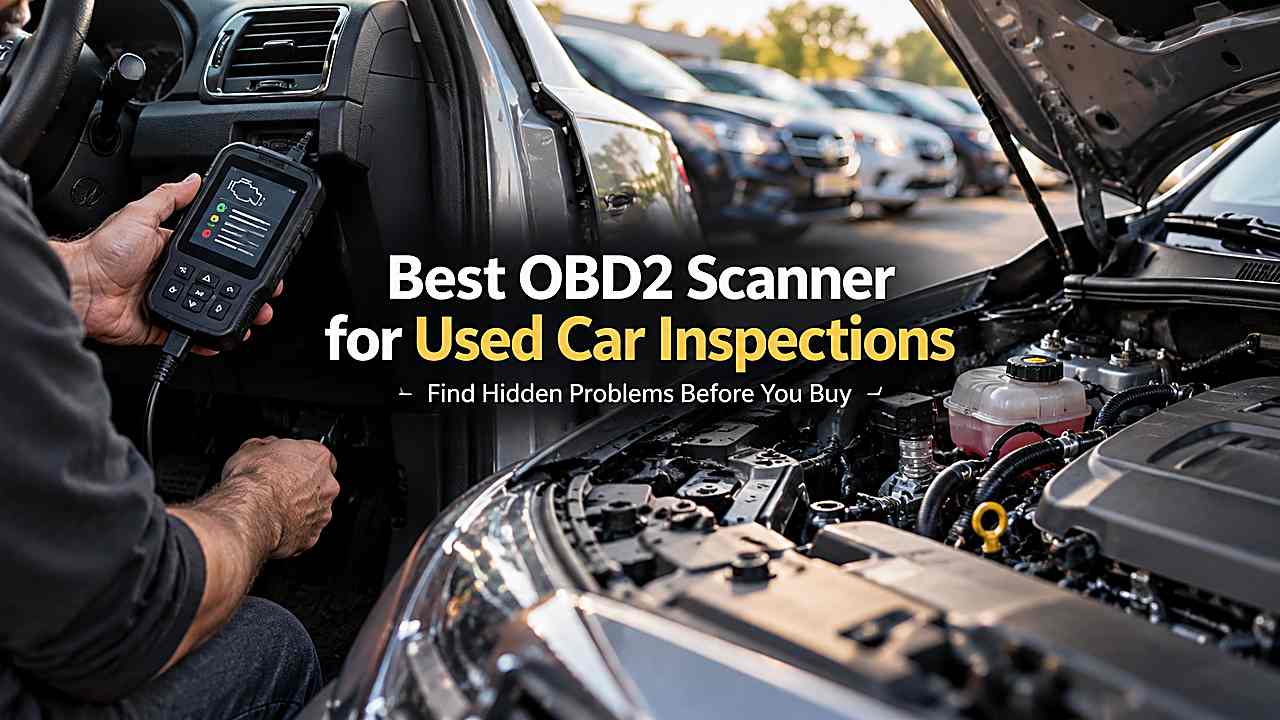
Confirm module coverage for the exact vehicle before you depend on any enhanced feature. With the ignition in the correct state, scan all supported modules and save the report without clearing anything. Stored, pending and history codes can lead you to questions that would never appear on the dashboard.
Keep the conclusion proportional to the evidence. If the finding is uncertain but inexpensive to verify, verify it. If it is uncertain and potentially expensive, do not let the seller make that uncertainty your financial responsibility.
Check readiness and live evidence
Use readiness and freeze-frame evidence after the first scan. Multiple incomplete emissions monitors can indicate a recent battery disconnect or code clearing, although legitimate service can do the same. Freeze-frame and live data add context to a code, but they only help when you understand what the value means for that engine and operating condition.
Keep the conclusion proportional to the evidence. If the finding is uncertain but inexpensive to verify, verify it. If it is uncertain and potentially expensive, do not let the seller make that uncertainty your financial responsibility.
Hand the evidence to the mechanic
Finish with independent mechanical inspection. A saved diagnostic report gives the pre-purchase inspector a starting point, but it cannot measure rust, collision repair, wheel-bearing noise or all transmission wear. The best scanner is the one that makes the professional inspection more targeted, not the one that convinces you to skip it.
Keep the conclusion proportional to the evidence. If the finding is uncertain but inexpensive to verify, verify it. If it is uncertain and potentially expensive, do not let the seller make that uncertainty your financial responsibility.
Coverage Matters More Than the Longest Feature List
This section turns the earlier principles into a practical decision you can use on the actual vehicle rather than treating the topic as an abstract rule.
Check the exact year and model
A scanner can advertise ABS, SRS and bidirectional functions while supporting only a subset on the car you are viewing. Use the manufacturer coverage checker before purchase or before relying on a feature at the seller’s driveway. This is especially important for European, luxury and newer secure-gateway vehicles.
Keep the conclusion proportional to the evidence. If the finding is uncertain but inexpensive to verify, verify it. If it is uncertain and potentially expensive, do not let the seller make that uncertainty your financial responsibility.
Think about update cost after the purchase
Some tools include ongoing updates while others include a year and charge later. If you are buying one car, subscription cost may matter less than immediate coverage. If you inspect cars regularly, update policy becomes part of the tool’s real price.
Keep the conclusion proportional to the evidence. If the finding is uncertain but inexpensive to verify, verify it. If it is uncertain and potentially expensive, do not let the seller make that uncertainty your financial responsibility.
What a Pre-Purchase Scan Should Actually Produce
Start with full-module coverage. This is the part of the decision that should be known before you spend money or make a final offer. Put the evidence in writing and compare it with at least one realistic alternative. When buyers skip this step, they often let the visible condition or the seller’s urgency set the number for them. A better approach is to establish what the car or transaction would be worth if this issue did not exist, then measure the actual gap instead of guessing.
Next, verify saved diagnostic evidence. A quoted number, diagnostic result or document is useful only when it applies to the exact vehicle and the exact problem. Ask what is included, what is excluded and what could change after disassembly or verification. If the range is wide, use the conservative end in your budget. That protects you from a deal that looks profitable or affordable only because every uncertain item was calculated at the best possible outcome.
Finally, consider mechanical inspection. Used-car decisions do not end on the day you sign or sell. Insurance, future trade value, buyer confidence, repeat repairs and paperwork can continue affecting the car after the immediate problem is solved. If the transaction still makes sense after you include that future friction, you have a much stronger decision. If the deal only works when every future buyer ignores the same concern, the current discount is probably too small.
A Final Sanity Check Before You Commit
Before you commit on best obd2 scanner for used car inspections, compare the decision with one ordinary alternative that does not have the same complication. This prevents a low asking price, polished presentation or successful negotiation from becoming the only reason you continue. Write down the additional cost you expect in the first month and the uncertainty that could still remain after purchase, repair or trade. If a simpler alternative costs only a little more but removes a large title, structural, diagnostic or resale risk, the extra purchase price can be the cheaper decision over the full ownership period.
Then ask what evidence would make you change your mind in either direction. A good inspection process is falsifiable: a clean independent report, matching records or a verified repair can reduce concern, while a contradictory title event, failed diagnostic test or seller refusal can increase it. Do not keep moving the standard simply because you have already invested time in the car. The money already spent on a history report or inspection is a sunk cost, and its purpose was to help you avoid a much larger mistake. That discipline is especially important in used-car transactions because urgency and scarcity can make a questionable vehicle feel more attractive than it really is.
Frequently Asked Questions
No two used cars present exactly the same evidence. These FAQs focus on the edge cases that can change the recommendation for best obd2 scanner for used car inspections.
Is BlueDriver good enough for a pre-purchase inspection?
Yes for many mainstream vehicles, provided enhanced coverage includes the modules you care about. It is especially useful for stored codes, readiness and easy reporting.
If this point could materially change price, safety, title status or a major repair decision, verify it before the transaction rather than using the FAQ as a substitute for the specific vehicle evidence.
Should you clear codes during a used-car inspection?
No. Read and save codes without erasing them. Clearing can destroy useful evidence and reset readiness monitors on a vehicle you do not own.
If this point could materially change price, safety, title status or a major repair decision, verify it before the transaction rather than using the FAQ as a substitute for the specific vehicle evidence.
Can a scanner detect a bad transmission?
It can reveal transmission-control codes and live data on supported vehicles, but a worn or slipping transmission may have no stored fault. Road testing and inspection still matter.
If this point could materially change price, safety, title status or a major repair decision, verify it before the transaction rather than using the FAQ as a substitute for the specific vehicle evidence.
Is Bluetooth better than a handheld scanner?
Bluetooth tools are compact and flexible, while handheld scanners are self-contained. Module coverage and data quality matter more than the screen format.
If this point could materially change price, safety, title status or a major repair decision, verify it before the transaction rather than using the FAQ as a substitute for the specific vehicle evidence.
Can a cheap OBD2 reader reveal recently cleared codes?
Many basic readers can show readiness status, which helps reveal recent clearing. Enhanced tools add ABS, SRS and manufacturer-specific modules for a broader inspection.
If this point could materially change price, safety, title status or a major repair decision, verify it before the transaction rather than using the FAQ as a substitute for the specific vehicle evidence.
Conclusion
The point of best obd2 scanner for used car inspections is not to eliminate every uncertainty. It is to identify the uncertainties that are too expensive to accept and separate them from ordinary used-car wear that can be priced rationally.
If the vehicle still makes sense after those checks, you can move forward or negotiate with a clearer number. If it does not, walking away is a successful inspection rather than a missed deal.