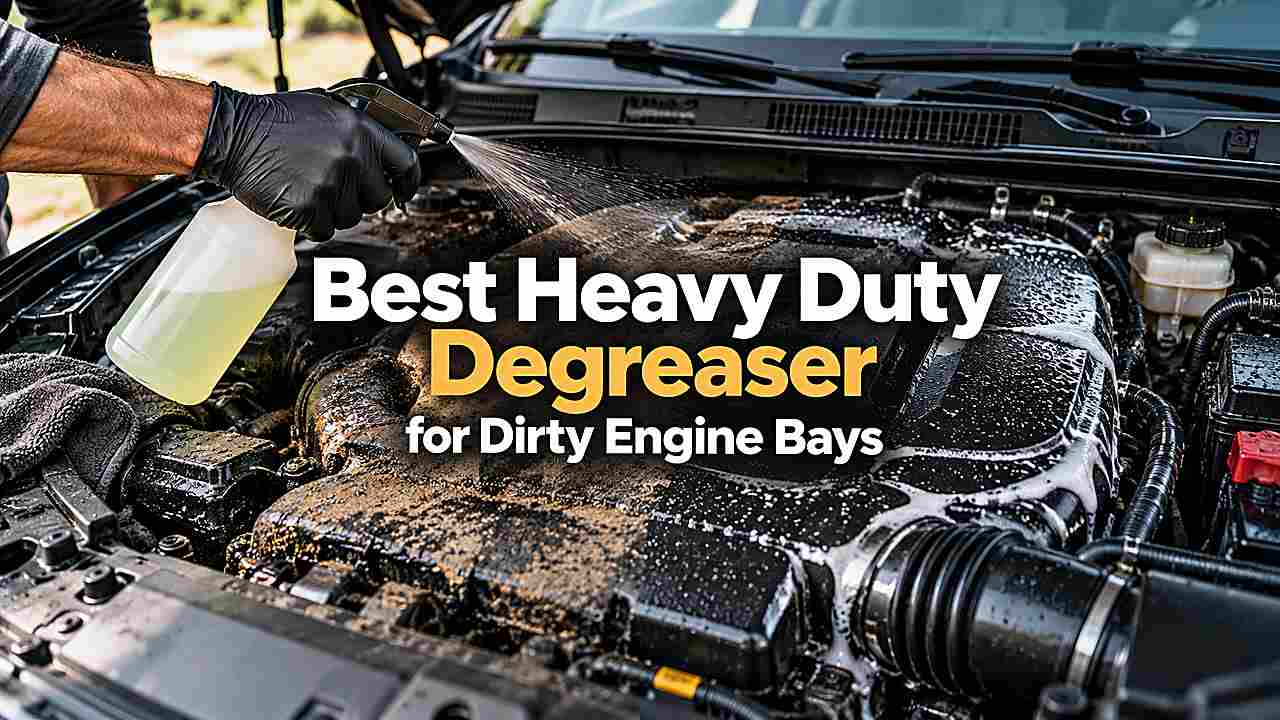
For a heavily greasy engine bay, Super Clean is one of the strongest easy-to-find degreasers and its manufacturer specifically recommends it for engines, including full-strength use on heavy grime. If you want a less caustic product around mixed metals and sensitive materials, Extreme Simple Green Aircraft & Precision Cleaner is a better controlled alternative because it includes corrosion inhibitors and clear dilution guidance.
Heavy-duty does not mean you should spray the whole engine at maximum strength. Use strong chemistry only on greasy areas, keep the engine cool and prevent cleaner from drying.
Use Super Clean for severe oily buildup when the materials are compatible; use Extreme Simple Green when you want a more controlled metal-friendly concentrate. Always spot-test, work cool and rinse before the product dries.
Best for severe grease: Super Clean
Super Clean currently recommends spraying a cool engine, allowing roughly three to five minutes of dwell, brushing heavy areas and rinsing. Its concentrated alkalinity cuts oil quickly.
That strength is exactly why you should keep it off delicate finishes and follow the label. When safety is involved, manufacturer procedures and rated equipment take priority over internet shortcuts. Saving a few minutes is never worth creating a lifting, electrical or braking hazard.
Best controlled alternative: Extreme Simple Green
Extreme Simple Green Aircraft & Precision Cleaner is water-based, non-caustic and formulated with an anti-corrosion agent. The manufacturer suggests about 1:3 for heavy cleaning and weaker dilutions for general maintenance.
It is attractive when the engine bay includes aluminum, painted metal, rubber and plastics. Your best result comes from matching capacity to the task with some margin. Running tools continuously at their limit creates heat, wear and frustration even when the specification says the job is technically possible.
Degreaser is only one part of engine-bay cleaning
Remove leaves and dry debris first, cover or avoid obviously sensitive exposed components, and let the engine cool. A brush breaks greasy film with less chemical dwell.
Pressure and chemistry should not be used as substitutes for controlled agitation. That detail matters because it changes how safely and efficiently the job can be completed. You should choose the tool or method around the actual vehicle and working conditions rather than a headline specification.
What this means for your setup
Good preparation also reduces the amount of expensive equipment you need. Clean surfaces, correct access and a clear workflow often matter more than buying the most powerful version of every tool. When safety is involved, manufacturer procedures and rated equipment take priority over internet shortcuts. Saving a few minutes is never worth creating a lifting, electrical or braking hazard.
Work section by section
Spray only the area you can agitate and rinse before drying. Start with lower greasy surfaces and keep strong cleaner off exterior paint when possible.
Direct sun shortens dwell time and increases streaking risk. A controlled process is usually faster in the end because it prevents rework. If one step begins behaving differently from what you expect, stop and inspect before adding more force, heat, pressure or chemical strength.
Use the minimum concentration that works
Full-strength cleaner can be appropriate on thick oil buildup, but routine dust and light film do not need it. Dilution reduces material stress and chemical cost.
Always follow the product’s own guidance rather than inventing stronger mixtures. Good preparation also reduces the amount of expensive equipment you need. Clean surfaces, correct access and a clear workflow often matter more than buying the most powerful version of every tool.
Rinsing technique matters
A garden hose or low-pressure spray is often enough once the chemistry has loosened the grime. Avoid blasting connectors, fuse boxes, alternator vents and intake openings.
Heavy water pressure can create electrical problems that degreasing was never meant to solve. Think about storage and repeat use as well as the immediate job. A product that works perfectly once but is awkward to store, service or replace can become a poor home-garage choice over time.
What this means for your setup
Your best result comes from matching capacity to the task with some margin. Running tools continuously at their limit creates heat, wear and frustration even when the specification says the job is technically possible. A controlled process is usually faster in the end because it prevents rework. If one step begins behaving differently from what you expect, stop and inspect before adding more force, heat, pressure or chemical strength.
Dry the bay before dressing
Use towels and moving air to remove standing water, especially from plug wells and connector recesses. Do not start coating plastics while water is still trapped.
A clean, dry engine bay usually looks better with a natural finish than with heavy shiny dressing. When safety is involved, manufacturer procedures and rated equipment take priority over internet shortcuts. Saving a few minutes is never worth creating a lifting, electrical or braking hazard.
Do not confuse degreaser with leak repair
A freshly cleaned engine makes new leaks easier to locate. If oil returns quickly, find and repair the source.
Repeatedly degreasing an active leak sends contaminated runoff into the environment and can hide maintenance needs. Your best result comes from matching capacity to the task with some margin. Running tools continuously at their limit creates heat, wear and frustration even when the specification says the job is technically possible.
Protect yourself and the work area
Wear eye protection and gloves, avoid breathing mist and control runoff. Do not mix degreasers with other chemicals.
Read the safety data and label, especially when working around coatings or anodized parts. That detail matters because it changes how safely and efficiently the job can be completed. You should choose the tool or method around the actual vehicle and working conditions rather than a headline specification.
What this means for your setup
Good preparation also reduces the amount of expensive equipment you need. Clean surfaces, correct access and a clear workflow often matter more than buying the most powerful version of every tool. When safety is involved, manufacturer procedures and rated equipment take priority over internet shortcuts. Saving a few minutes is never worth creating a lifting, electrical or braking hazard.
How to make the setup easier to repeat
Your best result comes from matching capacity to the task with some margin. Running tools continuously at their limit creates heat, wear and frustration even when the specification says the job is technically possible. A controlled process is usually faster in the end because it prevents rework. If one step begins behaving differently from what you expect, stop and inspect before adding more force, heat, pressure or chemical strength.
Control runoff when cleaning heavy oil
Engine-bay runoff can contain petroleum residue, road grime and strong cleaner. Do not allow it to enter storm drains where local rules prohibit it. Use absorbent mats, containment or a wash facility equipped for oily wastewater when the engine is heavily contaminated.
For a leaking engine, repair the source before performing repeated heavy degreasing. Cleaning once for diagnosis is useful; washing active oil into the environment every week is not.
Material testing is more important than brand strength
Engine bays combine bare aluminum, painted metal, plastics, rubber, anodized parts and electrical connectors. A degreaser that is excellent on an oily steel block may discolor an aluminum intake or stain a delicate coating. Test an inconspicuous area and use weaker dilution around sensitive materials.
Keep the dwell short on unknown finishes. If the cleaner begins changing the surface appearance, rinse immediately. The correct product is the one that removes the soil without creating a second repair.
A second lighter cleaning pass is often better than one extreme pass
Heavy grease may need two cycles. Use the strong concentration on the worst oily buildup, rinse completely, then reassess the remaining film with a weaker solution. This gives you more control around painted and delicate components. Repeated aggressive full-strength soaking increases the chance of staining without necessarily cleaning faster.
Use dedicated brushes for engine work and keep them separate from wheel and interior tools. Grease transferred to a clean plastic cover or painted fender can create extra cleanup and cross-contamination.
Protect nearby exterior paint during heavy degreasing
Strong cleaner can splash onto fenders, painted strut towers and exterior panels while you brush greasy components. Rinse those surfaces promptly and use fender covers or towels where practical, making sure the protective material itself is clean. Never leave concentrated degreaser drying on exterior paint. Working with smaller controlled sections keeps the engine cleaner and reduces the chance that one aggressive product creates stains somewhere else.
Use different brushes for different surfaces
A medium nylon brush works well on greasy plastic covers and painted metal, while a smaller detailing brush helps around caps and tight castings. Avoid aggressive wire brushes on aluminum, coated brackets and plastics because they can permanently mark the surface. Let chemistry loosen the contamination first, then use only enough agitation to remove what remains. Controlled brushing reduces the temptation to compensate with more pressure or stronger chemical concentration.
Frequently Asked Questions
The strongest degreaser is not automatically the safest engine cleaner. Material compatibility, dilution and dwell time decide whether the product helps or creates staining.
Can Super Clean damage aluminum?
Strong alkaline cleaners can discolor or etch some aluminum surfaces if used incorrectly. Follow the label, spot-test and reduce dwell time on sensitive material.
A less aggressive diluted cleaner may be a better choice on exposed aluminum. That detail matters because it changes how safely and efficiently the job can be completed. You should choose the tool or method around the actual vehicle and working conditions rather than a headline specification.
Is Simple Green safe for engine bays?
Extreme Simple Green Aircraft & Precision Cleaner is specifically formulated for metal, plastic, rubber and painted surfaces and includes corrosion protection. Use the recommended dilution and do not let it dry.
Standard household formulas are not automatically equivalent. A controlled process is usually faster in the end because it prevents rework. If one step begins behaving differently from what you expect, stop and inspect before adding more force, heat, pressure or chemical strength.
Can you use degreaser on a hot engine?
No. Work on a cool engine. Heat makes cleaner evaporate quickly and increases staining risk.
It can also make water contact unnecessarily stressful for hot components. Good preparation also reduces the amount of expensive equipment you need. Clean surfaces, correct access and a clear workflow often matter more than buying the most powerful version of every tool.
Do you need a pressure washer to rinse engine degreaser?
No. Low-pressure water is usually sufficient when the cleaner and brush have loosened the grime. Pressure washers can force water into connectors.
Use controlled rinsing. Think about storage and repeat use as well as the immediate job. A product that works perfectly once but is awkward to store, service or replace can become a poor home-garage choice over time.
Should you dress the engine bay after degreasing?
Only if you want the appearance and the product is compatible with the surfaces. Keep dressings off belts, pulleys and hot exhaust components.
A dry clean engine bay does not require dressing to be protected. When safety is involved, manufacturer procedures and rated equipment take priority over internet shortcuts. Saving a few minutes is never worth creating a lifting, electrical or braking hazard.
Conclusion
Use Super Clean for severe oily buildup when the materials are compatible; use Extreme Simple Green when you want a more controlled metal-friendly concentrate. Always spot-test, work cool and rinse before the product dries. The safest and most cost-effective result comes from choosing capacity and technique for the real job rather than buying or using more than the situation requires.
If the vehicle, tool or procedure falls outside what you can verify confidently, use the manufacturer’s service information or a qualified technician. Good garage work is repeatable, controlled and safe.