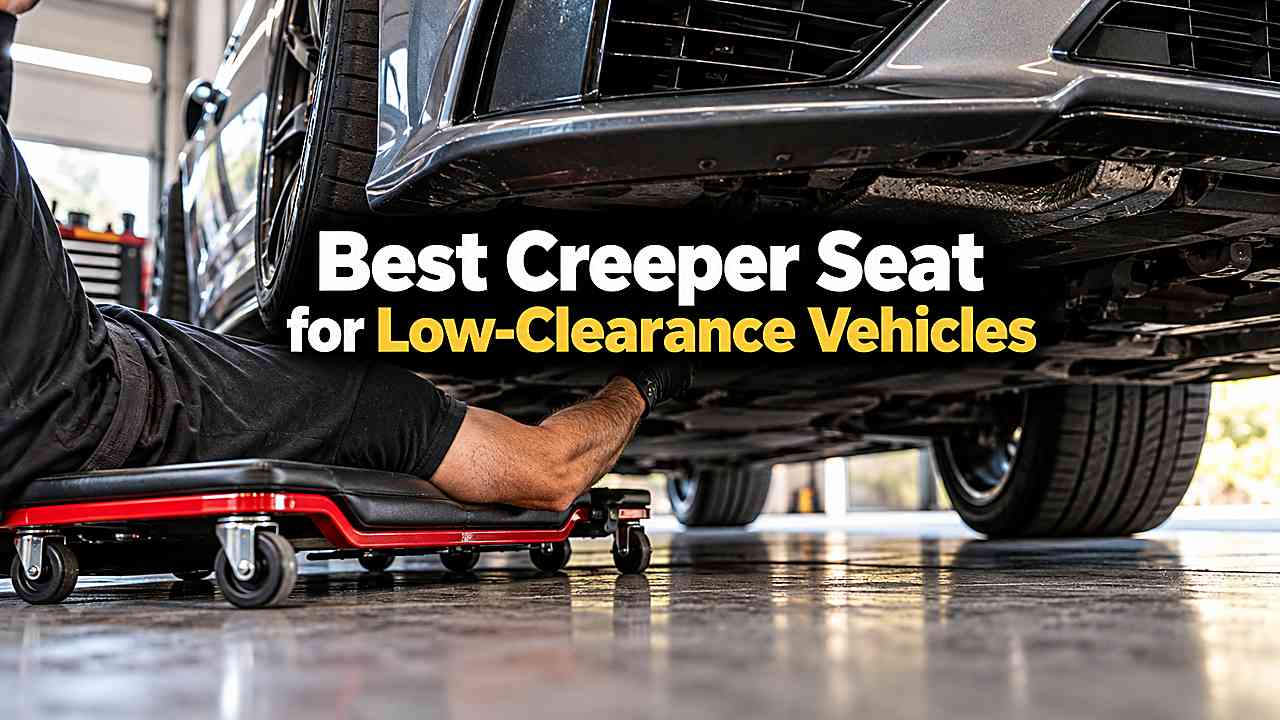
For truly low-clearance cars, a flat creeper such as the Performance Tool W85005 is more useful than a thick Z-creeper because every inch of body height matters under pinch welds and exhaust systems. If you want one product that also converts into a seat, the Omega Z-Creeper is the better all-around garage option but sits higher.
Choose the creeper around vehicle clearance first and comfort second. Thick padding feels great until your chest no longer fits beneath the rocker panel.
For very low cars, choose a thin-profile creeper with small casters; for mixed garage work, a folding Z-creeper offers better versatility. Measure actual under-car clearance before buying.
Low profile means total body height, not just wheel diameter
Manufacturers often advertise caster size but the important dimension is how high your shoulders and torso sit above the floor. A thick frame and cushion can add several inches.
Low sports cars punish that extra height immediately. Good preparation also reduces the amount of expensive equipment you need. Clean surfaces, correct access and a clear workflow often matter more than buying the most powerful version of every tool.
Best low-profile style: a flat molded creeper
A thin molded board with recessed casters puts your body close to the floor and slides under side skirts more easily. Car and Driver’s current creeper testing names the Performance Tool W85005 its best low-profile pick.
This style is simple, washable and usually less expensive than convertible models. Think about storage and repeat use as well as the immediate job. A product that works perfectly once but is awkward to store, service or replace can become a poor home-garage choice over time.
What this means for your setup
Your best result comes from matching capacity to the task with some margin. Running tools continuously at their limit creates heat, wear and frustration even when the specification says the job is technically possible. A controlled process is usually faster in the end because it prevents rework. If one step begins behaving differently from what you expect, stop and inspect before adding more force, heat, pressure or chemical strength.
Best versatile choice: Omega Z-Creeper
The Omega folding design converts between a flat creeper and an upright rolling seat. It is comfortable and useful for brakes, detailing lower doors and general garage work.
The tradeoff is greater thickness when you are underneath a very low vehicle. When safety is involved, manufacturer procedures and rated equipment take priority over internet shortcuts. Saving a few minutes is never worth creating a lifting, electrical or braking hazard.
Headrest design affects neck comfort
A slight raised head area can reduce neck strain, but a large pillow steals clearance. Look for a shallow integrated headrest rather than a tall cushion.
On very low vehicles, a folded shop towel may be more practical. Your best result comes from matching capacity to the task with some margin. Running tools continuously at their limit creates heat, wear and frustration even when the specification says the job is technically possible.
Caster quality matters on rough concrete
Small hard wheels can catch on expansion joints, dirt and pebbles. Six well-spaced casters distribute weight and improve maneuverability.
Keep the garage floor clean because one small nut can stop a creeper suddenly. That detail matters because it changes how safely and efficiently the job can be completed. You should choose the tool or method around the actual vehicle and working conditions rather than a headline specification.
What this means for your setup
Good preparation also reduces the amount of expensive equipment you need. Clean surfaces, correct access and a clear workflow often matter more than buying the most powerful version of every tool. When safety is involved, manufacturer procedures and rated equipment take priority over internet shortcuts. Saving a few minutes is never worth creating a lifting, electrical or braking hazard.
Width should fit between jack stands
A broad creeper can be comfortable but difficult to maneuver when stands are close to the rocker or axle. Measure the space between your support points.
This is especially important on small cars where stand placement already restricts access. A controlled process is usually faster in the end because it prevents rework. If one step begins behaving differently from what you expect, stop and inspect before adding more force, heat, pressure or chemical strength.
A creeper seat is different from an under-car creeper
Rolling stools are excellent for brakes, wheel detailing and bodywork but usually do not recline low enough for under-car work. If the keyword ‘creeper seat’ is what led you here, decide which job you actually do more often.
Many home mechanics eventually own both. Good preparation also reduces the amount of expensive equipment you need. Clean surfaces, correct access and a clear workflow often matter more than buying the most powerful version of every tool.
Cleanability matters in detailing garages
Vinyl pads wipe clean but can tear, while molded plastic is easy to wash after oil or tire dressing. Fabric upholstery is comfortable but holds grime.
If you detail as well as repair, a non-absorbent surface is easier to maintain. Think about storage and repeat use as well as the immediate job. A product that works perfectly once but is awkward to store, service or replace can become a poor home-garage choice over time.
What this means for your setup
Your best result comes from matching capacity to the task with some margin. Running tools continuously at their limit creates heat, wear and frustration even when the specification says the job is technically possible. A controlled process is usually faster in the end because it prevents rework. If one step begins behaving differently from what you expect, stop and inspect before adding more force, heat, pressure or chemical strength.
Never roll under a vehicle supported only by a jack
The creeper does not change lifting safety. Use properly rated stands at approved support points, chock wheels and work on a solid level surface.
Keep the jack as backup only when the procedure permits, not as the primary support. When safety is involved, manufacturer procedures and rated equipment take priority over internet shortcuts. Saving a few minutes is never worth creating a lifting, electrical or braking hazard.
How to know when the job is beyond DIY
Think about storage and repeat use as well as the immediate job. A product that works perfectly once but is awkward to store, service or replace can become a poor home-garage choice over time. Your best result comes from matching capacity to the task with some margin. Running tools continuously at their limit creates heat, wear and frustration even when the specification says the job is technically possible.
Consider getting a separate rolling seat instead of a convertible model
If most of your work is brakes, wheel cleaning and lower-body detailing, a compact rolling stool can be more comfortable than converting a Z-creeper repeatedly. A dedicated low-profile creeper can then stay optimized for under-car clearance.
Two simple tools can sometimes use less space than one bulky convertible unit, especially if the stool has a tray and fits under a workbench when not in use.
Measure your body plus the creeper, not the creeper alone
Vehicle clearance charts do not account for your shoulder width, chest height or head position. Place the car safely on stands, measure the lowest obstruction and then compare that space with your body lying on the selected creeper. A product that is only two inches thick may still be unusable if the exhaust runs directly over your chest.
This is also why a low-profile board can feel more comfortable than a thick padded model: it gives you room to reposition instead of pressing your shoulders into the underbody.
Low-clearance work is easier when the garage floor stays clear
A creeper needs more lateral space than your body because you move by pushing with your feet and shoulders. Keep air hoses, extension cords and dropped sockets out of the path before you roll underneath. Small casters can stop instantly on a nut or extension, which is uncomfortable and can put your hands into nearby components.
Use a magnetic parts tray or small rolling tray beside the vehicle rather than placing tools on the floor. The best low-profile creeper setup combines minimal body height with a clear path in and out.
Storage can decide which creeper you will actually use
A long flat creeper can be awkward in a small garage even when it works perfectly under the car. Check whether it can hang vertically on a wall, slide beneath a workbench or stand on end without damaging the casters. Folding Z-creepers take more thickness but can be easier to park. The best choice is the one that stays accessible enough to use instead of being buried behind tires and boxes.
Body-position comfort matters during long jobs
If you spend more than a few minutes under the car, shoulder support and head angle matter almost as much as clearance. A creeper that forces your neck forward can become tiring quickly, so test the headrest shape if possible. Thin removable padding can improve comfort without permanently raising the whole creeper. The goal is enough support to work accurately while preserving the clearance that made you choose a low-profile model in the first place.
Frequently Asked Questions
The most comfortable creeper is not always the one that physically fits under your car, so clearance should lead the buying decision.
How low should a creeper be for a sports car?
As low as practical while still supporting your body. Measure the vehicle’s working clearance once it is safely on stands and subtract your body thickness.
A thin molded creeper often works better than a heavily padded frame. When safety is involved, manufacturer procedures and rated equipment take priority over internet shortcuts. Saving a few minutes is never worth creating a lifting, electrical or braking hazard.
Are Z-creepers good for low cars?
They are versatile but usually thicker than dedicated low-profile creepers. They work well when the car is raised high enough on stands.
For extremely tight clearance, a flat board design is better. Your best result comes from matching capacity to the task with some margin. Running tools continuously at their limit creates heat, wear and frustration even when the specification says the job is technically possible.
Do larger creeper wheels roll better?
Generally, larger casters cross small cracks and debris more easily, but they also raise the creeper. Low-clearance designs use small wheels to save height.
A clean smooth floor makes small casters much easier to live with. That detail matters because it changes how safely and efficiently the job can be completed. You should choose the tool or method around the actual vehicle and working conditions rather than a headline specification.
Is a padded creeper worth it?
Yes if you have enough clearance and spend long periods under the car. Padding reduces pressure points.
For a very low vehicle, a thin pad or molded shape can be a better compromise. A controlled process is usually faster in the end because it prevents rework. If one step begins behaving differently from what you expect, stop and inspect before adding more force, heat, pressure or chemical strength.
Can you use a creeper on asphalt?
You can, but small casters may sink into hot asphalt or struggle on rough surfaces. Use a hard flat work surface when possible.
Vehicle lifting is also safer on solid level concrete. Good preparation also reduces the amount of expensive equipment you need. Clean surfaces, correct access and a clear workflow often matter more than buying the most powerful version of every tool.
Conclusion
For very low cars, choose a thin-profile creeper with small casters; for mixed garage work, a folding Z-creeper offers better versatility. Measure actual under-car clearance before buying. The safest and most cost-effective result comes from choosing capacity and technique for the real job rather than buying or using more than the situation requires.
If the vehicle, tool or procedure falls outside what you can verify confidently, use the manufacturer’s service information or a qualified technician. Good garage work is repeatable, controlled and safe.