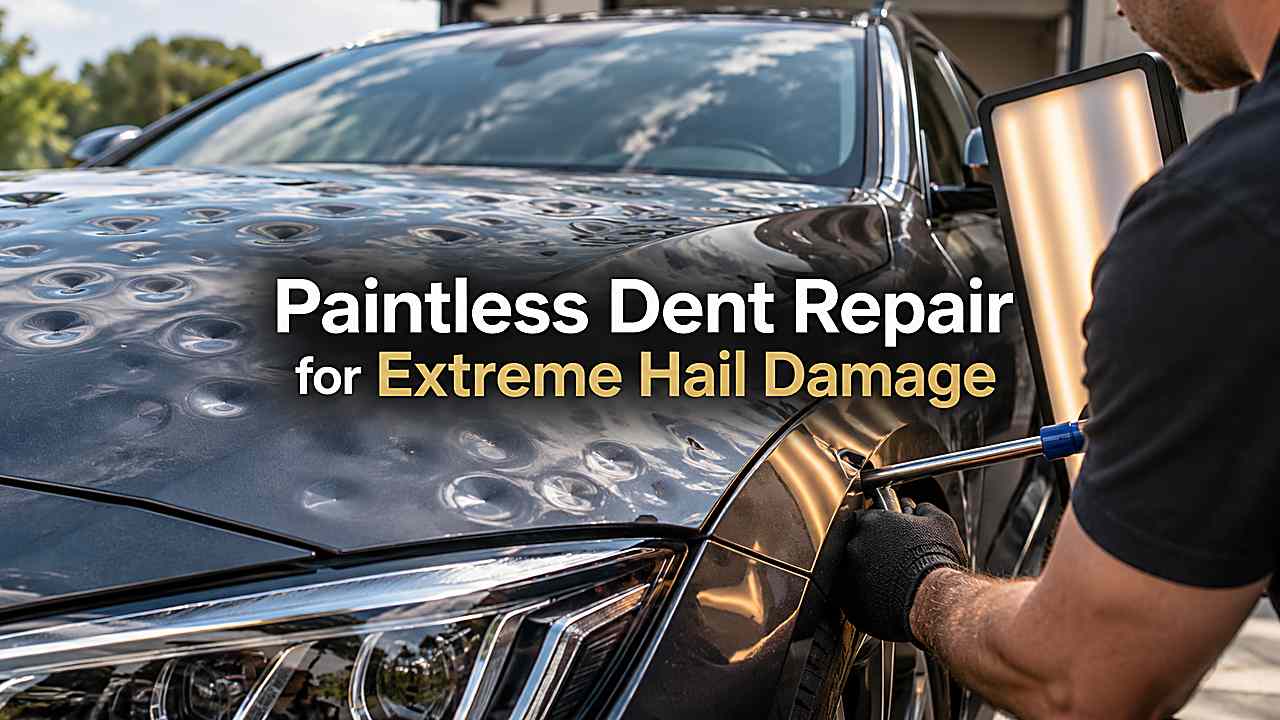
If you are researching paintless dent repair for extreme hail damage, the quickest answer is rarely the whole answer. The condition of the vehicle, the material involved and what you plan to do next can change the safest and most economical approach.
This guide focuses on the decisions that matter in real ownership rather than a one-size-fits-all shortcut. You will see what to inspect first, what can reasonably be handled yourself and where a professional estimate or inspection becomes the smarter move.
PDR can repair surprisingly severe hail damage when the paint is intact and the metal is not excessively stretched, but extreme storms often create a mixed repair: PDR on some panels, conventional repair or replacement on others.
Extreme hail is a whole-vehicle repair problem
Hundreds of dents change the economics and workflow
A car with extreme hail may have damage across the hood, roof, decklid, rails, doors and fenders at the same time. Each dent may be small, but the total labor becomes substantial. That is why a small test or inspection step should come before a more aggressive method. You get better results when you know what changed after each pass instead of repeating the same process blindly.
Technicians often map panels, count or categorize dents and decide which areas can be restored efficiently. You should expect a repair plan for the whole vehicle, not one dent at a time. If your vehicle has previous bodywork, unusual materials or aftermarket protection, mention that before treatment or repair. Those details can change compatibility, labor and the point at which professional help becomes the safer choice.
Large hail can add glass, paint and trim damage
Once hail becomes large enough to crack windshields, chip paint or damage moldings, the claim is no longer pure PDR. Broken glass may require calibration on vehicles with cameras. Good lighting and a clean surface make this judgment much easier. Dirt, gloss enhancers and shadows can hide defects or make harmless texture look worse than it really is.
Cracked paint requires refinishing. Severe impacts can also distort edges and body lines, so the correct repair can combine several methods. You should also consider the cost of creating a new problem. A conservative process that leaves a small cosmetic imperfection is often preferable to removing too much clear coat, damaging trim or disturbing a safety-related component.
What makes a heavily dented panel suitable for PDR
Intact paint is the biggest advantage
PDR is most valuable when the factory finish has survived. Even a panel covered with many soft dents can be a candidate if the coating remains sound. The practical goal is a stable result, not a dramatic before-and-after created by excessive force. If the recommended method stops producing improvement, reassess rather than escalating automatically.
Technicians work the metal gradually and preserve the original paint rather than filling and repainting the entire surface. A heavily dented panel with broken paint loses much of that advantage. That is why a small test or inspection step should come before a more aggressive method. You get better results when you know what changed after each pass instead of repeating the same process blindly.
Shallow distributed dents are easier than sharp deep hits
A roof with many smooth low spots may respond better than one with fewer but very deep impacts. Sharp centers, creases and stretched metal require more time and may never return to a stable factory contour. If your vehicle has previous bodywork, unusual materials or aftermarket protection, mention that before treatment or repair. Those details can change compatibility, labor and the point at which professional help becomes the safer choice.
Diameter alone does not decide repairability. The technician looks at depth, metal tension, body lines and the way light flows across the panel. Good lighting and a clean surface make this judgment much easier. Dirt, gloss enhancers and shadows can hide defects or make harmless texture look worse than it really is.
Panels that often become the limiting factor
Roof rails and tightly formed edges deserve caution
Rails and panel edges are stiff, formed areas where hail can create sharp deformation. Access may also be poor. You should also consider the cost of creating a new problem. A conservative process that leaves a small cosmetic imperfection is often preferable to removing too much clear coat, damaging trim or disturbing a safety-related component.
Damage there can be difficult to finish invisibly and may involve structures that should not be casually drilled or pulled. Severe rail damage can shift the repair toward conventional collision methods. The practical goal is a stable result, not a dramatic before-and-after created by excessive force. If the recommended method stops producing improvement, reassess rather than escalating automatically.
Aluminum and high-strength materials need specialized technique
Many modern hoods, doors and body panels use aluminum or higher-strength materials. They can still be repaired paintlessly, but tool feel, heat management and repair limits differ from mild steel. That is why a small test or inspection step should come before a more aggressive method. You get better results when you know what changed after each pass instead of repeating the same process blindly.
The shop should know the vehicle construction before promising a result. Material identification becomes more important as damage severity increases. If your vehicle has previous bodywork, unusual materials or aftermarket protection, mention that before treatment or repair. Those details can change compatibility, labor and the point at which professional help becomes the safer choice.
Why insurance estimates often change after teardown
PDR lighting reveals more dents than a driveway inspection
Extreme hail is difficult to count accurately in flat outdoor light. A body shop may find more damage under dedicated reflection lighting. Good lighting and a clean surface make this judgment much easier. Dirt, gloss enhancers and shadows can hide defects or make harmless texture look worse than it really is.
Removing trim can also reveal restricted access or broken components. Supplements are common because the first estimate is often written before every condition is known. You should also consider the cost of creating a new problem. A conservative process that leaves a small cosmetic imperfection is often preferable to removing too much clear coat, damaging trim or disturbing a safety-related component.
Replacement may be cheaper than attempting heroic repair
A bolt-on hood with extreme stretch, chipped paint and hundreds of dents may be more economical to replace and refinish than to spend many hours trying to save it. The opposite can be true for an expensive original panel with intact finish. The practical goal is a stable result, not a dramatic before-and-after created by excessive force. If the recommended method stops producing improvement, reassess rather than escalating automatically.
Repair method should follow total cost, material and expected finish, not pride in using one technique everywhere. That is why a small test or inspection step should come before a more aggressive method. You get better results when you know what changed after each pass instead of repeating the same process blindly.
What a high-quality extreme-hail repair should include
A panel-by-panel repair map and realistic finish target
Ask which panels will receive PDR, which need paintwork and whether any are being replaced. The estimate should account for removal and installation of trim needed for access. If your vehicle has previous bodywork, unusual materials or aftermarket protection, mention that before treatment or repair. Those details can change compatibility, labor and the point at which professional help becomes the safer choice.
If a technician expects minor residual texture on an exceptionally damaged area, that expectation should be stated before work begins. Clear scope prevents surprises. Good lighting and a clean surface make this judgment much easier. Dirt, gloss enhancers and shadows can hide defects or make harmless texture look worse than it really is.
Post-repair inspection under proper lighting
After completion, view the car in sunlight and controlled reflection lighting if possible. Check roof rails, body lines and panel edges carefully because those areas reveal poor finishing. You should also consider the cost of creating a new problem. A conservative process that leaves a small cosmetic imperfection is often preferable to removing too much clear coat, damaging trim or disturbing a safety-related component.
Also verify that headliners, lamps, seals and other removed parts were reinstalled correctly. Extreme-hail repair is as much about reassembly quality as dent pushing. The practical goal is a stable result, not a dramatic before-and-after created by excessive force. If the recommended method stops producing improvement, reassess rather than escalating automatically.
Frequently Asked Questions
These questions address the issues that most often come up when you are dealing with paintless dent repair for extreme hail damage. They also clarify where a general rule stops being useful and the condition of the specific vehicle, policy, surface or repair has to decide the answer.
Can PDR fix hundreds of hail dents on one car?
Yes, mass hail PDR is common when paint is intact and the metal remains repairable. The job can take days because each dent must be worked and finished. That is why a small test or inspection step should come before a more aggressive method. You get better results when you know what changed after each pass instead of repeating the same process blindly.
Access operations and trim removal add time. If some panels are stretched or paint-damaged, the overall repair may combine PDR with conventional work. If your vehicle has previous bodywork, unusual materials or aftermarket protection, mention that before treatment or repair. Those details can change compatibility, labor and the point at which professional help becomes the safer choice.
How large can hail dents be and still use PDR?
There is no reliable diameter cutoff. A broad shallow dent can be easier than a small deep crater. Good lighting and a clean surface make this judgment much easier. Dirt, gloss enhancers and shadows can hide defects or make harmless texture look worse than it really is.
Paint condition, stretch, material, body-line involvement and access matter more than size alone. Severe large-hail damage needs an experienced in-person assessment. You should also consider the cost of creating a new problem. A conservative process that leaves a small cosmetic imperfection is often preferable to removing too much clear coat, damaging trim or disturbing a safety-related component.
Will extreme hail make a car a total loss?
It can. Total-loss decisions compare repair economics with the vehicle’s pre-loss value and applicable state rules. The practical goal is a stable result, not a dramatic before-and-after created by excessive force. If the recommended method stops producing improvement, reassess rather than escalating automatically.
Hundreds of dents, glass damage and panel replacement can push repair cost high enough to total an otherwise drivable car. An insurer’s first estimate may change after a shop supplement. That is why a small test or inspection step should come before a more aggressive method. You get better results when you know what changed after each pass instead of repeating the same process blindly.
Does extreme hail always damage the structure?
No. Many hailstorms create extensive cosmetic outer-panel damage without compromising the vehicle’s structural safety. If your vehicle has previous bodywork, unusual materials or aftermarket protection, mention that before treatment or repair. Those details can change compatibility, labor and the point at which professional help becomes the safer choice.
Large impacts can still damage glass, roof edges or structural areas, so severity and location matter. A collision shop should inspect the vehicle when rails, pillars, seams or panel fit appear distorted. Good lighting and a clean surface make this judgment much easier. Dirt, gloss enhancers and shadows can hide defects or make harmless texture look worse than it really is.
Is factory paint worth saving after severe hail?
Often yes, if the coating is still healthy. PDR can preserve original finish and avoid blending adjacent panels. You should also consider the cost of creating a new problem. A conservative process that leaves a small cosmetic imperfection is often preferable to removing too much clear coat, damaging trim or disturbing a safety-related component.
That can be attractive for newer vehicles and difficult colors. The technician should not preserve paint at the expense of leaving unstable or badly stretched metal. The practical goal is a stable result, not a dramatic before-and-after created by excessive force. If the recommended method stops producing improvement, reassess rather than escalating automatically.
Conclusion
PDR can repair surprisingly severe hail damage when the paint is intact and the metal is not excessively stretched, but extreme storms often create a mixed repair: PDR on some panels, conventional repair or replacement on others. The important part is applying that answer to the actual condition in front of you rather than forcing a universal rule onto every vehicle.
Your next step should be the lowest-risk action that gives you better information: inspect carefully, test a small area, verify the policy or product instructions, compare current market evidence or obtain a qualified professional assessment. That keeps the decision practical and protects the value of the vehicle.