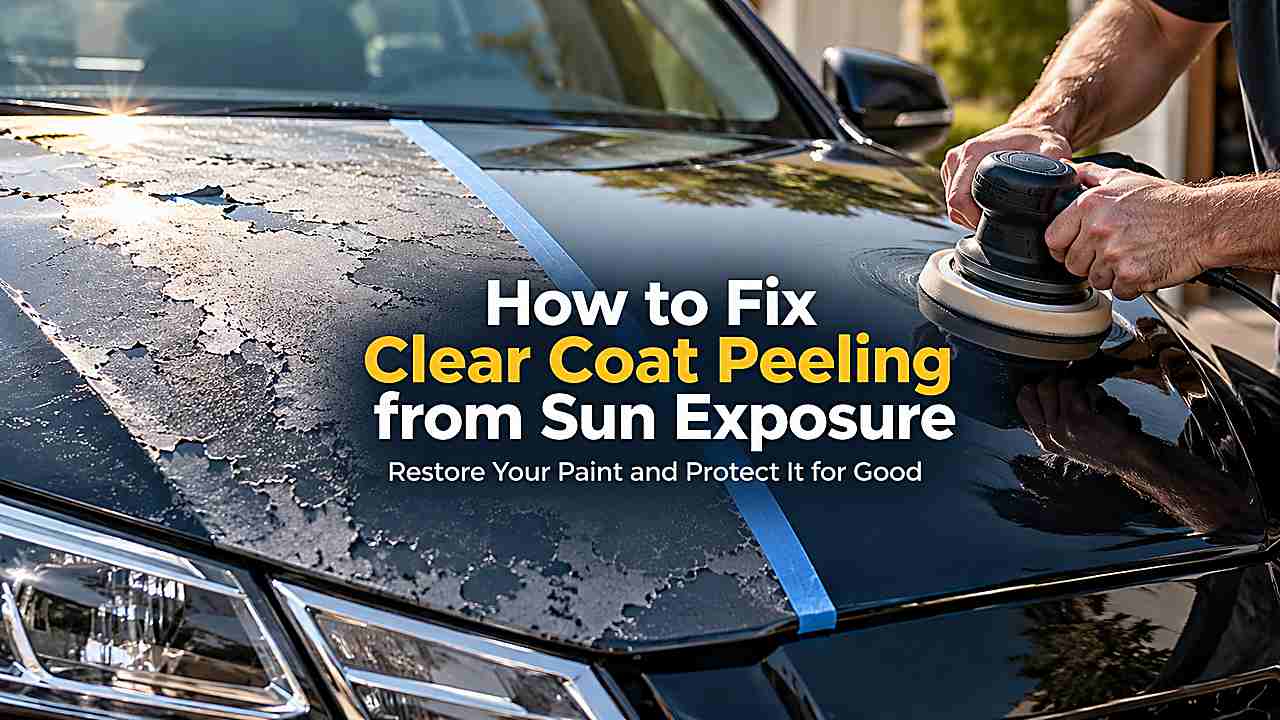
If you are researching how to fix clear coat peeling from sun exposure, the quickest answer is rarely the whole answer. The condition of the vehicle, the material involved and what you plan to do next can change the safest and most economical approach.
This guide focuses on the decisions that matter in real ownership rather than a one-size-fits-all shortcut. You will see what to inspect first, what can reasonably be handled yourself and where a professional estimate or inspection becomes the smarter move.
Once clear coat is peeling from UV exposure, polishing cannot restore it. A lasting repair requires removing unstable coating, properly preparing the base surface and applying new automotive clear, often with color repair where the base coat has also deteriorated.
Why peeling clear coat is different from dull paint
Oxidation can sometimes be polished but delamination cannot
A faded panel may still have continuous clear coat that can be corrected carefully. Peeling means adhesion between coating layers has failed and pieces are physically separating. That is why a small test or inspection step should come before a more aggressive method. You get better results when you know what changed after each pass instead of repeating the same process blindly.
No compound can glue those layers back down. If you polish aggressively around peeling edges, you may enlarge the failed area. If your vehicle has previous bodywork, unusual materials or aftermarket protection, mention that before treatment or repair. Those details can change compatibility, labor and the point at which professional help becomes the safer choice.
Sun and heat accelerate coating breakdown
UV exposure degrades polymers over time, especially on horizontal panels such as roofs, hoods and trunk lids. Heat cycles and prior poor refinishing can speed failure. Good lighting and a clean surface make this judgment much easier. Dirt, gloss enhancers and shadows can hide defects or make harmless texture look worse than it really is.
Once clear begins lifting, water and contamination can reach the edges and spread the damage. Covering it with wax may improve gloss but will not stop delamination permanently. You should also consider the cost of creating a new problem. A conservative process that leaves a small cosmetic imperfection is often preferable to removing too much clear coat, damaging trim or disturbing a safety-related component.
Decide whether the base color is still usable
Small localized clear failure can sometimes be refinished without full panel stripping
A paint professional may be able to feather unstable clear, scuff the surrounding sound finish and re-clear a larger blended area if the color coat remains consistent. The exact repair depends on coating system and panel location. The practical goal is a stable result, not a dramatic before-and-after created by excessive force. If the recommended method stops producing improvement, reassess rather than escalating automatically.
You should not simply spray new clear over loose flakes because the new coating will be attached to a failing layer. That is why a small test or inspection step should come before a more aggressive method. You get better results when you know what changed after each pass instead of repeating the same process blindly.
Faded or exposed base coat usually needs color before clear
If the colored layer is chalky, stained or visibly missing, clear alone will lock in an uneven appearance. Matching modern metallic and pearl colors also requires correct spray orientation. If your vehicle has previous bodywork, unusual materials or aftermarket protection, mention that before treatment or repair. Those details can change compatibility, labor and the point at which professional help becomes the safer choice.
DIY aerosol repair can be acceptable on an older low-value car, but a body shop gives you a better chance of consistent color and durability. Good lighting and a clean surface make this judgment much easier. Dirt, gloss enhancers and shadows can hide defects or make harmless texture look worse than it really is.
A proper refinishing workflow
Several variables influence this part of how to fix clear coat peeling from sun exposure. Separating them helps you avoid treating a cosmetic symptom, repair estimate or buying decision as if it had only one cause.
1. Remove all loose and failing clear coat.
The repair area has to extend beyond visibly peeling edges into stable coating. Sanding must create a smooth transition without cutting unnecessarily through the base coat. You should also consider the cost of creating a new problem. A conservative process that leaves a small cosmetic imperfection is often preferable to removing too much clear coat, damaging trim or disturbing a safety-related component.
Masking only the exact peeling island usually leaves a visible edge. Surface cleanliness and dust control matter because new clear magnifies contamination. The practical goal is a stable result, not a dramatic before-and-after created by excessive force. If the recommended method stops producing improvement, reassess rather than escalating automatically.
2. Correct damaged color before applying clear.
If sanding exposes primer or if the base color is faded, compatible base coat must be restored. Follow the paint system’s flash times and temperature requirements. That is why a small test or inspection step should come before a more aggressive method. You get better results when you know what changed after each pass instead of repeating the same process blindly.
Color matching becomes harder on sun-faded adjacent panels. This is one reason partial DIY repairs can look acceptable straight on but obvious from an angle. If your vehicle has previous bodywork, unusual materials or aftermarket protection, mention that before treatment or repair. Those details can change compatibility, labor and the point at which professional help becomes the safer choice.
3. Apply compatible automotive clear and allow proper cure.
A quality two-component automotive clear offers much better chemical and UV resistance than improvised household clear sprays. Two-component products also contain hazardous isocyanates and require proper respiratory and environmental controls. Good lighting and a clean surface make this judgment much easier. Dirt, gloss enhancers and shadows can hide defects or make harmless texture look worse than it really is.
If you do not have safe spray equipment, professional refinishing is the sensible route. After curing, the surface may be leveled and polished if the paint system allows it. You should also consider the cost of creating a new problem. A conservative process that leaves a small cosmetic imperfection is often preferable to removing too much clear coat, damaging trim or disturbing a safety-related component.
What temporary fixes can and cannot do
Wax and ceramic products improve appearance only while coating remains attached
Protection can help sound clear coat resist contamination, but it does not stop a delaminating edge from lifting. You may see darker color and better gloss after applying product, which makes the repair seem successful for a short time. The practical goal is a stable result, not a dramatic before-and-after created by excessive force. If the recommended method stops producing improvement, reassess rather than escalating automatically.
The physical failure remains underneath. Do not spend heavily on protection before repairing widespread peel. That is why a small test or inspection step should come before a more aggressive method. You get better results when you know what changed after each pass instead of repeating the same process blindly.
Touch-up clear can protect tiny chips but is not a panel-level peeling repair
Small isolated chips may be sealed to slow water intrusion, but spraying or brushing clear over a large flaky roof rarely lasts. The old failure becomes the weak layer under the new material. If your vehicle has previous bodywork, unusual materials or aftermarket protection, mention that before treatment or repair. Those details can change compatibility, labor and the point at which professional help becomes the safer choice.
Temporary sealing makes sense only when you accept that full refinishing will still be needed later. Good lighting and a clean surface make this judgment much easier. Dirt, gloss enhancers and shadows can hide defects or make harmless texture look worse than it really is.
Prevent the next panel from reaching the same condition
Reduce UV exposure when possible
Garage parking, carports and quality windshield shades do not replace paint care, but reducing direct heat and UV cycles helps all exterior and interior materials. If outdoor parking is unavoidable, regular washing removes contaminants that can worsen coating stress. You should also consider the cost of creating a new problem. A conservative process that leaves a small cosmetic imperfection is often preferable to removing too much clear coat, damaging trim or disturbing a safety-related component.
Avoid abrasive automatic washes that add mechanical wear to already aged clear coat. The practical goal is a stable result, not a dramatic before-and-after created by excessive force. If the recommended method stops producing improvement, reassess rather than escalating automatically.
Maintain protection on healthy paint
Wax, sealant and ceramic coatings help with contamination release and UV exposure to varying degrees, but they are maintenance layers rather than replacement clear coat. Reapply according to product guidance. That is why a small test or inspection step should come before a more aggressive method. You get better results when you know what changed after each pass instead of repeating the same process blindly.
If you notice early chalking or loss of gloss, have the paint inspected before aggressive polishing. Thin aged clear needs conservative correction. If your vehicle has previous bodywork, unusual materials or aftermarket protection, mention that before treatment or repair. Those details can change compatibility, labor and the point at which professional help becomes the safer choice.
Frequently Asked Questions
These questions address the issues that most often come up when you are dealing with how to fix clear coat peeling from sun exposure. They also clarify where a general rule stops being useful and the condition of the specific vehicle, policy, surface or repair has to decide the answer.
Can you polish peeling clear coat to make it look normal?
No. Polishing can improve adjacent oxidized clear but cannot reattach or replace peeling material. Good lighting and a clean surface make this judgment much easier. Dirt, gloss enhancers and shadows can hide defects or make harmless texture look worse than it really is.
Abrasives may make the edges spread faster. The durable fix is refinishing after unstable coating is removed. You can polish only the sound areas conservatively if there is enough clear remaining. You should also consider the cost of creating a new problem. A conservative process that leaves a small cosmetic imperfection is often preferable to removing too much clear coat, damaging trim or disturbing a safety-related component.
Can I spray clear coat over peeling clear without sanding?
That is unlikely to last because the new clear would be bonded to a layer that is already failing. Loose material has to be removed and the sound surface prepared for adhesion. The practical goal is a stable result, not a dramatic before-and-after created by excessive force. If the recommended method stops producing improvement, reassess rather than escalating automatically.
If base color is damaged, it also needs repair. Proper refinishing is more involved than adding a transparent top layer. That is why a small test or inspection step should come before a more aggressive method. You get better results when you know what changed after each pass instead of repeating the same process blindly.
How much of the panel has to be repainted?
It depends on how far the coating failure extends and whether color has faded. Small repairs may be blended, while widespread roof or hood failure often makes full-panel refinishing more practical. If your vehicle has previous bodywork, unusual materials or aftermarket protection, mention that before treatment or repair. Those details can change compatibility, labor and the point at which professional help becomes the safer choice.
Metallic and pearl colors can require additional blending for appearance. A body shop can inspect the true edge of stable coating. Good lighting and a clean surface make this judgment much easier. Dirt, gloss enhancers and shadows can hide defects or make harmless texture look worse than it really is.
Will ceramic coating stop clear coat from peeling?
No. A ceramic coating is a very thin protective layer placed over healthy paint. You should also consider the cost of creating a new problem. A conservative process that leaves a small cosmetic imperfection is often preferable to removing too much clear coat, damaging trim or disturbing a safety-related component.
It cannot restore adhesion inside a failing paint system. Applying it over peeling clear simply coats a surface that will continue to separate. Repair the paint first, then protect the new finish after its cure requirements are satisfied. The practical goal is a stable result, not a dramatic before-and-after created by excessive force. If the recommended method stops producing improvement, reassess rather than escalating automatically.
Is peeling clear coat a rust risk?
On steel panels, rust becomes possible if coating failure eventually exposes primer and bare metal. Clear peeling alone may still leave color and primer beneath it, but continued weathering can deepen the damage. That is why a small test or inspection step should come before a more aggressive method. You get better results when you know what changed after each pass instead of repeating the same process blindly.
Aluminum will not form red iron rust but can still corrode. Repairing failed coating protects both appearance and substrate. If your vehicle has previous bodywork, unusual materials or aftermarket protection, mention that before treatment or repair. Those details can change compatibility, labor and the point at which professional help becomes the safer choice.
Conclusion
Once clear coat is peeling from UV exposure, polishing cannot restore it. A lasting repair requires removing unstable coating, properly preparing the base surface and applying new automotive clear, often with color repair where the base coat has also deteriorated. The important part is applying that answer to the actual condition in front of you rather than forcing a universal rule onto every vehicle.
Your next step should be the lowest-risk action that gives you better information: inspect carefully, test a small area, verify the policy or product instructions, compare current market evidence or obtain a qualified professional assessment. That keeps the decision practical and protects the value of the vehicle.