If you think your own car may have an unknown tracker, start with the safety features already built into modern phones. iPhone and Android can alert you when compatible Bluetooth trackers such as AirTags are detected moving with you, and Android also supports a manual nearby-tracker scan. If you get a credible alert, save the map or screenshots, use the phone’s sound or nearby-finding feature, and inspect the vehicle only when it is safe.
Bluetooth tags are only one type of tracker. A hardwired or cellular GPS device may not trigger Apple or Google alerts, so repeated unexplained tracking concerns can justify an inspection by a trusted automotive electrician, mechanic, dealer or law-enforcement resource rather than dismantling the car yourself.
Use iPhone or Android unknown-tracker alerts first, then visually inspect accessible areas and aftermarket wiring. If you feel unsafe, go to a public place, preserve the alert information and contact law enforcement instead of confronting anyone.
Start with your phone because it can detect many consumer trackers
iPhone can alert you when a compatible tracker moves with you
Apple’s unwanted-tracking system can display a map showing where a compatible unknown tracker was observed traveling with your device. You may be able to play a sound or use Find Nearby on supported hardware. Save the alert information before it disappears.
A tracker alert can also have innocent explanations, such as a borrowed item, so verify the device before drawing conclusions. Resale matters too. A condition you are willing to accept today can still reduce the number of future buyers, dealer trade options or insurance choices, so include the exit value in the purchase decision.
Android provides automatic alerts and a manual scan
Android’s Unknown Tracker Alerts support compatible Find Hub tags and Apple AirTags on Android 6 and later. You can open Safety and emergency, choose Unknown tracker alerts and run Scan now. A manual scan finds separated trackers currently nearby, but a device discovered once is not proof it belongs to your car.
Repeated movement with your vehicle is more meaningful. That distinction matters because the visible symptom is only one part of the decision. You should connect what you see with ownership records, service history, repair cost and what an independent inspection can verify.
Do a basic visual inspection without damaging the car
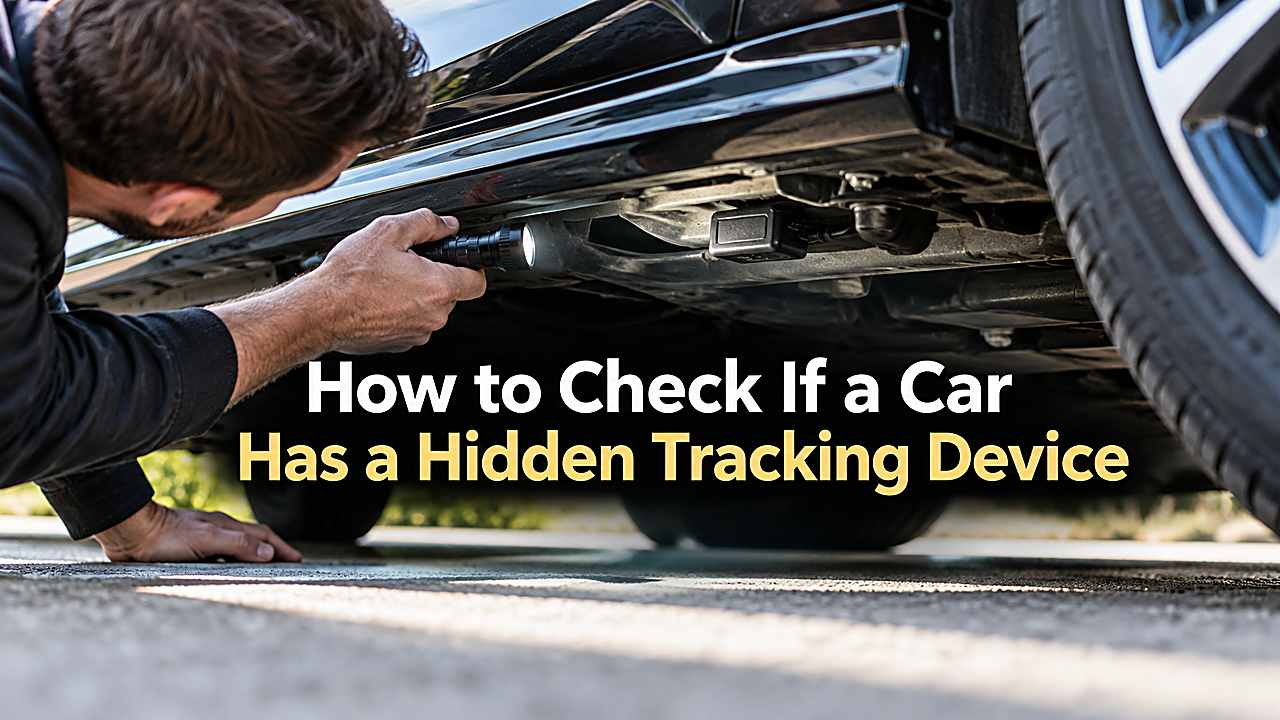
Look at accessible exterior and interior areas for an unfamiliar tag, magnetic box or recently added wiring. Check around the OBD diagnostic connector for plug-in devices and look under the dashboard only far enough to identify obvious aftermarket modules or spliced wires. Do not crawl under an unsupported vehicle, pull airbag trim apart or start disconnecting unknown electrical modules.
If something appears professionally hardwired, photograph it and have a technician identify it. Keep copies of photos, scan reports, quotes and key paperwork when the finding affects price. Clear documentation makes negotiation shorter and prevents memory from becoming less accurate after you have viewed several vehicles.
Bluetooth trackers and cellular GPS trackers behave differently
Bluetooth tags rely on nearby phones and often trigger ecosystem alerts
AirTags and compatible network tags are designed for locating personal belongings and now include cross-platform unwanted-tracking protections. They are small, battery powered and do not usually connect to the car’s wiring.
Your phone is the best first detection tool. A useful rule is to treat every finding as a reason for the next check rather than as a final verdict. When several independent clues point in the same direction, your confidence becomes much stronger.
Hardwired or cellular trackers may look like ordinary aftermarket electronics
Fleet telematics, dealer recovery devices, insurance dongles and aftermarket security systems can connect to power or the OBD port. Some may be legitimate devices installed by a lender, employer or previous owner. Phone Bluetooth scanning alone may not detect them.
Identification often requires checking wiring and ownership paperwork. Do not let a low asking price change the standard of proof you require. A cheap vehicle with unclear title, structural or mechanical risk can cost far more than a correctly priced car with honest cosmetic wear.
If the seller can document the explanation and the vehicle supports it, the issue may be manageable. If the story changes or inspection access is restricted, that uncertainty deserves real weight in your decision.
What to do if you find an unknown tracker
The most reliable way to use this section is to treat each check separately. One good sign should not cancel several bad ones, and one questionable sign should be verified before you assume the worst.
Document before disabling when safety permits
Apple and Google both provide ways to view device information and instructions for disabling compatible trackers. Save screenshots of the alert, map and any serial or device identifier before you alter the device if you may need evidence.
Do not destroy it. Do not let a low asking price change the standard of proof you require. A cheap vehicle with unclear title, structural or mechanical risk can cost far more than a correctly priced car with honest cosmetic wear.
If the seller can document the explanation and the vehicle supports it, the issue may be manageable. If the story changes or inspection access is restricted, that uncertainty deserves real weight in your decision.
Prioritize personal safety over proving who installed it
If you believe someone is stalking you or you feel at risk, move to a safe public location and contact law enforcement or a trusted person. Do not drive to confront a suspected installer.
The tracker may have captured your recent location regardless of whether you turn off Bluetooth on your phone. If the seller can document the explanation and the vehicle supports it, the issue may be manageable. If the story changes or inspection access is restricted, that uncertainty deserves real weight in your decision.
Follow manufacturer instructions to disable a consumer tracker
Turning off your phone’s Bluetooth or location does not necessarily stop the tracker owner from receiving updates from other phones. The tracker itself has to be disabled according to its manufacturer instructions.
Apple and Google provide model-specific steps for compatible devices. Your final number should include the repair or ownership cost that will actually fall on you, not a generic internet average. Local labor rates, vehicle design and parts availability can change the economics quickly.
When a professional vehicle inspection is appropriate
If you repeatedly receive tracking alerts but cannot locate a device, or you suspect a hardwired tracker, ask a trusted mechanic or automotive electrician to inspect the vehicle. Tell them why you are concerned so they can identify nonfactory modules and wiring without disturbing safety systems. A dealership may also help distinguish factory telematics hardware from aftermarket equipment. A useful rule is to treat every finding as a reason for the next check rather than as a final verdict. When several independent clues point in the same direction, your confidence becomes much stronger.
Legitimate devices you might discover
The most reliable way to use this section is to treat each check separately. One good sign should not cancel several bad ones, and one questionable sign should be verified before you assume the worst.
Lender or dealer recovery hardware
Some financed vehicles have starter-interrupt or location devices disclosed in the contract. If you recently purchased the car, review your sales and finance documents.
An unfamiliar box is not automatically malicious. Your final number should include the repair or ownership cost that will actually fall on you, not a generic internet average. Local labor rates, vehicle design and parts availability can change the economics quickly.
Fleet, employer or insurance telematics
Company cars and some usage-based insurance programs use tracking or driving-behavior devices with consent. If the car used to be a fleet or rental vehicle, old hardware may remain after sale.
Ask the seller or servicing dealer to identify it. A pre-purchase inspection remains one of the highest-value steps because it turns hidden uncertainty into a list you can price. Even experienced buyers use specialists when structure, electronics or drivetrain condition is difficult to judge.
Factory connected-car modules
Modern vehicles include factory GPS, cellular and telematics equipment for emergency services, navigation and connected apps. These modules are not hidden trackers planted by a third party.
Consult the owner’s manual or dealer before removing anything that appears integrated into the factory harness. Keep copies of photos, scan reports, quotes and key paperwork when the finding affects price. Clear documentation makes negotiation shorter and prevents memory from becoming less accurate after you have viewed several vehicles.
Resale matters too. A condition you are willing to accept today can still reduce the number of future buyers, dealer trade options or insurance choices, so include the exit value in the purchase decision.
What not to do
Do not use a high-power RF jammer, damage vehicle electronics, cut unknown wiring or crawl underneath a vehicle supported only by a jack. Do not post device identifiers publicly if you may need law-enforcement help. The goal is to identify and document safely, not to create an electrical fault or destroy evidence. If the seller can document the explanation and the vehicle supports it, the issue may be manageable. If the story changes or inspection access is restricted, that uncertainty deserves real weight in your decision.
Use the finding to decide your next step, not just your opinion
When a test reveals a concern, convert it into an action: request a record, get a repair quote, scan the vehicle, compare another example or pay for an independent inspection. This keeps the buying decision evidence-based. You do not need to diagnose every problem yourself to make a smart purchase.
Do not let a low asking price change the standard of proof you require. A cheap vehicle with unclear title, structural or mechanical risk can cost far more than a correctly priced car with honest cosmetic wear.
Frequently Asked Questions
Unknown-tracker alerts can be frightening, but they also produce false alarms and can point to borrowed or legitimate devices. These answers focus on safe verification rather than assumptions.
Can an AirTag be hidden on a car without you knowing?
It can be placed with a vehicle, but Apple and Android systems are designed to alert users when compatible trackers are detected moving with them over time. The alert is a reason to search and document, not proof of who placed it.
Use the phone’s sound or nearby-finding tools where available. A useful rule is to treat every finding as a reason for the next check rather than as a final verdict. When several independent clues point in the same direction, your confidence becomes much stronger.
Can you find a GPS tracker with a phone Bluetooth scan?
Only if the tracker actually uses a detectable Bluetooth system. Many cellular or hardwired GPS devices do not advertise themselves like an AirTag. If you suspect one, a physical electrical inspection is more useful.
Do not rely on a generic Bluetooth app as a complete vehicle sweep. Do not let a low asking price change the standard of proof you require. A cheap vehicle with unclear title, structural or mechanical risk can cost far more than a correctly priced car with honest cosmetic wear.
Where should you look for an unknown tracker on your car?
Start with accessible places where a device or plug-in module could be added without dismantling the vehicle, such as belongings, the cabin, diagnostic connector area and obvious exterior attachments. Avoid detailed disassembly of airbags, trim and electrical systems.
A technician can inspect deeper areas safely. If the seller can document the explanation and the vehicle supports it, the issue may be manageable. If the story changes or inspection access is restricted, that uncertainty deserves real weight in your decision.
What should you do if you feel unsafe after a tracker alert?
Go to a safe public location and contact local law enforcement or a trusted person. Save screenshots of the alert and map if possible. Apple and Google both recommend law-enforcement contact when safety is at risk.
Do not confront a suspected person by yourself. Your final number should include the repair or ownership cost that will actually fall on you, not a generic internet average. Local labor rates, vehicle design and parts availability can change the economics quickly.
Can a previous owner’s tracker still be in a used car?
Yes. A forgotten Bluetooth tag, fleet device or aftermarket security module can remain after a vehicle changes hands. Verify ownership records and identify the device before assuming malicious intent.
A dealer or automotive electrician can help distinguish legitimate hardware. A pre-purchase inspection remains one of the highest-value steps because it turns hidden uncertainty into a list you can price. Even experienced buyers use specialists when structure, electronics or drivetrain condition is difficult to judge.
Conclusion
The smartest approach to how to check if a car has a hidden tracking device is to start with the direct answer, then narrow uncertainty with inspection, documentation and real local pricing. That keeps a simple question from turning into an expensive assumption.
If the numbers and evidence still make sense after those checks, move forward confidently. If they do not, walking away or choosing the simpler repair is often the most profitable decision.