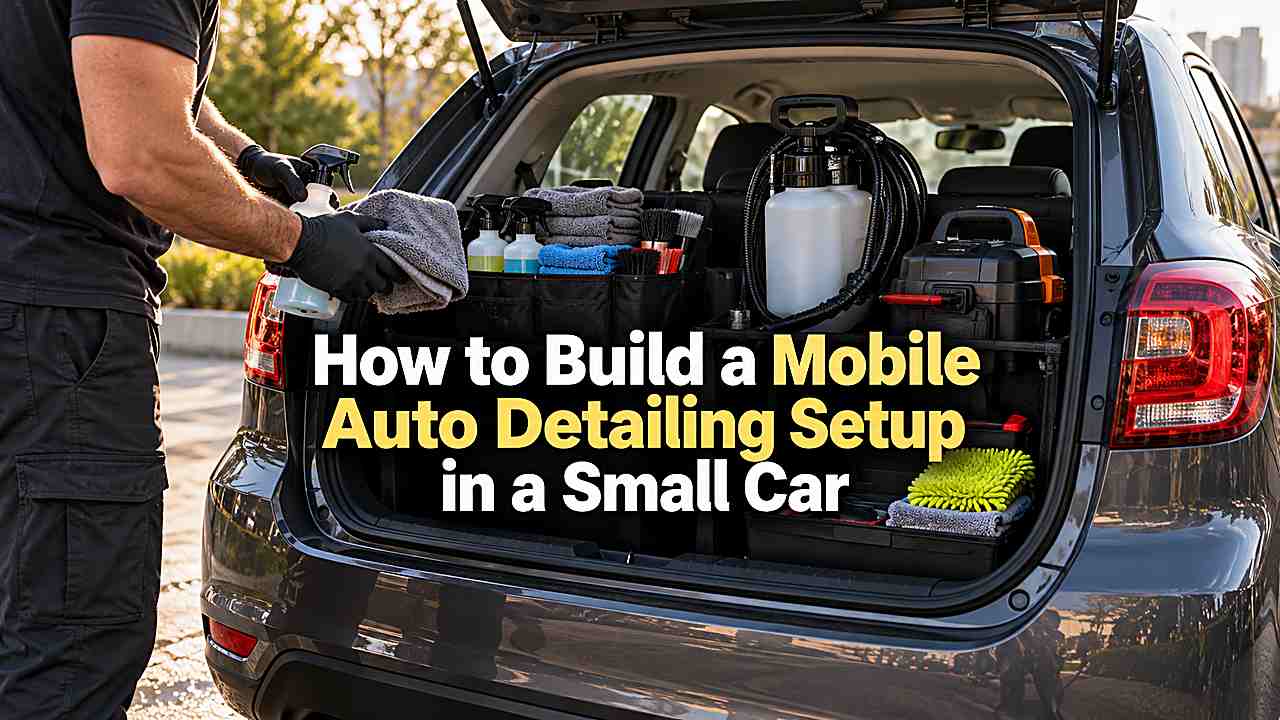
You can build a capable mobile detailing setup in a hatchback or compact sedan if you design around low-water methods, compact machines and modular storage instead of trying to copy a van. A rinseless wash system, small pressure sprayer, compact wet/dry vacuum, dual-action polisher, extension cord, towels and chemicals can fit in a surprisingly small footprint.
The key is to separate essential revenue-producing tools from equipment you can skip. A small car becomes workable when every container has a fixed location, liquids are secured upright and your process is built around the space you actually have.
Build around rinseless washing, compact power tools and stackable bins. Keep water volume modest, secure chemicals and heavy machines low in the car, and carry only the products you use on nearly every job.
Design the service menu before you buy equipment
If you offer maintenance washes, interiors and light paint enhancement, you need far less equipment than a full paint-correction and extraction business. Define the jobs you will accept first.
Your menu determines whether you need a pressure washer, extractor, generator or water tank at all. A controlled process is usually faster in the end because it prevents rework. If one step begins behaving differently from what you expect, stop and inspect before adding more force, heat, pressure or chemical strength.
Use rinseless washing to reduce water and tank size
A small car does not need a 65-gallon tank for many mobile jobs. Rinseless washing can be performed with a few gallons of clean water, multiple towels and a pump sprayer.
That saves weight and leaves room for interior equipment. Good preparation also reduces the amount of expensive equipment you need. Clean surfaces, correct access and a clear workflow often matter more than buying the most powerful version of every tool.
Choose compact machines with overlapping uses
A 4- to 6-gallon wet/dry vacuum handles most mobile interiors without consuming the trunk. A compact dual-action polisher, small blower and handheld steamer can cover a wide range of work.
Avoid carrying two machines when one can complete the same jobs adequately. Think about storage and repeat use as well as the immediate job. A product that works perfectly once but is awkward to store, service or replace can become a poor home-garage choice over time.
What this means for your setup
Your best result comes from matching capacity to the task with some margin. Running tools continuously at their limit creates heat, wear and frustration even when the specification says the job is technically possible. A controlled process is usually faster in the end because it prevents rework. If one step begins behaving differently from what you expect, stop and inspect before adding more force, heat, pressure or chemical strength.
Build a three-bin storage system
Use one sealed bin for chemicals, one for clean microfiber and applicators, and one for dirty towels and used tools. Label every bottle and keep acids, strong alkalines and solvent products isolated from towels.
A simple system is easier to reset between jobs. When safety is involved, manufacturer procedures and rated equipment take priority over internet shortcuts. Saving a few minutes is never worth creating a lifting, electrical or braking hazard.
Secure water, batteries and machines low in the vehicle
Heavy equipment should not sit loose above seatback height. Use cargo tie-downs and non-slip mats so a hard stop does not send a vacuum or water container forward. Never place fuel containers or gasoline generators inside the passenger compartment.
Ventilation and fire safety come before convenience. Your best result comes from matching capacity to the task with some margin. Running tools continuously at their limit creates heat, wear and frustration even when the specification says the job is technically possible.
Create an extension-cord-first power plan
If many customers have outdoor power, a quality extension cord and GFCI protection can eliminate the generator entirely. Battery tools cover small jobs where power is unavailable.
Only add an inverter or generator when your actual bookings prove you need one. That detail matters because it changes how safely and efficiently the job can be completed. You should choose the tool or method around the actual vehicle and working conditions rather than a headline specification.
What this means for your setup
Good preparation also reduces the amount of expensive equipment you need. Clean surfaces, correct access and a clear workflow often matter more than buying the most powerful version of every tool. When safety is involved, manufacturer procedures and rated equipment take priority over internet shortcuts. Saving a few minutes is never worth creating a lifting, electrical or braking hazard.
Make loading and unloading part of the workflow
The best compact setup lets you reach the vacuum, towels and wash supplies without unloading everything else. Put the first tools used near the hatch or trunk opening.
Photograph your packed layout so you can reset it the same way every time. A controlled process is usually faster in the end because it prevents rework. If one step begins behaving differently from what you expect, stop and inspect before adding more force, heat, pressure or chemical strength.
A realistic starter inventory
Carry one exterior wash solution, one wheel/tire cleaner, one interior cleaner, glass cleaner, iron remover for booked decontamination jobs, tire dressing, spray protection, polish and panel prep. Adding five versions of the same cleaner creates weight and clutter without improving the service.
Good preparation also reduces the amount of expensive equipment you need. Clean surfaces, correct access and a clear workflow often matter more than buying the most powerful version of every tool.
Scale only after the car is limiting revenue
When you consistently turn down jobs because of water, power or storage, then consider a wagon, SUV or van. Upgrading too early increases insurance, fuel and equipment cost.
A small setup forces process discipline and can remain profitable for maintenance-focused mobile detailing. Think about storage and repeat use as well as the immediate job. A product that works perfectly once but is awkward to store, service or replace can become a poor home-garage choice over time.
What this means for your setup
Your best result comes from matching capacity to the task with some margin. Running tools continuously at their limit creates heat, wear and frustration even when the specification says the job is technically possible. A controlled process is usually faster in the end because it prevents rework. If one step begins behaving differently from what you expect, stop and inspect before adding more force, heat, pressure or chemical strength.
A practical pre-job checklist
Good preparation also reduces the amount of expensive equipment you need. Clean surfaces, correct access and a clear workflow often matter more than buying the most powerful version of every tool. When safety is involved, manufacturer procedures and rated equipment take priority over internet shortcuts. Saving a few minutes is never worth creating a lifting, electrical or braking hazard.
Payload and ventilation are real business constraints
Water, machines, batteries and chemicals add weight quickly. Check the car’s payload rating and remember that the driver and passengers count toward it. A compact detailing setup should stay well below the vehicle’s limit and keep heavy items low between the axles when possible.
Ventilation matters too. Do not store leaking chemicals, fuel or solvent-soaked towels in the passenger compartment. Use sealed containers, separate dirty textiles and unload wet towels after each job so mildew and chemical odor do not become part of your mobile workspace.
Design the setup around job sequence, not product categories
Pack according to the order you work. Wash and wheel supplies should be reachable before polishers, while interior tools should come out as one group. If you repeatedly unload six bins to reach the vacuum, the setup is costing you time. A small car can work efficiently when the first tools out are the first tools needed and every item has a fixed return position.
After each job, note which items you never touched. If a chemical or machine goes unused for a month, remove it from the daily load and keep it at home for scheduled specialty services. Reducing unnecessary cargo improves organization and vehicle payload.
Build a reset routine for the end of every workday
A compact mobile setup stays efficient only when it is reset after each job. Refill diluted chemicals, recharge batteries, launder towels, empty the vacuum and return every tool to its assigned bin. If you postpone that work until the next appointment, the small-car layout quickly becomes disorganized and you lose the main advantage of a compact system.
Keep a simple checklist on your phone for water, clean towels, charged batteries, chemicals, PPE and payment equipment. The list should be short enough to use every day. Consistency prevents missed tools and reduces the temptation to carry duplicate backup gear you rarely need.
Frequently Asked Questions
A small-car setup works when your services are designed around the vehicle instead of treating the car as an undersized van.
How much water do you need for mobile detailing?
Rinseless maintenance jobs can use only a few gallons, while pressure-washing and heavy wheel or underbody work can require far more. Carry enough for your booked service plus reserve.
Water weighs about 8.3 pounds per gallon, so tank size affects vehicle payload. Think about storage and repeat use as well as the immediate job. A product that works perfectly once but is awkward to store, service or replace can become a poor home-garage choice over time.
Do you need a generator for mobile detailing?
Not always. Customer power, battery tools and low-wattage equipment can cover many jobs. A generator adds fuel, noise, exhaust and storage issues.
Add one only when your service area regularly lacks safe power access. When safety is involved, manufacturer procedures and rated equipment take priority over internet shortcuts. Saving a few minutes is never worth creating a lifting, electrical or braking hazard.
Can you run a pressure washer from a small water tank?
Yes if the pressure washer and feed system can operate from the available flow and tank arrangement. Some electric units need positive inlet pressure, while others can draw from a tank with the correct setup.
Follow the pressure-washer manufacturer’s requirements. Your best result comes from matching capacity to the task with some margin. Running tools continuously at their limit creates heat, wear and frustration even when the specification says the job is technically possible.
What vacuum size is best for a small mobile setup?
A 4- to 6-gallon wet/dry vacuum is a useful compromise between capacity and cargo space. Add a flexible hose and detailing attachments.
A giant shop vac gives little advantage if it consumes half the trunk. That detail matters because it changes how safely and efficiently the job can be completed. You should choose the tool or method around the actual vehicle and working conditions rather than a headline specification.
How do you keep detailing chemicals safe in a small car?
Use upright sealed bins, secondary containment and clear labels. Keep chemicals out of direct heat when product directions require it. Do not transport gasoline or dangerous loose containers in the passenger area.
Clean spills immediately and replace leaking bottles. A controlled process is usually faster in the end because it prevents rework. If one step begins behaving differently from what you expect, stop and inspect before adding more force, heat, pressure or chemical strength.
Conclusion
Build around rinseless washing, compact power tools and stackable bins. Keep water volume modest, secure chemicals and heavy machines low in the car, and carry only the products you use on nearly every job. The safest and most cost-effective result comes from choosing capacity and technique for the real job rather than buying or using more than the situation requires.
If the vehicle, tool or procedure falls outside what you can verify confidently, use the manufacturer’s service information or a qualified technician. Good garage work is repeatable, controlled and safe.