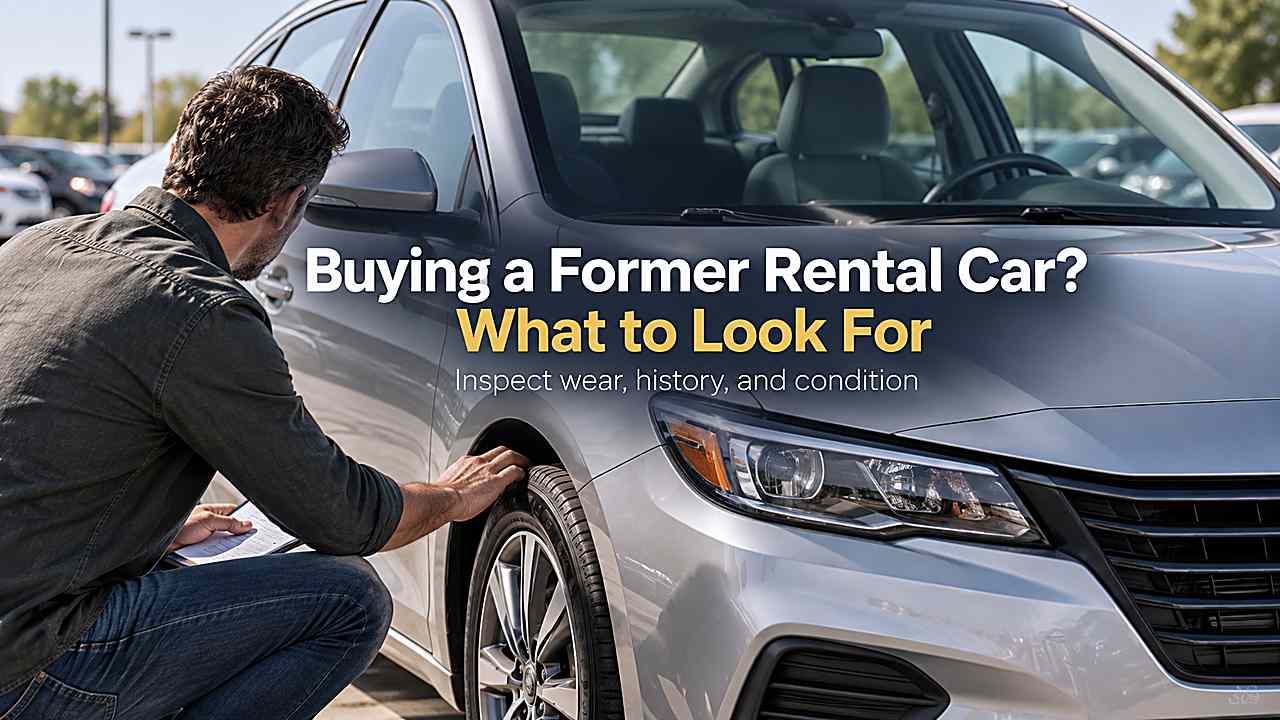
A former rental can be a good buy if its maintenance is documented, wear is reasonable, the price reflects the history and an independent inspection checks out. Rental use itself is not a verdict, but you should pay extra attention to tires, brakes, body repairs, interior wear, electronics and warranty terms.
That answer is deliberately narrower than a blanket rule. With buying a former rental car what to look for, the car’s actual history and condition matter more than a viral tip, a seller’s confidence or one online valuation.
A former rental can be a good buy if its maintenance is documented, wear is reasonable, the price reflects the history and an independent inspection checks out. Rental use itself is not a verdict, but you should pay extra attention to tires, brakes, body repairs, interior wear, electronics and warranty terms.
Why former rentals can be attractive
Newer mainstream models. Fleet maintenance systems. Predictable equipment.
Direct rental-company sales may include warranty or return policy. When the issue crosses into structure, airbags, title status, flood exposure or expensive diagnostics, pay for a specialist. The inspection fee is small compared with inheriting a problem you cannot verify yourself.
That distinction matters because a used-car decision is rarely controlled by one clue. You get a stronger answer when paperwork, physical condition and independent evidence all point in the same direction.
Many drivers change the wear pattern
This part is easier to use when you separate the observation from the conclusion. Work through the checks below and keep the evidence tied to the actual car in front of you.
What to check
Highway city airport idling and short trips. Inspect rather than assume abuse or perfect care. That distinction matters because a used-car decision is rarely controlled by one clue. You get a stronger answer when paperwork, physical condition and independent evidence all point in the same direction.
If the seller can support the explanation with records and the car behaves consistently with the story, the finding may be harmless. When the explanation changes or inspection access is restricted, give the same clue more weight.
How to verify
Driving style varies. Use the result as a reason for the next check, not as permission to jump straight to a conclusion. A good inspection narrows uncertainty step by step and stops when the evidence becomes too expensive or risky to ignore.
A test section, comparison panel or written quote is more useful than a confident guess. Repeatable evidence protects you from both unnecessary fear and an expensive assumption.
Inspect tires and brakes closely
This part is easier to use when you separate the observation from the conclusion. Work through the checks below and keep the evidence tied to the actual car in front of you.
What to check
Mixed tire brands. Uneven wear. Service records. Use the result as a reason for the next check, not as permission to jump straight to a conclusion. A good inspection narrows uncertainty step by step and stops when the evidence becomes too expensive or risky to ignore.
A test section, comparison panel or written quote is more useful than a confident guess. Repeatable evidence protects you from both unnecessary fear and an expensive assumption.
How to verify
Age and tread. Frequent braking. New parts can be benefit but ask why. You should also think about resale. A condition you are willing to accept today may still affect what the next buyer, lender or dealer is willing to pay later, so price the future limitation into today’s decision.
Do not let a highly visible cosmetic issue distract you from ownership, mechanical and safety checks. The biggest repair on a used car is often not the one you can see from ten feet away.
Look for fleet body repairs
This part is easier to use when you separate the observation from the conclusion. Work through the checks below and keep the evidence tied to the actual car in front of you.
What to check
Bumper work. Paint thickness. You should also think about resale. A condition you are willing to accept today may still affect what the next buyer, lender or dealer is willing to pay later, so price the future limitation into today’s decision.
Do not let a highly visible cosmetic issue distract you from ownership, mechanical and safety checks. The biggest repair on a used car is often not the one you can see from ten feet away.
How to verify
Wheel rash. Minor internal repairs may not appear on history reports. If the seller can support the explanation with records and the car behaves consistently with the story, the finding may be harmless. When the explanation changes or inspection access is restricted, give the same clue more weight.
Keep the transaction numbers separate whenever possible. Purchase price, trade value, financing, repair cost and taxes are easier to judge when one figure is not hiding another.
What changes the decision
Overspray. A test section, comparison panel or written quote is more useful than a confident guess. Repeatable evidence protects you from both unnecessary fear and an expensive assumption.
When the issue crosses into structure, airbags, title status, flood exposure or expensive diagnostics, pay for a specialist. The inspection fee is small compared with inheriting a problem you cannot verify yourself.
Test every electronic feature
Usb ports. Cameras. Locks. Windows. Climate.
Infotainment. Driver-assistance. Scan modules. Confirm all keys. If the seller can support the explanation with records and the car behaves consistently with the story, the finding may be harmless. When the explanation changes or inspection access is restricted, give the same clue more weight.
Compare price with non-rental alternatives
Rental history can affect future buyers. Savings should be real.
Fixed no-haggle price still needs condition check. A test section, comparison panel or written quote is more useful than a confident guess. Repeatable evidence protects you from both unnecessary fear and an expensive assumption.
Get independent inspection even with certification
Ftc recommends it. Seller inspection and warranty do not replace your own mechanic.
Tell inspector the fleet history. Do not let a highly visible cosmetic issue distract you from ownership, mechanical and safety checks. The biggest repair on a used car is often not the one you can see from ten feet away.
Know when the cheapest answer is to walk away
Inspection is successful when it prevents a bad purchase. You do not have to prove fraud or diagnose the exact failure to decide that a vehicle carries too much uncertainty. If the seller blocks verification, the title trail is unclear or the repair risk exceeds the discount, another car is a rational next step.
Do not let a highly visible cosmetic issue distract you from ownership, mechanical and safety checks. The biggest repair on a used car is often not the one you can see from ten feet away.
A Faster First Pass for Buying A Former Rental Car What To Look For
This section turns the earlier principles into a practical decision you can use on the actual vehicle rather than treating the topic as an abstract rule.
Before you inspect the detailed clues
Start with fleet maintenance records. Confirm that the VIN and seller story make sense, then look at the whole vehicle from several steps away before focusing on one suspicious area. A broad first look helps you notice asymmetry, stance, panel fit and signs that one side of the car has received much more work than the other. Do not let one clever test replace the basic walk-around.
Keep the conclusion proportional to the evidence. If the finding is uncertain but inexpensive to verify, verify it. If it is uncertain and potentially expensive, do not let the seller make that uncertainty your financial responsibility.
Cross-check the clue with another source
Use wear items and body repairs as the second layer of evidence. The strongest used-car findings are independent of one another: a physical clue, a record and a professional observation that point to the same history. If one source contradicts the others, slow down and find out why. That is especially important when a seller has a confident explanation but no documents.
Keep the conclusion proportional to the evidence. If the finding is uncertain but inexpensive to verify, verify it. If it is uncertain and potentially expensive, do not let the seller make that uncertainty your financial responsibility.
Escalate when the finding affects safety or resale
Once the concern reaches warranty plus independent inspection, stop treating it as a cosmetic negotiation point. Ask for an independent inspection from a shop equipped to evaluate that system or repair. The purpose is not to prove the seller wrong. It is to learn whether the car can be owned, insured and resold without a risk that the current price does not cover.
Keep the conclusion proportional to the evidence. If the finding is uncertain but inexpensive to verify, verify it. If it is uncertain and potentially expensive, do not let the seller make that uncertainty your financial responsibility.
What a Good Seller Response Looks Like
This section turns the earlier principles into a practical decision you can use on the actual vehicle rather than treating the topic as an abstract rule.
Specific records beat reassurance
A useful seller response to a question about fleet maintenance records includes dates, invoices, photos or a clear ownership timeline. “It was like that when I bought it” may be honest, but it does not reduce your uncertainty. You can still proceed, but price the car as one with incomplete history until independent inspection fills the gap.
Keep the conclusion proportional to the evidence. If the finding is uncertain but inexpensive to verify, verify it. If it is uncertain and potentially expensive, do not let the seller make that uncertainty your financial responsibility.
Inspection access matters
A seller who allows you to verify wear items and body repairs gives you a way to resolve uncertainty. Reasonable access can include a cold start, diagnostic scan, lift inspection or body-shop visit depending on the issue. If the seller refuses every outside check while asking full market price, another vehicle is usually a better use of your time.
Keep the conclusion proportional to the evidence. If the finding is uncertain but inexpensive to verify, verify it. If it is uncertain and potentially expensive, do not let the seller make that uncertainty your financial responsibility.
Frequently Asked Questions
The main process above handles most situations. These questions address the exceptions, limitations and negotiation issues that tend to show up with buying a former rental car what to look for.
Are former rental cars abused?
The exact answer depends on the vehicle, its history and the evidence available. Use the clue as part of a pattern rather than treating one observation as absolute proof. Use the result as a reason for the next check, not as permission to jump straight to a conclusion. A good inspection narrows uncertainty step by step and stops when the evidence becomes too expensive or risky to ignore.
If this point could materially change price, safety, title status or a major repair decision, verify it before the transaction rather than using the FAQ as a substitute for the specific vehicle evidence.
Do rental cars receive better maintenance?
If the point could change safety, legal ownership or a major repair bill, verify it before you buy or spend money. A qualified inspection is more valuable than a stronger opinion when the evidence is incomplete. You should also think about resale. A condition you are willing to accept today may still affect what the next buyer, lender or dealer is willing to pay later, so price the future limitation into today’s decision.
If this point could materially change price, safety, title status or a major repair decision, verify it before the transaction rather than using the FAQ as a substitute for the specific vehicle evidence.
Are former rentals cheaper to insure?
Compare the finding with records, similar vehicles and the seller’s explanation. Consistency across several sources is what gives you confidence. If the seller can support the explanation with records and the car behaves consistently with the story, the finding may be harmless. When the explanation changes or inspection access is restricted, give the same clue more weight.
If this point could materially change price, safety, title status or a major repair decision, verify it before the transaction rather than using the FAQ as a substitute for the specific vehicle evidence.
Do former rental cars have lower resale value?
Do not force the deal to work simply because the asking price is attractive. The right purchase still has to make sense after inspection, paperwork and realistic repair cost. A test section, comparison panel or written quote is more useful than a confident guess. Repeatable evidence protects you from both unnecessary fear and an expensive assumption.
If this point could materially change price, safety, title status or a major repair decision, verify it before the transaction rather than using the FAQ as a substitute for the specific vehicle evidence.
Is buying directly from a rental company safer?
Document what you see with photos or notes so you can compare vehicles later and negotiate from facts. Memory gets unreliable after several test drives and dealer conversations. Do not let a highly visible cosmetic issue distract you from ownership, mechanical and safety checks. The biggest repair on a used car is often not the one you can see from ten feet away.
If this point could materially change price, safety, title status or a major repair decision, verify it before the transaction rather than using the FAQ as a substitute for the specific vehicle evidence.
Conclusion
For buying a former rental car what to look for, facts beat pressure. Keep the transaction numbers clear, confirm the history and condition, and be willing to walk away when the car cannot support the story being sold with it.
If the vehicle still makes sense after those checks, you can move forward or negotiate with a clearer number. If it does not, walking away is a successful inspection rather than a missed deal.