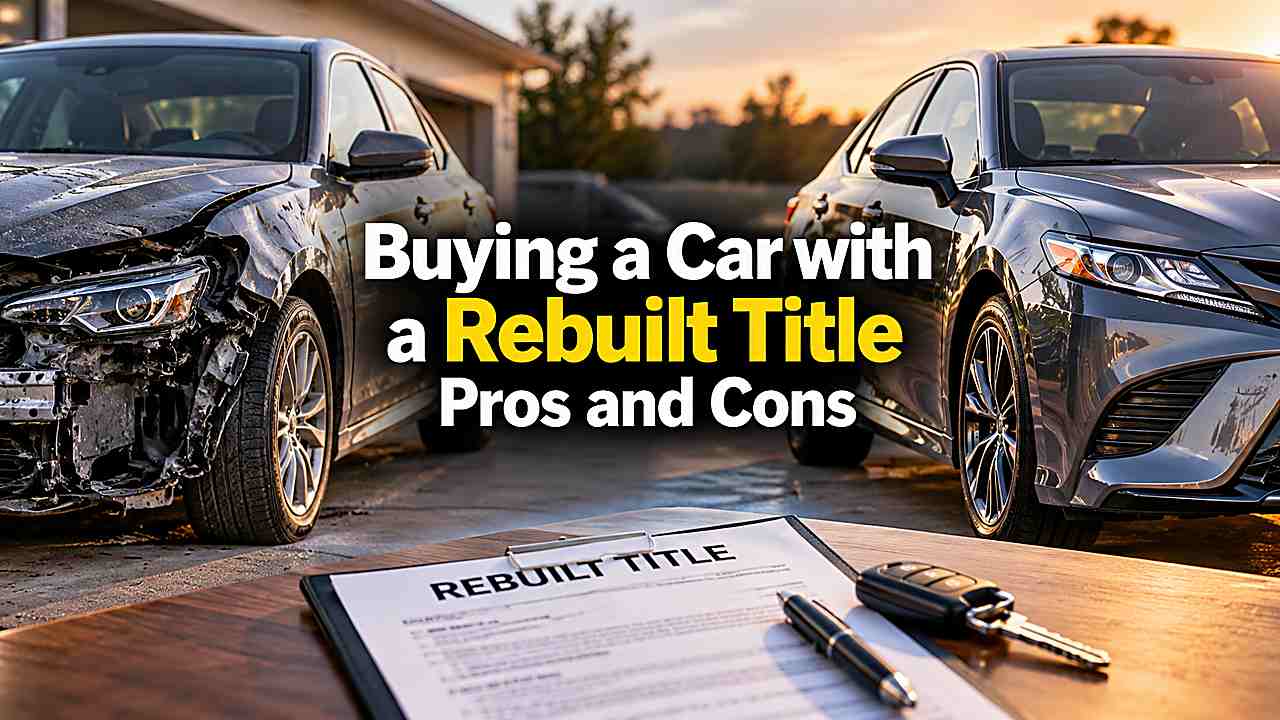
A rebuilt-title car can make financial sense when the original damage is documented, repair quality is independently verified, insurance is confirmed and the discount is large enough to offset lower resale value. The downside is permanent title history plus more uncertainty around structure, financing, insurance and future trade-in.
If you are working through buying a car with a rebuilt title pros and cons, the practical goal is to reduce uncertainty before money changes hands. The rest of this guide shows you which evidence matters, what a seller can reasonably explain and when a specialist is worth the cost.
A rebuilt-title car can make financial sense when the original damage is documented, repair quality is independently verified, insurance is confirmed and the discount is large enough to offset lower resale value. The downside is permanent title history plus more uncertainty around structure, financing, insurance and future trade-in.
The main pro is a lower entry price
Rebuilt cars usually trade below clean-title equivalents. Savings can buy a newer trim. Value exists only if repairs are sound and discount is meaningful. A test section, comparison panel or written quote is more useful than a confident guess. Repeatable evidence protects you from both unnecessary fear and an expensive assumption.
When this favors the purchase or repair
This factor helps when the cost and risk are both measurable and the car still compares well with alternatives. You should be able to explain why accepting the condition leaves enough value for you after the next owner or dealer evaluates it.
The biggest con is unknown repair quality
Salvage causes vary from hail to collision to flood. Rebuilt inspection standards vary by state. Roadworthy does not equal factory restored. Pre-repair photos and invoices matter. Do not let a highly visible cosmetic issue distract you from ownership, mechanical and safety checks. The biggest repair on a used car is often not the one you can see from ten feet away.
When this becomes a reason to pause
Pause when the explanation cannot be verified, the downside is open-ended or the price discount is too small to compensate for future resale and repair uncertainty. A clear limit keeps one attractive feature from dominating the decision.
Insurance can be more difficult
Coverage availability varies. Physical-damage coverage may be limited. Settlement value can differ. Get a VIN-specific quote before deposit. Keep the transaction numbers separate whenever possible. Purchase price, trade value, financing, repair cost and taxes are easier to judge when one figure is not hiding another.
When this favors the purchase or repair
This factor helps when the cost and risk are both measurable and the car still compares well with alternatives. You should be able to explain why accepting the condition leaves enough value for you after the next owner or dealer evaluates it.
Financing and resale options are narrower
Some lenders avoid branded titles. Future dealer trade may be low or refused. Brand remains in history. Calculate exit value now. When the issue crosses into structure, airbags, title status, flood exposure or expensive diagnostics, pay for a specialist. The inspection fee is small compared with inheriting a problem you cannot verify yourself.
When this becomes a reason to pause
Pause when the explanation cannot be verified, the downside is open-ended or the price discount is too small to compensate for future resale and repair uncertainty. A clear limit keeps one attractive feature from dominating the decision.
Verify title history nationally and locally
Use nmvtis brand history. Compare current title. Watch for brand changes across states.
Confirm VIN on vehicle and documents. That distinction matters because a used-car decision is rarely controlled by one clue. You get a stronger answer when paperwork, physical condition and independent evidence all point in the same direction.
Inspect structure, airbags and corrosion protection
Welds. Rails. Pillars. Floors.
Restraint system. Repaired metal needs proper corrosion protection. Scan modules but also inspect physically. Use the result as a reason for the next check, not as permission to jump straight to a conclusion. A good inspection narrows uncertainty step by step and stops when the evidence becomes too expensive or risky to ignore.
You should also think about resale. A condition you are willing to accept today may still affect what the next buyer, lender or dealer is willing to pay later, so price the future limitation into today’s decision.
Match the type of prior damage to your tolerance
Well-documented hail total differs from severe front structural rebuild. Flood history carries long-term electrical risk.
Simple discount percentage cannot equalize every rebuilt car. You should also think about resale. A condition you are willing to accept today may still affect what the next buyer, lender or dealer is willing to pay later, so price the future limitation into today’s decision.
Document the inspection before you leave
Take clear photos of the VIN, odometer, visible defects and any document that matters to the deal. Write down the seller’s explanation for a significant repair or title issue while it is fresh. If you later compare three similar vehicles, these notes keep the facts separate. Documentation also gives you a better basis for a repair quote or negotiation.
You should also think about resale. A condition you are willing to accept today may still affect what the next buyer, lender or dealer is willing to pay later, so price the future limitation into today’s decision.
Run a Best-Case and Worst-Case Calculation
This section turns the earlier principles into a practical decision you can use on the actual vehicle rather than treating the topic as an abstract rule.
Best case
In the best case, original loss type confirms the car or repair is straightforward, the cost stays near the quote and future value behaves as expected. Write that number down rather than keeping it as a feeling. A best case is useful because it shows the upside if everything goes right, but it should not be the only scenario supporting the decision.
Keep the conclusion proportional to the evidence. If the finding is uncertain but inexpensive to verify, verify it. If it is uncertain and potentially expensive, do not let the seller make that uncertainty your financial responsibility.
Realistic middle case
The middle case should include independent structural inspection plus a reasonable allowance for uncertainty. Used cars and body repairs often produce extra labor, parts or market variation. If the decision still makes sense with a moderate surprise built in, it is more robust than one that depends on perfect execution.
Keep the conclusion proportional to the evidence. If the finding is uncertain but inexpensive to verify, verify it. If it is uncertain and potentially expensive, do not let the seller make that uncertainty your financial responsibility.
Worst case and exit value
The worst case should include insurance and future resale. Ask what happens if you must sell sooner than expected, the repair costs more or a future buyer discounts the history. You do not need to assume disaster, but you should know whether one adverse outcome wipes out the savings that attracted you.
Keep the conclusion proportional to the evidence. If the finding is uncertain but inexpensive to verify, verify it. If it is uncertain and potentially expensive, do not let the seller make that uncertainty your financial responsibility.
A Decision Is Better When You Can Reverse It
This section turns the earlier principles into a practical decision you can use on the actual vehicle rather than treating the topic as an abstract rule.
Preserve options
Whenever possible, avoid irreversible spending before you know the underlying value. Get an appraisal before major cosmetic repair, an insurance quote before buying a branded-title car, and a history check before paying for inspection. Each low-cost step should reduce uncertainty before the next expensive step.
Keep the conclusion proportional to the evidence. If the finding is uncertain but inexpensive to verify, verify it. If it is uncertain and potentially expensive, do not let the seller make that uncertainty your financial responsibility.
Compare with the easy alternative
Put one clean, ordinary alternative next to the complicated option. If the savings are small, the simpler car or as-is trade may be the better value even if the complicated route can be made to work. Complexity deserves a discount because it consumes time and creates resale friction.
Keep the conclusion proportional to the evidence. If the finding is uncertain but inexpensive to verify, verify it. If it is uncertain and potentially expensive, do not let the seller make that uncertainty your financial responsibility.
Price the Permanent Title Brand, Not Just Today’s Repair
Start with damage documentation. This is the part of the decision that should be known before you spend money or make a final offer. Put the evidence in writing and compare it with at least one realistic alternative. When buyers skip this step, they often let the visible condition or the seller’s urgency set the number for them. A better approach is to establish what the car or transaction would be worth if this issue did not exist, then measure the actual gap instead of guessing.
Next, verify insurance availability. A quoted number, diagnostic result or document is useful only when it applies to the exact vehicle and the exact problem. Ask what is included, what is excluded and what could change after disassembly or verification. If the range is wide, use the conservative end in your budget. That protects you from a deal that looks profitable or affordable only because every uncertain item was calculated at the best possible outcome.
Finally, consider future resale. Used-car decisions do not end on the day you sign or sell. Insurance, future trade value, buyer confidence, repeat repairs and paperwork can continue affecting the car after the immediate problem is solved. If the transaction still makes sense after you include that future friction, you have a much stronger decision. If the deal only works when every future buyer ignores the same concern, the current discount is probably too small.
A Final Sanity Check Before You Commit
Before you commit on buying a car with a rebuilt title pros and cons, compare the decision with one ordinary alternative that does not have the same complication. This prevents a low asking price, polished presentation or successful negotiation from becoming the only reason you continue. Write down the additional cost you expect in the first month and the uncertainty that could still remain after purchase, repair or trade. If a simpler alternative costs only a little more but removes a large title, structural, diagnostic or resale risk, the extra purchase price can be the cheaper decision over the full ownership period.
Then ask what evidence would make you change your mind in either direction. A good inspection process is falsifiable: a clean independent report, matching records or a verified repair can reduce concern, while a contradictory title event, failed diagnostic test or seller refusal can increase it. Do not keep moving the standard simply because you have already invested time in the car. The money already spent on a history report or inspection is a sunk cost, and its purpose was to help you avoid a much larger mistake. That discipline is especially important in used-car transactions because urgency and scarcity can make a questionable vehicle feel more attractive than it really is.
Frequently Asked Questions
These questions cover the points that most often create false confidence when you are dealing with buying a car with a rebuilt title pros and cons. The answers stay focused on what you can verify before the transaction.
Is a rebuilt title the same as a salvage title?
The exact answer depends on the vehicle, its history and the evidence available. Use the clue as part of a pattern rather than treating one observation as absolute proof. Keep the transaction numbers separate whenever possible. Purchase price, trade value, financing, repair cost and taxes are easier to judge when one figure is not hiding another.
If this point could materially change price, safety, title status or a major repair decision, verify it before the transaction rather than using the FAQ as a substitute for the specific vehicle evidence.
How much cheaper should a rebuilt-title car be?
If the point could change safety, legal ownership or a major repair bill, verify it before you buy or spend money. A qualified inspection is more valuable than a stronger opinion when the evidence is incomplete. When the issue crosses into structure, airbags, title status, flood exposure or expensive diagnostics, pay for a specialist. The inspection fee is small compared with inheriting a problem you cannot verify yourself.
If this point could materially change price, safety, title status or a major repair decision, verify it before the transaction rather than using the FAQ as a substitute for the specific vehicle evidence.
Can you get full coverage on a rebuilt-title vehicle?
Compare the finding with records, similar vehicles and the seller’s explanation. Consistency across several sources is what gives you confidence. That distinction matters because a used-car decision is rarely controlled by one clue. You get a stronger answer when paperwork, physical condition and independent evidence all point in the same direction.
If this point could materially change price, safety, title status or a major repair decision, verify it before the transaction rather than using the FAQ as a substitute for the specific vehicle evidence.
Can a rebuilt-title car be safe?
Do not force the deal to work simply because the asking price is attractive. The right purchase still has to make sense after inspection, paperwork and realistic repair cost. Use the result as a reason for the next check, not as permission to jump straight to a conclusion. A good inspection narrows uncertainty step by step and stops when the evidence becomes too expensive or risky to ignore.
If this point could materially change price, safety, title status or a major repair decision, verify it before the transaction rather than using the FAQ as a substitute for the specific vehicle evidence.
Will dealers take rebuilt-title cars on trade?
Document what you see with photos or notes so you can compare vehicles later and negotiate from facts. Memory gets unreliable after several test drives and dealer conversations. You should also think about resale. A condition you are willing to accept today may still affect what the next buyer, lender or dealer is willing to pay later, so price the future limitation into today’s decision.
If this point could materially change price, safety, title status or a major repair decision, verify it before the transaction rather than using the FAQ as a substitute for the specific vehicle evidence.
Conclusion
With buying a car with a rebuilt title pros and cons, the best decision is the one supported by evidence you can repeat and explain. Answer the main question early, then verify the few details that could change the price, safety or ownership outcome.
If the vehicle still makes sense after those checks, you can move forward or negotiate with a clearer number. If it does not, walking away is a successful inspection rather than a missed deal.