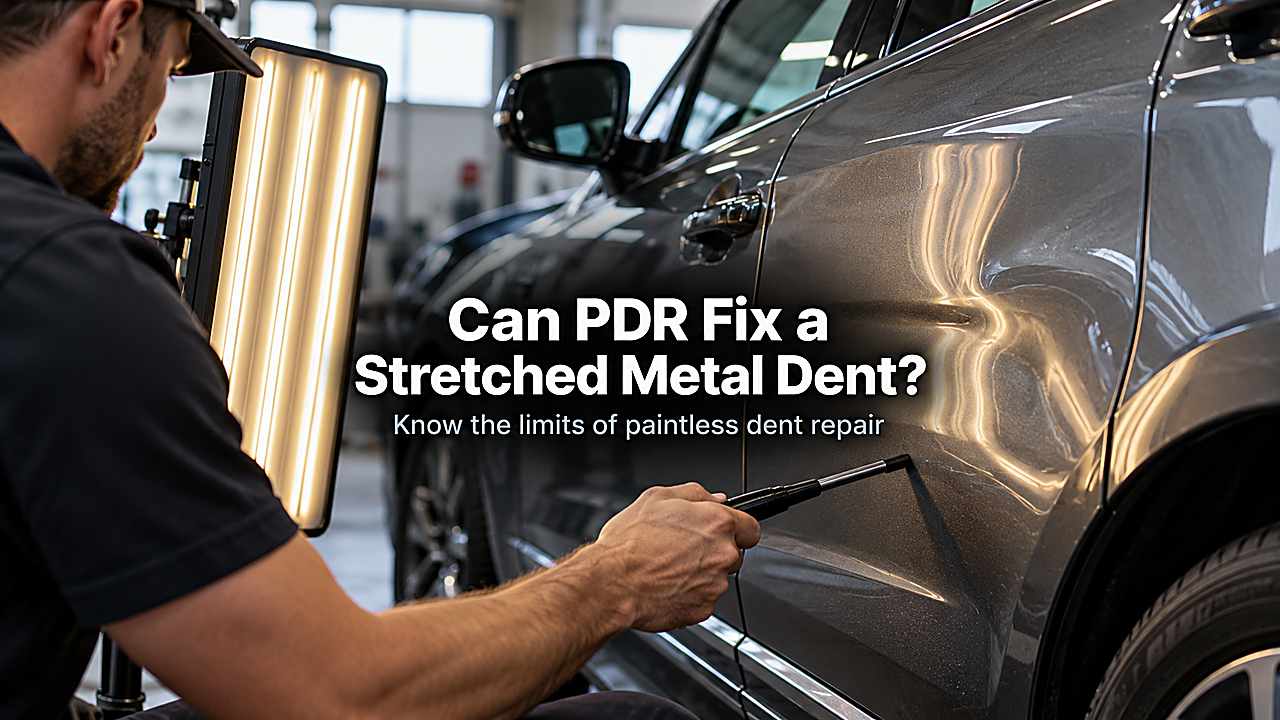
A stretched dent is different from a panel that has simply been pushed inward. When sheet metal stretches, the damaged area has effectively gained surface area, so returning the low spot to its old position does not automatically make the panel stable or smooth.
Skilled PDR can sometimes manage mild stretch, particularly in broad damage with intact paint, but severe stretching is a major limitation. The amount and location of excess metal determine whether a paintless result is realistic.
PDR can sometimes repair mildly stretched metal, but severe stretching can prevent the panel from returning cleanly to its original contour. Oil-canning, sharp folds, torn metal and unstable areas often require conventional metalwork and refinishing.
What stretched metal actually means
This section breaks the decision into the factors that matter most for will pdr fix a stretched metal dent. The details are worth separating because two dents that look similar at first glance can require very different repair strategies.
A dent can displace metal without significantly stretching it
In a favorable soft dent, the panel has moved but much of its original surface relationship remains recoverable. Controlled PDR pressure can release tension and guide the sheet metal back toward its designed contour. That distinction matters because a repair should be chosen for the condition of the panel, not for the name of the technique.
This is why some surprisingly large shallow dents respond well. Diameter alone does not prove that the metal is stretched. A careful estimate should therefore describe the limiting factor rather than relying on dent size alone.
Stretch creates excess surface area
A deep impact can pull the sheet metal beyond its elastic behavior. Once that happens, simply lifting the center can create a high spot or unstable panel because there is more material than the original contour can comfortably contain. Looking at the panel in reflected light is useful because subtle crowns, waves and coating damage are easy to miss in flat lighting.
The technician must manage that excess rather than merely chase the low. Severe cases may require shrinking or conventional refinishing methods outside normal PDR. The practical goal is a stable, natural contour that remains convincing from normal viewing angles, not merely a dent that looks smaller in one photograph.
Oil-canning is an important warning sign
An oil-canning area flexes between positions with relatively little pressure and may pop in and out. That instability can indicate loss of normal panel tension or stretch, although panel design also influences behavior. Previous repairs, unusual materials and restricted access can change the plan, so owners should mention anything they know about the panel’s history.
It deserves professional assessment rather than repeated DIY popping. Forcing an unstable panel can make highs and lows harder to correct. When the damage is borderline, an experienced technician should be willing to explain what result is realistic before work begins.
How technicians judge whether stretch is manageable
This section breaks the decision into the factors that matter most for will pdr fix a stretched metal dent. The details are worth separating because two dents that look similar at first glance can require very different repair strategies.
Depth matters more than a simple width measurement
A wide, shallow dent may distribute strain over a large area, while a small, deep impact can concentrate severe stretch at its center. The technician studies the dent profile under reflection lighting to see how abruptly the metal changes direction. That distinction matters because a repair should be chosen for the condition of the panel, not for the name of the technique.
Sharp centers and tight folds are less favorable. The surrounding crowns also reveal how force traveled through the panel. A careful estimate should therefore describe the limiting factor rather than relying on dent size alone.
Paint condition reveals how severe the deformation may have been
Cracked or split paint often accompanies more severe movement, though intact paint does not guarantee that the metal is unstretched. The deepest area should be inspected closely. Looking at the panel in reflected light is useful because subtle crowns, waves and coating damage are easy to miss in flat lighting.
If the coating survived, PDR may still be worth evaluating. If the finish has failed, conventional repair can address both shape and coating. The practical goal is a stable, natural contour that remains convincing from normal viewing angles, not merely a dent that looks smaller in one photograph.
Panel material and location change the response
Steel, aluminum and different panel thicknesses do not move identically. Edges, body lines and reinforced zones also resist reshaping differently from open sheet metal. Previous repairs, unusual materials and restricted access can change the plan, so owners should mention anything they know about the panel’s history.
A technician’s experience with the specific material matters. The same apparent stretch can have different repair prospects on two panels. When the damage is borderline, an experienced technician should be willing to explain what result is realistic before work begins.
What PDR can do with mild stretching
This section breaks the decision into the factors that matter most for will pdr fix a stretched metal dent. The details are worth separating because two dents that look similar at first glance can require very different repair strategies.
Tension can be redistributed gradually
Advanced PDR is not simply pushing the lowest point until it becomes flush. The technician works lows, crowns and high spots in a sequence that balances tension across the panel. That distinction matters because a repair should be chosen for the condition of the panel, not for the name of the technique.
Small corrections can reduce the appearance of mild stretch and restore stability. This can take substantially longer than an ordinary door ding. A careful estimate should therefore describe the limiting factor rather than relying on dent size alone.
Heat and controlled technique may support the process
Careful warming can help paint flexibility and metal movement in some repairs, but heat does not magically remove excess surface area. It must be used within safe limits for the coating and nearby materials. Looking at the panel in reflected light is useful because subtle crowns, waves and coating damage are easy to miss in flat lighting.
The technician still has to manage the geometry mechanically. Claims that a heat gun alone will permanently fix a stretched dent should be treated cautiously. The practical goal is a stable, natural contour that remains convincing from normal viewing angles, not merely a dent that looks smaller in one photograph.
A partial improvement may be the sensible target
Some stretched dents can be improved dramatically without reaching a flawless factory contour. Owners may choose that result when preserving original paint is more important than absolute perfection. Previous repairs, unusual materials and restricted access can change the plan, so owners should mention anything they know about the panel’s history.
The expected residual waviness or texture should be discussed beforehand. A clear finish target makes it easier to decide whether PDR is worthwhile. When the damage is borderline, an experienced technician should be willing to explain what result is realistic before work begins.
Signs conventional body repair is more appropriate
The panel will not hold a stable contour
If the metal repeatedly pops between positions or produces broad waves as one area is corrected, normal PDR may not provide a durable cosmetic result. Conventional techniques can include metal shrinking, filler, refinishing or panel replacement depending on severity. That distinction matters because a repair should be chosen for the condition of the panel, not for the name of the technique.
Those methods sacrifice the purely paintless approach but can manage excess material. The repair should prioritize stable geometry. A careful estimate should therefore describe the limiting factor rather than relying on dent size alone.
Sharp folds, torn metal and damaged edges raise the stakes
A severe crease can stretch and work-harden the metal along a narrow line. Tears or damaged seams cannot be restored by PDR. Looking at the panel in reflected light is useful because subtle crowns, waves and coating damage are easy to miss in flat lighting.
Likewise, a crushed panel edge may involve multiple layers that need conventional correction. These are strong reasons to obtain a body-shop estimate rather than repeatedly pulling on the dent. The practical goal is a stable, natural contour that remains convincing from normal viewing angles, not merely a dent that looks smaller in one photograph.
Frequently Asked Questions
How can I tell if a dent has stretched the metal?
There is no perfect home test, but depth, sharp folds, broad waviness and oil-canning are useful warning signs. A dent that changes position easily when pressed may have lost normal tension. Reflections can reveal excess waviness around the impact. A PDR technician can make a more reliable judgment under proper lighting. Previous repairs, unusual materials and restricted access can change the plan, so owners should mention anything they know about the panel’s history.
The most reliable answer comes from evaluating the actual panel under good lighting and considering finish condition, geometry and access together. Photos can narrow the possibilities, but borderline damage may need an in-person inspection before a technician can promise a specific result.
Can a large dent be repaired if the metal is not stretched much?
Yes, some large shallow dents are better PDR candidates than small but very deep dents. The panel’s ability to return toward its designed contour matters more than diameter alone. Intact paint and good access improve the prospects. Large repairs still require skill and may take considerable time. When the damage is borderline, an experienced technician should be willing to explain what result is realistic before work begins.
The most reliable answer comes from evaluating the actual panel under good lighting and considering finish condition, geometry and access together. Photos can narrow the possibilities, but borderline damage may need an in-person inspection before a technician can promise a specific result.
Will a stretched dent pop back after PDR?
A properly completed repair should leave the panel stable, but severe stretch can make that difficult to achieve with PDR alone. If the metal cannot hold the restored contour, the technician should explain that limitation rather than promise permanence. Conventional metal shrinking or refinishing may be needed. Repair method should match the condition of the metal. That distinction matters because a repair should be chosen for the condition of the panel, not for the name of the technique.
The most reliable answer comes from evaluating the actual panel under good lighting and considering finish condition, geometry and access together. Photos can narrow the possibilities, but borderline damage may need an in-person inspection before a technician can promise a specific result.
Can glue pulling fix stretched metal?
Glue pulling is a way to apply external lifting force, not a cure for excess surface area. It can be useful within a broader PDR strategy when backside access is limited. Severe stretch still has to be managed through panel tension and metal finishing. Repeated hard pulls can create additional highs if used without control. A careful estimate should therefore describe the limiting factor rather than relying on dent size alone.
The most reliable answer comes from evaluating the actual panel under good lighting and considering finish condition, geometry and access together. Photos can narrow the possibilities, but borderline damage may need an in-person inspection before a technician can promise a specific result.
Does aluminum stretch differently from steel?
Yes, the materials have different working characteristics and require different technique. Aluminum can still be repaired paintlessly in suitable cases, but technicians often approach it with different tools, heat management and expectations. The amount of deformation remains crucial. Material expertise is especially valuable when stretch is suspected. Looking at the panel in reflected light is useful because subtle crowns, waves and coating damage are easy to miss in flat lighting.
The most reliable answer comes from evaluating the actual panel under good lighting and considering finish condition, geometry and access together. Photos can narrow the possibilities, but borderline damage may need an in-person inspection before a technician can promise a specific result.
Conclusion
PDR can sometimes repair mildly stretched metal, but severe stretching can prevent the panel from returning cleanly to its original contour. Oil-canning, sharp folds, torn metal and unstable areas often require conventional metalwork and refinishing. The sensible next step is to photograph the damage clearly, note any paint or functional problems, and obtain an estimate from a technician whose experience matches the panel and damage type.
Choosing the repair from the actual condition of the metal and finish helps preserve original material when that is realistic, while avoiding the mistake of forcing a paintless method onto damage that needs conventional body or refinishing work.