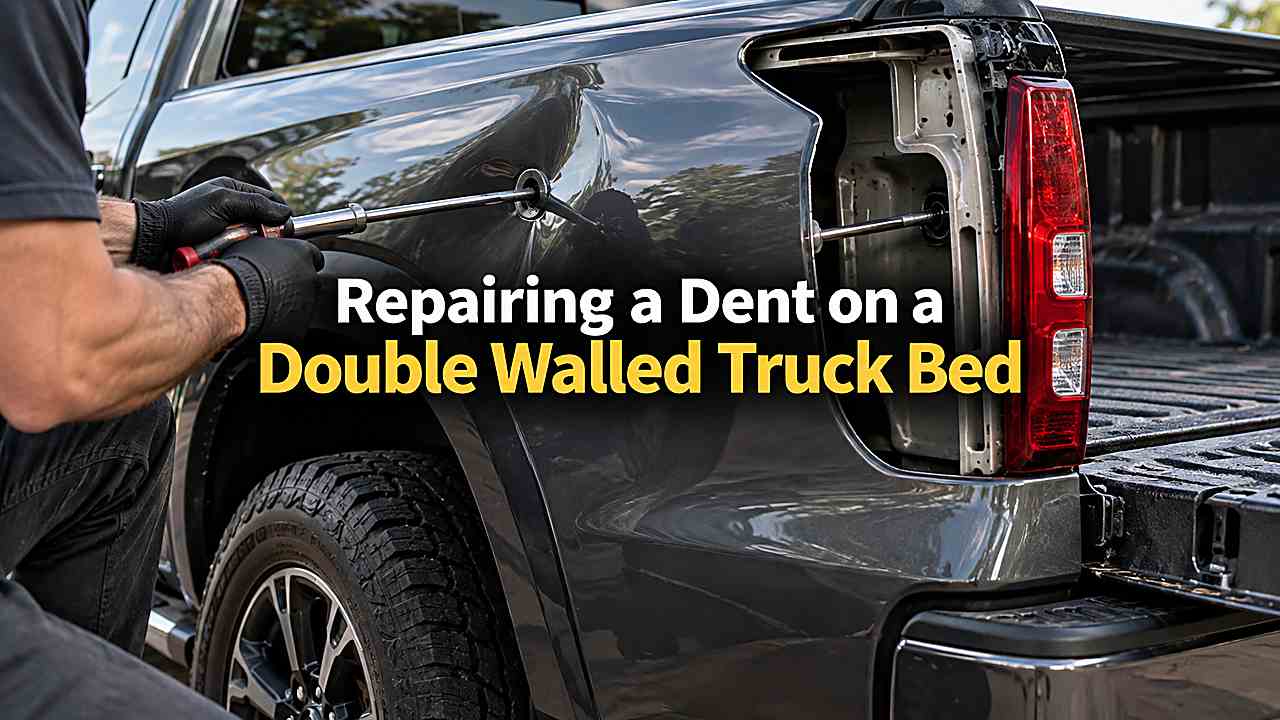
If you are researching repairing a dent on a double walled truck bed, you are probably trying to decide whether a paint-preserving repair is realistic before you commit to bodywork. The answer depends on the actual panel, because dent shape, coating condition, material and access all affect what a technician can safely accomplish.
A good PDR assessment separates a cosmetic low in otherwise sound sheet metal from damage that involves paint failure, severe stretching, seams or structural components. You do not need to diagnose every detail yourself, but knowing what to look for helps you ask better questions and compare estimates.
How double-wall construction blocks tools is important, but it is only one part of the decision. PDR works best when the finish is intact, the metal remains recoverable and the technician has a safe way to control the damaged area.
How double-wall construction blocks tools
For this topic, how double-wall construction blocks tools deserves separate attention because it can materially change repairability, time and risk. The following points show how you can interpret it without reducing the decision to a single size rule.
Why it matters
How double-wall construction blocks tools is one of the factors that can change the answer for repairing a dent on a double walled truck bed. You should not judge the repair only by the dent’s diameter, because depth, metal tension, paint condition and location can make two similar-looking dents behave very differently. A professional assessment uses reflected light to expose subtle highs, lows and creases that ordinary lighting can hide. That inspection gives you a much better idea of whether preserving the factory finish is realistic.
From a repair standpoint, how double-wall construction blocks tools affects either access, metal movement, finish risk or the amount of finishing work required. The technician normally makes small controlled corrections rather than trying to force the entire dent out at once. Crowns and high spots around the low may need attention as the panel moves. This gradual approach is why a technically difficult small dent can take longer than a broad shallow one.
What you should check
From a repair standpoint, how double-wall construction blocks tools affects either access, metal movement, finish risk or the amount of finishing work required. The technician normally makes small controlled corrections rather than trying to force the entire dent out at once. Crowns and high spots around the low may need attention as the panel moves. This gradual approach is why a technically difficult small dent can take longer than a broad shallow one.
If you are comparing estimates, ask how how double-wall construction blocks tools changes the proposed method. A useful answer should tell you whether trim removal, backside pressure, glue pulling, controlled heat or conventional bodywork is expected. You should also disclose previous refinishing, coatings or known damage because those details can affect paint risk. Clear expectations before the repair are more valuable than a simple promise that the dent will disappear.
How technicians approach it
If you are comparing estimates, ask how how double-wall construction blocks tools changes the proposed method. A useful answer should tell you whether trim removal, backside pressure, glue pulling, controlled heat or conventional bodywork is expected. You should also disclose previous refinishing, coatings or known damage because those details can affect paint risk. Clear expectations before the repair are more valuable than a simple promise that the dent will disappear.
There are limits to what PDR should be asked to do in relation to how double-wall construction blocks tools. Cracked paint, torn metal, severe stretch, crushed seams or structural deformation can make a conventional body-shop repair more appropriate. PDR is most valuable when the metal can be restored while a sound finish remains worth preserving. If the damage crosses that boundary, choosing a broader repair method is not a failure of PDR; it is matching the method to the panel.
Mapping inner bedside structure
For this topic, mapping inner bedside structure deserves separate attention because it can materially change repairability, time and risk. The following points show how you can interpret it without reducing the decision to a single size rule.
Why it matters
From a repair standpoint, mapping inner bedside structure affects either access, metal movement, finish risk or the amount of finishing work required. The technician normally makes small controlled corrections rather than trying to force the entire dent out at once. Crowns and high spots around the low may need attention as the panel moves. This gradual approach is why a technically difficult small dent can take longer than a broad shallow one.
If you are comparing estimates, ask how mapping inner bedside structure changes the proposed method. A useful answer should tell you whether trim removal, backside pressure, glue pulling, controlled heat or conventional bodywork is expected. You should also disclose previous refinishing, coatings or known damage because those details can affect paint risk. Clear expectations before the repair are more valuable than a simple promise that the dent will disappear.
What you should check
If you are comparing estimates, ask how mapping inner bedside structure changes the proposed method. A useful answer should tell you whether trim removal, backside pressure, glue pulling, controlled heat or conventional bodywork is expected. You should also disclose previous refinishing, coatings or known damage because those details can affect paint risk. Clear expectations before the repair are more valuable than a simple promise that the dent will disappear.
There are limits to what PDR should be asked to do in relation to mapping inner bedside structure. Cracked paint, torn metal, severe stretch, crushed seams or structural deformation can make a conventional body-shop repair more appropriate. PDR is most valuable when the metal can be restored while a sound finish remains worth preserving. If the damage crosses that boundary, choosing a broader repair method is not a failure of PDR; it is matching the method to the panel.
How technicians approach it
There are limits to what PDR should be asked to do in relation to mapping inner bedside structure. Cracked paint, torn metal, severe stretch, crushed seams or structural deformation can make a conventional body-shop repair more appropriate. PDR is most valuable when the metal can be restored while a sound finish remains worth preserving. If the damage crosses that boundary, choosing a broader repair method is not a failure of PDR; it is matching the method to the panel.
You can help the estimator by photographing mapping inner bedside structure in context. Include a wide image of the entire panel and angled shots that show reflection distortion, then mention any scratches, chips or functional problems. Do not aggressively push, pull or heat the panel before the assessment, because a DIY attempt can create highs or damage paint. Better starting information usually leads to a more accurate estimate and appointment plan.
Glue pulling on closed sections
For this topic, glue pulling on closed sections deserves separate attention because it can materially change repairability, time and risk. The following points show how you can interpret it without reducing the decision to a single size rule.
Why it matters
If you are comparing estimates, ask how glue pulling on closed sections changes the proposed method. A useful answer should tell you whether trim removal, backside pressure, glue pulling, controlled heat or conventional bodywork is expected. You should also disclose previous refinishing, coatings or known damage because those details can affect paint risk. Clear expectations before the repair are more valuable than a simple promise that the dent will disappear.
There are limits to what PDR should be asked to do in relation to glue pulling on closed sections. Cracked paint, torn metal, severe stretch, crushed seams or structural deformation can make a conventional body-shop repair more appropriate. PDR is most valuable when the metal can be restored while a sound finish remains worth preserving. If the damage crosses that boundary, choosing a broader repair method is not a failure of PDR; it is matching the method to the panel.
What you should check
There are limits to what PDR should be asked to do in relation to glue pulling on closed sections. Cracked paint, torn metal, severe stretch, crushed seams or structural deformation can make a conventional body-shop repair more appropriate. PDR is most valuable when the metal can be restored while a sound finish remains worth preserving. If the damage crosses that boundary, choosing a broader repair method is not a failure of PDR; it is matching the method to the panel.
You can help the estimator by photographing glue pulling on closed sections in context. Include a wide image of the entire panel and angled shots that show reflection distortion, then mention any scratches, chips or functional problems. Do not aggressively push, pull or heat the panel before the assessment, because a DIY attempt can create highs or damage paint. Better starting information usually leads to a more accurate estimate and appointment plan.
How technicians approach it
You can help the estimator by photographing glue pulling on closed sections in context. Include a wide image of the entire panel and angled shots that show reflection distortion, then mention any scratches, chips or functional problems. Do not aggressively push, pull or heat the panel before the assessment, because a DIY attempt can create highs or damage paint. Better starting information usually leads to a more accurate estimate and appointment plan.
Glue pulling on closed sections is one of the factors that can change the answer for repairing a dent on a double walled truck bed. You should not judge the repair only by the dent’s diameter, because depth, metal tension, paint condition and location can make two similar-looking dents behave very differently. A professional assessment uses reflected light to expose subtle highs, lows and creases that ordinary lighting can hide. That inspection gives you a much better idea of whether preserving the factory finish is realistic.
Bed rails, wheel arches and body lines
For this topic, bed rails, wheel arches and body lines deserves separate attention because it can materially change repairability, time and risk. The following points show how you can interpret it without reducing the decision to a single size rule.
Why it matters
There are limits to what PDR should be asked to do in relation to bed rails, wheel arches and body lines. Cracked paint, torn metal, severe stretch, crushed seams or structural deformation can make a conventional body-shop repair more appropriate. PDR is most valuable when the metal can be restored while a sound finish remains worth preserving. If the damage crosses that boundary, choosing a broader repair method is not a failure of PDR; it is matching the method to the panel.
You can help the estimator by photographing bed rails, wheel arches and body lines in context. Include a wide image of the entire panel and angled shots that show reflection distortion, then mention any scratches, chips or functional problems. Do not aggressively push, pull or heat the panel before the assessment, because a DIY attempt can create highs or damage paint. Better starting information usually leads to a more accurate estimate and appointment plan.
What you should check
You can help the estimator by photographing bed rails, wheel arches and body lines in context. Include a wide image of the entire panel and angled shots that show reflection distortion, then mention any scratches, chips or functional problems. Do not aggressively push, pull or heat the panel before the assessment, because a DIY attempt can create highs or damage paint. Better starting information usually leads to a more accurate estimate and appointment plan.
Bed rails, wheel arches and body lines is one of the factors that can change the answer for repairing a dent on a double walled truck bed. You should not judge the repair only by the dent’s diameter, because depth, metal tension, paint condition and location can make two similar-looking dents behave very differently. A professional assessment uses reflected light to expose subtle highs, lows and creases that ordinary lighting can hide. That inspection gives you a much better idea of whether preserving the factory finish is realistic.
How technicians approach it
Bed rails, wheel arches and body lines is one of the factors that can change the answer for repairing a dent on a double walled truck bed. You should not judge the repair only by the dent’s diameter, because depth, metal tension, paint condition and location can make two similar-looking dents behave very differently. A professional assessment uses reflected light to expose subtle highs, lows and creases that ordinary lighting can hide. That inspection gives you a much better idea of whether preserving the factory finish is realistic.
From a repair standpoint, bed rails, wheel arches and body lines affects either access, metal movement, finish risk or the amount of finishing work required. The technician normally makes small controlled corrections rather than trying to force the entire dent out at once. Crowns and high spots around the low may need attention as the panel moves. This gradual approach is why a technically difficult small dent can take longer than a broad shallow one.
When a bedside needs conventional repair
For this topic, when a bedside needs conventional repair deserves separate attention because it can materially change repairability, time and risk. The following points show how you can interpret it without reducing the decision to a single size rule.
Why it matters
You can help the estimator by photographing when a bedside needs conventional repair in context. Include a wide image of the entire panel and angled shots that show reflection distortion, then mention any scratches, chips or functional problems. Do not aggressively push, pull or heat the panel before the assessment, because a DIY attempt can create highs or damage paint. Better starting information usually leads to a more accurate estimate and appointment plan.
When a bedside needs conventional repair is one of the factors that can change the answer for repairing a dent on a double walled truck bed. You should not judge the repair only by the dent’s diameter, because depth, metal tension, paint condition and location can make two similar-looking dents behave very differently. A professional assessment uses reflected light to expose subtle highs, lows and creases that ordinary lighting can hide. That inspection gives you a much better idea of whether preserving the factory finish is realistic.
What you should check
When a bedside needs conventional repair is one of the factors that can change the answer for repairing a dent on a double walled truck bed. You should not judge the repair only by the dent’s diameter, because depth, metal tension, paint condition and location can make two similar-looking dents behave very differently. A professional assessment uses reflected light to expose subtle highs, lows and creases that ordinary lighting can hide. That inspection gives you a much better idea of whether preserving the factory finish is realistic.
From a repair standpoint, when a bedside needs conventional repair affects either access, metal movement, finish risk or the amount of finishing work required. The technician normally makes small controlled corrections rather than trying to force the entire dent out at once. Crowns and high spots around the low may need attention as the panel moves. This gradual approach is why a technically difficult small dent can take longer than a broad shallow one.
How technicians approach it
From a repair standpoint, when a bedside needs conventional repair affects either access, metal movement, finish risk or the amount of finishing work required. The technician normally makes small controlled corrections rather than trying to force the entire dent out at once. Crowns and high spots around the low may need attention as the panel moves. This gradual approach is why a technically difficult small dent can take longer than a broad shallow one.
If you are comparing estimates, ask how when a bedside needs conventional repair changes the proposed method. A useful answer should tell you whether trim removal, backside pressure, glue pulling, controlled heat or conventional bodywork is expected. You should also disclose previous refinishing, coatings or known damage because those details can affect paint risk. Clear expectations before the repair are more valuable than a simple promise that the dent will disappear.
Before you approve the repair
Ask the technician which dents or defects are included, how access will be created, whether any paint risk is expected and what level of finish is realistic. If conventional repair is a credible alternative, ask what it would add or change. This gives you enough information to choose based on the actual damage rather than on price or repair terminology alone.
Frequently Asked Questions
Can PDR work with no access behind a bedside?
The answer depends on the exact condition of the panel. You should consider paint integrity, dent depth, sharpness, location, material and access together rather than relying on one universal rule. A favorable combination can make PDR an excellent option, while one major limiting factor can change the recommendation.
Clear photos can narrow the answer, but difficult edges, hidden structures and previous refinishing sometimes require an in-person inspection. Ask the technician what method will be used and what may remain visible afterward. That makes the answer practical for your vehicle rather than merely theoretical.
Does the inner bed wall come off?
The answer depends on the exact condition of the panel. You should consider paint integrity, dent depth, sharpness, location, material and access together rather than relying on one universal rule. A favorable combination can make PDR an excellent option, while one major limiting factor can change the recommendation.
Clear photos can narrow the answer, but difficult edges, hidden structures and previous refinishing sometimes require an in-person inspection. Ask the technician what method will be used and what may remain visible afterward. That makes the answer practical for your vehicle rather than merely theoretical.
Can an upper bed rail be repaired?
The answer depends on the exact condition of the panel. You should consider paint integrity, dent depth, sharpness, location, material and access together rather than relying on one universal rule. A favorable combination can make PDR an excellent option, while one major limiting factor can change the recommendation.
Clear photos can narrow the answer, but difficult edges, hidden structures and previous refinishing sometimes require an in-person inspection. Ask the technician what method will be used and what may remain visible afterward. That makes the answer practical for your vehicle rather than merely theoretical.
Is aluminum bedside PDR different?
The answer depends on the exact condition of the panel. You should consider paint integrity, dent depth, sharpness, location, material and access together rather than relying on one universal rule. A favorable combination can make PDR an excellent option, while one major limiting factor can change the recommendation.
Clear photos can narrow the answer, but difficult edges, hidden structures and previous refinishing sometimes require an in-person inspection. Ask the technician what method will be used and what may remain visible afterward. That makes the answer practical for your vehicle rather than merely theoretical.
When should you use a body shop?
The answer depends on the exact condition of the panel. You should consider paint integrity, dent depth, sharpness, location, material and access together rather than relying on one universal rule. A favorable combination can make PDR an excellent option, while one major limiting factor can change the recommendation.
Clear photos can narrow the answer, but difficult edges, hidden structures and previous refinishing sometimes require an in-person inspection. Ask the technician what method will be used and what may remain visible afterward. That makes the answer practical for your vehicle rather than merely theoretical.
Conclusion
When you are dealing with repairing a dent on a double walled truck bed, focus on the condition of the actual panel and the proposed repair method. PDR can preserve factory paint on suitable damage, but access, material, finish condition and severe deformation can change what is sensible.
Your next step is to take clear photos, disclose known previous repairs and ask an experienced technician to explain the access plan and expected result. If paint, seams, structure or severe metal damage fall outside normal PDR limits, a qualified body shop is the appropriate route.