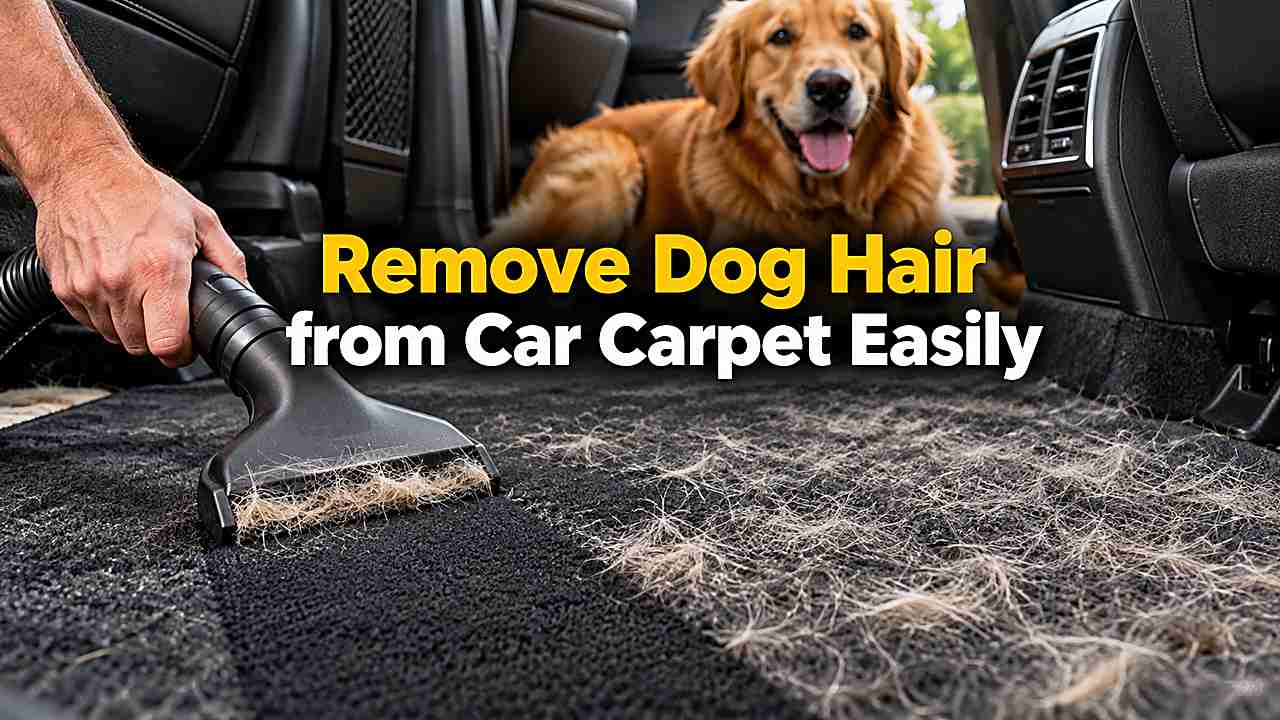
Dog hair works into car carpet because automotive fibers are short, dense and grabby. A normal vacuum pass often removes loose dirt while leaving embedded hair woven into the mat or cargo-area carpet.
The easiest method is to loosen the hair before you vacuum it. Rubber tools, light misting and controlled brushing can lift hair from the fibers so the vacuum can actually collect it.
Dog hair comes out of car carpet more easily when you loosen it first with a rubber pet-hair brush, nitrile glove or pumice-style tool, then vacuum slowly in multiple directions. Avoid aggressive scraping on delicate carpet.
Why dog hair sticks to automotive carpet
Carpet in many vehicles is not soft household carpet. It is often coarse, low pile and shaped around floor contours. Pet hair wedges between those fibers, especially in cargo areas and footwells where pressure pushes it deeper.
Static and moisture can make the problem worse. Hair clings to dry plastic trim and carpet, while damp hair can mat into clumps. If you vacuum too quickly, the nozzle passes over the embedded hair without lifting it.
In practice, you should let the surface guide the next step. If it feels rough, sticky, greasy or unusually warm, slow down and correct that condition first. If the surface looks clean but still shows a defect, the problem may have moved from cleaning into correction, protection or repair. That distinction helps you avoid using the wrong product for the wrong job.
Tools that make the job easier
A rubber pet-hair brush is usually the safest first tool. Rubber creates friction that gathers hair without cutting the carpet. Nitrile gloves can also work well for small areas; simply wipe the carpet with your gloved hand and collect the hair into piles.
Pumice-style pet hair stones can be effective on tough automotive carpet, but they must be used lightly. They can abrade delicate fabric, seat upholstery or soft trunk liners. Test first in a hidden area and avoid using them on leather, vinyl or fragile mats.
In practice, you should let the surface guide the next step. If it feels rough, sticky, greasy or unusually warm, slow down and correct that condition first. If the surface looks clean but still shows a defect, the problem may have moved from cleaning into correction, protection or repair. That distinction helps you avoid using the wrong product for the wrong job.
Step-by-step dog hair removal
This workflow works best when you move in order and inspect the surface as you go. The sequence below keeps the repair controlled, reduces avoidable damage and helps you stop before a small detailing problem becomes a larger one.
1. Remove mats and loose items.
Remove the floor mats and cargo liner if possible. Vacuum loose dirt first so you are not grinding sand into the carpet while brushing. Then use your rubber tool in short strokes to gather hair into clumps. Work from the edges toward the center so you do not spread hair around.
Work patiently here because pressure and speed are usually what create avoidable damage. If the result is not improving after a careful pass, pause and reassess instead of increasing force. You can always repeat a safe step, but you cannot undo scratches, staining or material damage caused by rushing.
2. Vacuum loose dirt first.
Vacuum slowly after each brushing pass. Use a crevice tool along seams and seat rails. Change direction several times because hair lies at different angles. For stubborn areas, a very light mist of water can reduce static, but do not soak the carpet.
Work patiently here because pressure and speed are usually what create avoidable damage. If the result is not improving after a careful pass, pause and reassess instead of increasing force. You can always repeat a safe step, but you cannot undo scratches, staining or material damage caused by rushing.
3. Loosen hair with a rubber tool.
Remove the floor mats and cargo liner if possible. Vacuum loose dirt first so you are not grinding sand into the carpet while brushing. Then use your rubber tool in short strokes to gather hair into clumps. Work from the edges toward the center so you do not spread hair around.
Work patiently here because pressure and speed are usually what create avoidable damage. If the result is not improving after a careful pass, pause and reassess instead of increasing force. You can always repeat a safe step, but you cannot undo scratches, staining or material damage caused by rushing.
4. Vacuum slowly in multiple directions.
Vacuum slowly after each brushing pass. Use a crevice tool along seams and seat rails. Change direction several times because hair lies at different angles. For stubborn areas, a very light mist of water can reduce static, but do not soak the carpet.
Work patiently here because pressure and speed are usually what create avoidable damage. If the result is not improving after a careful pass, pause and reassess instead of increasing force. You can always repeat a safe step, but you cannot undo scratches, staining or material damage caused by rushing.
How to handle heavy hair in cargo areas
Cargo carpets often hold the most hair because dogs sit or lie there directly. Divide the area into sections and complete one section before moving on. A rubber brush followed by vacuuming is usually faster than endless vacuum passes.
If the carpet still looks fuzzy after hair removal, you may be seeing worn fibers rather than remaining hair. Inspect closely before continuing to scrape. Overworking the same spot can roughen carpet and make it hold even more hair later.
In practice, you should let the surface guide the next step. If it feels rough, sticky, greasy or unusually warm, slow down and correct that condition first. If the surface looks clean but still shows a defect, the problem may have moved from cleaning into correction, protection or repair. That distinction helps you avoid using the wrong product for the wrong job.
Preventing dog hair buildup
A washable cargo liner, seat cover or pet hammock saves time. Brush your dog before long rides, and keep a small rubber brush in the car for quick cleanups before hair embeds. Frequent light cleaning is much easier than rescuing a carpet after months of buildup.
If you carry dogs often, avoid oily interior dressings near carpeted areas because they can trap hair and dust. Clean, dry surfaces release hair more easily.
In practice, you should let the surface guide the next step. If it feels rough, sticky, greasy or unusually warm, slow down and correct that condition first. If the surface looks clean but still shows a defect, the problem may have moved from cleaning into correction, protection or repair. That distinction helps you avoid using the wrong product for the wrong job.
Dog hair collects around seat rails, cargo hooks and carpet seams because airflow and foot movement push it into those edges. Use a crevice tool first, then loosen the surrounding carpet with a rubber brush. Pulling the seat forward and backward gives you better access to each side of the rail. Do not forget the vertical carpet on seat backs in hatchbacks and SUVs.
How to work around seat rails and seams
Extraction is useful when pet odor, mud or stains remain after hair is removed. It should come after dry removal, not before, because wet hair can clump and become harder to vacuum. Use minimal moisture and recover as much liquid as possible. Let the carpet dry completely before closing the vehicle for long periods.
When extraction helps after hair removal
A safe detailing process has stop points. If a mark does not respond to a correct mild method, it may not be the kind of defect that cleaning can solve. Continuing with more pressure can scratch, stain, thin or distort the surface. At that point, identify whether you are dealing with residue, oxidation, etching, abrasion, odor contamination or material failure before moving to a stronger approach.
When to stop and reassess
The repair is not finished until the surface is protected and the cause is addressed. Paint may need wax, sealant or coating; interior plastics may need a non-greasy protectant; fabric may need full drying and prevention; leather may need light protection rather than heavy oil. This final step keeps the same problem from returning quickly and helps your work last longer.
Frequently Asked Questions
What is the easiest tool for dog hair in car carpet?
A rubber pet-hair brush is usually the easiest and safest tool for most automotive carpet. It gathers hair into clumps so the vacuum can collect it. Nitrile gloves also work well for small areas. Pumice-style tools are stronger but should be tested first.
The safest choice is to start with the least aggressive method that can reasonably work, then inspect before moving stronger. Your paint, trim, fabric or leather may respond differently depending on age, previous products and heat exposure. A small test spot gives you useful feedback before you treat a larger visible area.
Can I use a regular household vacuum?
Yes, if it has good suction and useful attachments. A crevice tool and brush attachment help more than raw power alone. Move slowly and vacuum after loosening the hair. A quick pass rarely removes embedded pet hair.
The safest choice is to start with the least aggressive method that can reasonably work, then inspect before moving stronger. Your paint, trim, fabric or leather may respond differently depending on age, previous products and heat exposure. A small test spot gives you useful feedback before you treat a larger visible area.
Should I wet the carpet to remove dog hair?
Only lightly mist if static is a problem. Soaking the carpet can create drying issues and odors. Water is not a substitute for mechanical loosening. If you use any moisture, keep it minimal and allow the area to dry fully.
The safest choice is to start with the least aggressive method that can reasonably work, then inspect before moving stronger. Your paint, trim, fabric or leather may respond differently depending on age, previous products and heat exposure. A small test spot gives you useful feedback before you treat a larger visible area.
Will a pumice stone damage car carpet?
It can if used aggressively or on delicate materials. Pet-hair stones are best for tough cargo carpet, not soft upholstery or fragile mats. Test in a hidden area and use light strokes. Stop if fibers begin to fuzz or pull.
The safest choice is to start with the least aggressive method that can reasonably work, then inspect before moving stronger. Your paint, trim, fabric or leather may respond differently depending on age, previous products and heat exposure. A small test spot gives you useful feedback before you treat a larger visible area.
How can I keep dog hair from coming back?
Use a seat cover, cargo liner or pet hammock and clean it separately. Brush your dog before trips and vacuum more often so hair does not embed. Keeping a rubber brush in the vehicle makes quick maintenance easier. Prevention saves much more time than deep removal.
The safest choice is to start with the least aggressive method that can reasonably work, then inspect before moving stronger. Your paint, trim, fabric or leather may respond differently depending on age, previous products and heat exposure. A small test spot gives you useful feedback before you treat a larger visible area.
Conclusion
Dog hair comes out of car carpet more easily when you loosen it first with a rubber pet-hair brush, nitrile glove or pumice-style tool, then vacuum slowly in multiple directions. Avoid aggressive scraping on delicate carpet. The most reliable result comes from identifying the material and defect first, then choosing a method that solves that exact problem without creating new damage.
For your next step, clean and inspect the area in good light, test any new product in a small spot and work gradually. If the surface is already cracked, deeply etched, heavily stained or structurally damaged, stop before overworking it and get a professional opinion.