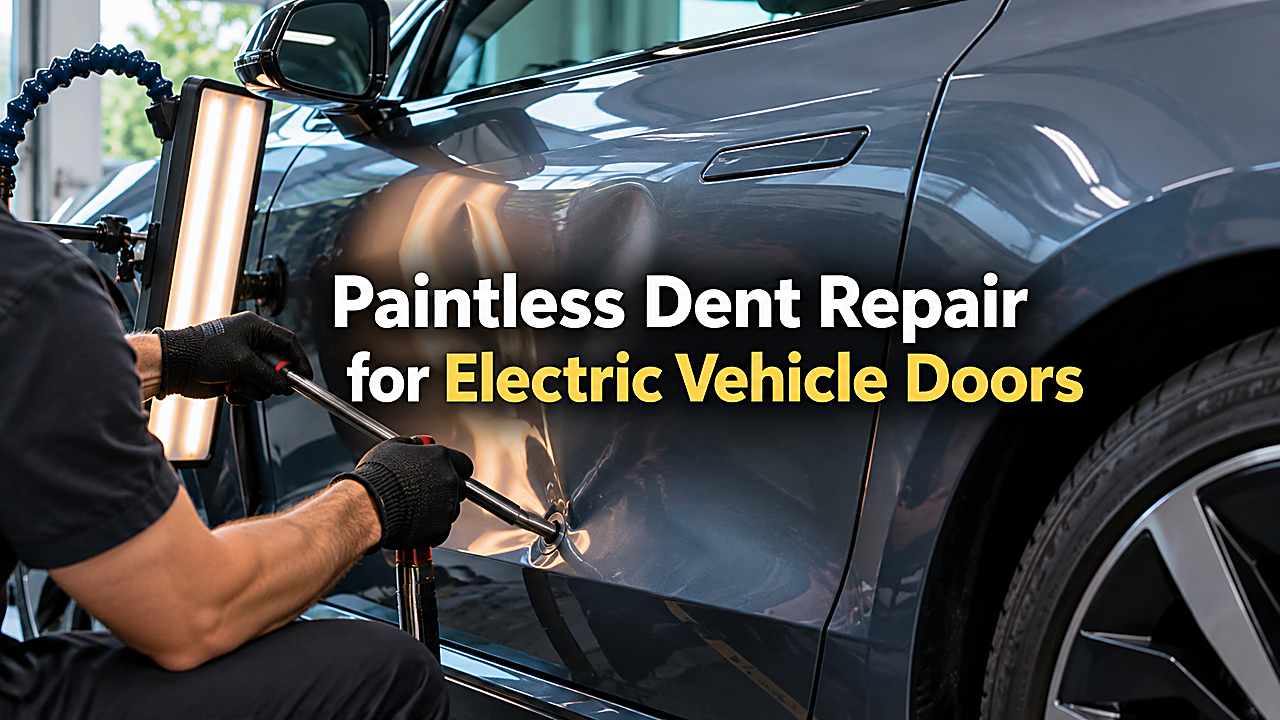
An electric vehicle door can look conventional from the outside while containing a dense package of wiring, sensors, side-impact hardware and, on some models, aluminum or other specialized materials. That does not make PDR impossible, but it makes model-specific repair planning more important.
The dent still has to meet the usual PDR criteria: suitable metal deformation, intact finish and workable access. The technician also has to respect OEM procedures and avoid unnecessary disturbance of electrical and safety components.
PDR can work well on many electric vehicle doors when the dent and paint are suitable. The technician should understand the door’s material, internal components, access points and manufacturer repair information before disassembly or tool insertion.
Why EV doors deserve model-specific assessment
This section breaks the decision into the factors that matter most for paintless dent repair for electric vehicle doors. The details are worth separating because two dents that look similar at first glance can require very different repair strategies.
Door construction varies widely
There is no single EV door design. One model may use conventional steel outer skins, another may use aluminum, and internal reinforcement or component placement can differ even within a brand. That distinction matters because a repair should be chosen for the condition of the panel, not for the name of the technique.
These differences affect tool leverage and access. A technician should identify the panel and construction rather than assume every EV requires the same method. A careful estimate should therefore describe the limiting factor rather than relying on dent size alone.
Modern doors contain more than window hardware
Cameras, wiring harnesses, speakers, side-impact components, sensors and electronic latches may share the door cavity. PDR tools are long metal levers, so blind insertion without understanding what lies behind the skin is poor practice. Looking at the panel in reflected light is useful because subtle crowns, waves and coating damage are easy to miss in flat lighting.
Safe access may require controlled trim removal or an alternative technique. Protecting vehicle systems is part of a professional repair. The practical goal is a stable, natural contour that remains convincing from normal viewing angles, not merely a dent that looks smaller in one photograph.
High-voltage awareness still matters even though the dent is in a door
The traction battery is not normally inside a door, but EV service work should still follow model-specific safety information. Some repair operations elsewhere on the vehicle require power-down procedures, and technicians need to know when those instructions apply. Previous repairs, unusual materials and restricted access can change the plan, so owners should mention anything they know about the panel’s history.
A cosmetic door dent should not invite unnecessary contact with high-voltage systems. OEM information provides the appropriate boundary. When the damage is borderline, an experienced technician should be willing to explain what result is realistic before work begins.
When an EV door dent is a good PDR candidate
This section breaks the decision into the factors that matter most for paintless dent repair for electric vehicle doors. The details are worth separating because two dents that look similar at first glance can require very different repair strategies.
1. The finish is intact.
PDR’s main advantage is preserving the existing coating. Cracked or chipped paint means the owner may still need refinishing after the metal is corrected. That distinction matters because a repair should be chosen for the condition of the panel, not for the name of the technique.
Clean inspection under proper lighting helps distinguish a dent-only problem from combined paint damage. Factory finish in good condition generally gives the most straightforward preservation goal. A careful estimate should therefore describe the limiting factor rather than relying on dent size alone.
2. The metal has not been severely stretched or folded.
A shallow parking ding is very different from a deep collision crease. EV ownership does not change the physical limits of sheet-metal repair. Looking at the panel in reflected light is useful because subtle crowns, waves and coating damage are easy to miss in flat lighting.
Severe stretch, torn metal, crushed edges or damaged reinforcements point toward conventional collision repair. The technician should evaluate the deformation before discussing convenience or cost. The practical goal is a stable, natural contour that remains convincing from normal viewing angles, not merely a dent that looks smaller in one photograph.
3. A safe access route exists.
Door braces and electronics can block the most direct path to the dent. A technician may use approved access points, remove serviceable trim or choose exterior glue pulling when the finish permits it. Previous repairs, unusual materials and restricted access can change the plan, so owners should mention anything they know about the panel’s history.
Drilling unnecessary holes is not a substitute for proper access planning. The method should preserve corrosion protection and vehicle integrity. When the damage is borderline, an experienced technician should be willing to explain what result is realistic before work begins.
4. The technician is comfortable with the panel material.
Aluminum and steel require different feel and technique, and some specialty panels demand additional expertise. A technician who regularly works on the relevant vehicle type is better positioned to estimate difficulty. That distinction matters because a repair should be chosen for the condition of the panel, not for the name of the technique.
Material knowledge also affects heat use and finishing strategy. Ask specifically about experience with your model or panel construction. A careful estimate should therefore describe the limiting factor rather than relying on dent size alone.
What a careful EV PDR process looks like
This section breaks the decision into the factors that matter most for paintless dent repair for electric vehicle doors. The details are worth separating because two dents that look similar at first glance can require very different repair strategies.
Repair information is checked before invasive access
The more disassembly a job needs, the more important OEM procedures become. Trim clips, wiring connectors, airbags or sensors should not be treated as generic obstacles. Looking at the panel in reflected light is useful because subtle crowns, waves and coating damage are easy to miss in flat lighting.
Correct removal and reassembly prevent warning lights, rattles and damaged components. A simple exterior glue pull may avoid some disassembly, but only when it is suitable for the dent and finish. The practical goal is a stable, natural contour that remains convincing from normal viewing angles, not merely a dent that looks smaller in one photograph.
The dent is worked incrementally
As with any PDR job, the technician uses controlled pushes or pulls and reads the panel under reflection lighting. Aluminum or complex character lines may require more time. Previous repairs, unusual materials and restricted access can change the plan, so owners should mention anything they know about the panel’s history.
The objective is to restore the outer skin without disturbing adjacent systems. Speed should not override precision. When the damage is borderline, an experienced technician should be willing to explain what result is realistic before work begins.
Systems disturbed during access should be restored correctly
If trim or connectors are removed, reassembly matters as much as the dent work. Window operation, locks, seals and any affected electronics should function normally afterward. That distinction matters because a repair should be chosen for the condition of the panel, not for the name of the technique.
Some vehicles may have model-specific calibration or initialization requirements following certain procedures. The technician should follow applicable manufacturer guidance rather than guess. A careful estimate should therefore describe the limiting factor rather than relying on dent size alone.
When the EV should go to a collision repair facility
Collision damage can extend beyond the outer skin
A door that no longer closes correctly, has altered gaps, shows reinforcement damage or has suffered a substantial side impact needs broader assessment. PDR only addresses suitable cosmetic deformation in the outer panel. Looking at the panel in reflected light is useful because subtle crowns, waves and coating damage are easy to miss in flat lighting.
It does not verify or restore side-impact structure. Safety-related damage belongs with a qualified collision repair facility. The practical goal is a stable, natural contour that remains convincing from normal viewing angles, not merely a dent that looks smaller in one photograph.
Broken paint and severe edge damage often require refinishing
A dent can be technically movable while still needing paint repair. If the coating is cracked or the door edge is sharply crushed, conventional metal and refinishing work may deliver the more complete result. Previous repairs, unusual materials and restricted access can change the plan, so owners should mention anything they know about the panel’s history.
Preserving factory paint is valuable only when the finish itself remains viable. The repair method should follow the actual damage. When the damage is borderline, an experienced technician should be willing to explain what result is realistic before work begins.
Frequently Asked Questions
Is PDR safe for Tesla, Rivian and other EV doors?
It can be, provided the technician understands the specific door construction and follows appropriate repair procedures. Brand name alone does not determine PDR suitability. Paint condition, dent shape, panel material and internal access remain central. Ask the technician about experience with your model and how access will be achieved. That distinction matters because a repair should be chosen for the condition of the panel, not for the name of the technique.
The most reliable answer comes from evaluating the actual panel under good lighting and considering finish condition, geometry and access together. Photos can narrow the possibilities, but borderline damage may need an in-person inspection before a technician can promise a specific result.
Are all EV doors aluminum?
No. EVs use a variety of body materials and constructions, and even one vehicle can combine different materials across panels. The technician should identify the specific door rather than assume it is aluminum. Material affects technique but does not by itself decide whether PDR is possible. Dent geometry and finish condition still matter. A careful estimate should therefore describe the limiting factor rather than relying on dent size alone.
The most reliable answer comes from evaluating the actual panel under good lighting and considering finish condition, geometry and access together. Photos can narrow the possibilities, but borderline damage may need an in-person inspection before a technician can promise a specific result.
Does the EV battery have to be disconnected for a door ding?
Not automatically. The correct procedure depends on the vehicle and what components will be disturbed during access. A simple cosmetic repair may not involve the high-voltage system at all. If a manufacturer procedure calls for power isolation for a particular operation, that instruction should be followed. This is why model-specific repair information matters. Looking at the panel in reflected light is useful because subtle crowns, waves and coating damage are easy to miss in flat lighting.
The most reliable answer comes from evaluating the actual panel under good lighting and considering finish condition, geometry and access together. Photos can narrow the possibilities, but borderline damage may need an in-person inspection before a technician can promise a specific result.
Can glue pulling avoid removing EV door trim?
Sometimes. Exterior glue pulling can provide access-free lifting for suitable dents when the finish is compatible and secure. It is not the best method for every crease or location, and repainted panels may carry additional paint-pull risk. A technician chooses the method based on the dent rather than simply trying to avoid trim work. Some repairs still need backside access for precise finishing. The practical goal is a stable, natural contour that remains convincing from normal viewing angles, not merely a dent that looks smaller in one photograph.
The most reliable answer comes from evaluating the actual panel under good lighting and considering finish condition, geometry and access together. Photos can narrow the possibilities, but borderline damage may need an in-person inspection before a technician can promise a specific result.
Will PDR affect EV sensors or electronics?
The dent correction itself should not, but careless access could damage components behind the panel. Professional planning identifies wiring, modules and hardware before tools are inserted or trim is removed. Any disconnected components should be restored according to the vehicle’s procedures. A warning light or malfunction after repair should be investigated rather than ignored. Previous repairs, unusual materials and restricted access can change the plan, so owners should mention anything they know about the panel’s history.
The most reliable answer comes from evaluating the actual panel under good lighting and considering finish condition, geometry and access together. Photos can narrow the possibilities, but borderline damage may need an in-person inspection before a technician can promise a specific result.
Conclusion
PDR can work well on many electric vehicle doors when the dent and paint are suitable. The technician should understand the door’s material, internal components, access points and manufacturer repair information before disassembly or tool insertion. The sensible next step is to photograph the damage clearly, note any paint or functional problems, and obtain an estimate from a technician whose experience matches the panel and damage type.
Choosing the repair from the actual condition of the metal and finish helps preserve original material when that is realistic, while avoiding the mistake of forcing a paintless method onto damage that needs conventional body or refinishing work.